
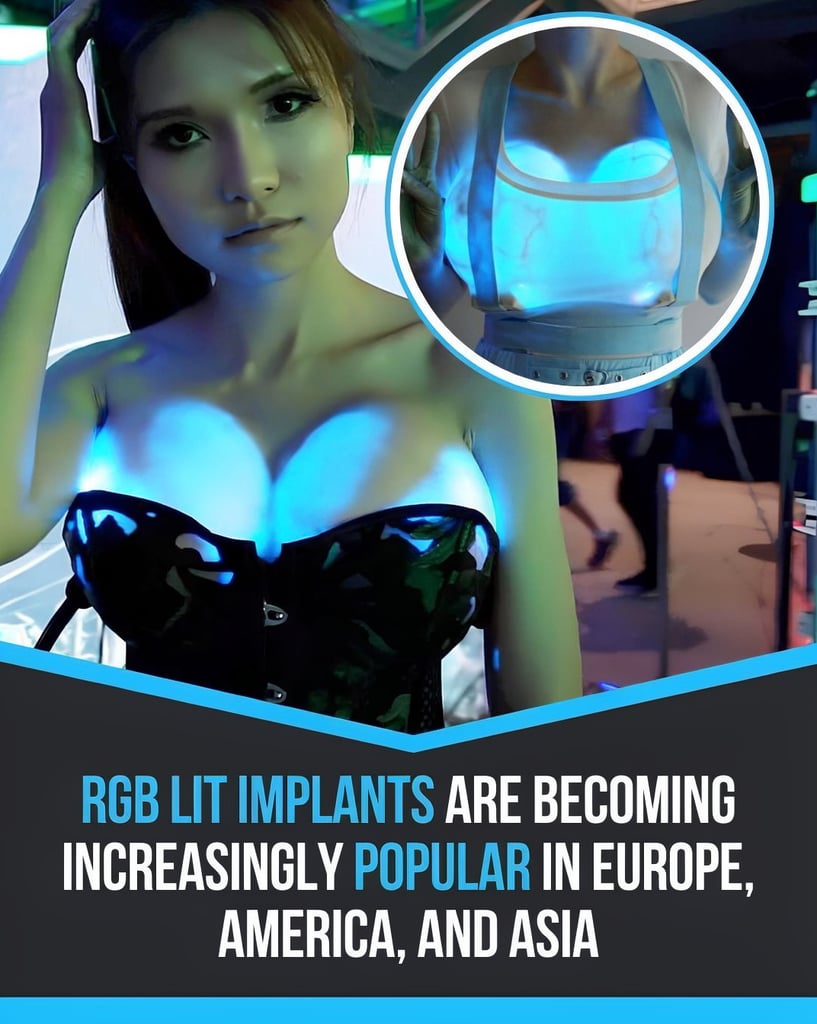
When 27-year-old Berlin DJ and cyber-artist “Lumina Voss” stepped onto the main stage at this year’s Melt Festival, the crowd lost it before she even dropped the bass. As the opening kick drum hit, her chest erupted into synchronized strobes of electric violet and acid green, perfectly timed to the track. No external lights, no projection mapping—just two glowing orbs beneath her skin, controlled in real time from her phone.
They’re called ChromaLume™ implants, and they are officially the wildest piece of consumer tech you can have surgically installed in your body right now.
Developed jointly by Silicon Valley biotech startup NeuraGlow and Berlin-based body-mod studio CyberSmith, the FDA-cleared (for “aesthetic use only”) devices are soft silicone shells laced with flexible micro-LED arrays and a tiny Bluetooth antenna. A 22-minute outpatient procedure slips them under the muscle exactly like traditional breast implants—except these ones can cycle through 16.8 million colors, pulse to Spotify, flash notifications, or even display a slow heartbeat glow in warm amber.

“I change the color to match my mood or the venue lighting,” Lumina told reporters backstage, casually sliding her finger across an iPhone widget to shift from ultraviolet to blood red. “It’s like having a living equalizer in my t*ts.”
The app is ridiculously simple: pick a static color, choose from dozens of presets (rave strobe, candle flicker, pride flag pulse), or let the implant’s microphone sync directly to whatever music is playing. Battery life? Up to 18 months, recharged wirelessly through an induction mat you just lie on for 40 minutes while scrolling TikTok.
Since the first commercial batches shipped in September 2025, over 8,000 people—mostly aged 19–34—have already booked procedures from Los Angeles to Seoul. Twitch streamers use them as subtle subscriber alerts. Cosplayers flash arcane symbols during photoshoots. At least one OnlyFans creator offers paid “custom color request” streams.
Price tag: $18,500–$24,000 USD including surgery, depending on cup size and whether you want the premium “haptic feedback” version that vibrates gently with bass drops.
Doctors are… cautiously intrigued.
“From a surgical standpoint, it’s no different than placing any other silicone implant,” says Dr. Anya Patel, a Beverly Hills plastic surgeon who has installed 47 sets since launch. “The materials are the same medical-grade silicone and titanium used in pacemakers. The LED array is fully encapsulated, so there’s no direct tissue contact.”
Still, not everyone is popping champagne. The American Society of Plastic Surgeons issued a statement urging long-term studies, citing unknown risks of chronic low-level light exposure to breast tissue and potential complications if an implant needs removal or replacement years down the line. Insurance, needless to say, classifies this as 100% cosmetic.
The cultural ripple is already massive. Vetements showed glowing models at Paris Fashion Week. K-pop rookie group NEX7 debuted with color-changing outfits synced to the members’ own implants. Gaming peripheral brands are racing to release SDKs so your rig’s RGB can mirror what’s under your shirt.
Market analysts predict the “smart implant” category could hit $600 million annually by 2027 if adoption keeps climbing at current rates—roughly the same trajectory customizable LED sneakers followed a decade ago.
Love them or fear them, ChromaLume implants are the ultimate flex of 2025: your body, literally lighting up on your terms.
One patient summed it up on TikTok (currently 42 million views and climbing): “I waited 27 years to feel like a final boss. Now I walk into any room and the lighting is never a problem again.”
Would you glow? Drop your color combo in the comments. The future is bright—and apparently, it’s under the skin.