
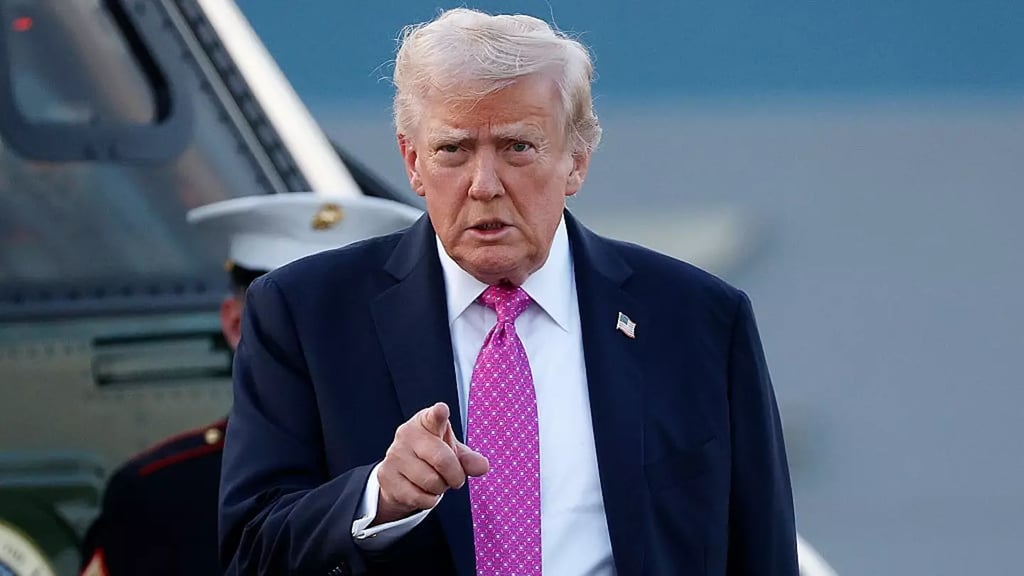
The White House issued a formal response following former United States President Donald Trump’s exclusion from the list of recipients of the 2025 Nobel Peace Prize. The development reignited public and political debate regarding Trump’s foreign policy record and his long-standing assertion that his diplomatic initiatives merited international recognition.
According to statements from administration officials, the White House maintains that Trump played a significant role in reducing tensions in several international conflict zones during his presidency. Officials cited diplomatic initiatives in the Middle East and negotiations with foreign governments that, in their view, contributed to de-escalation and a reduction in active hostilities. The administration argued that these efforts were insufficiently acknowledged by the Nobel Committee.
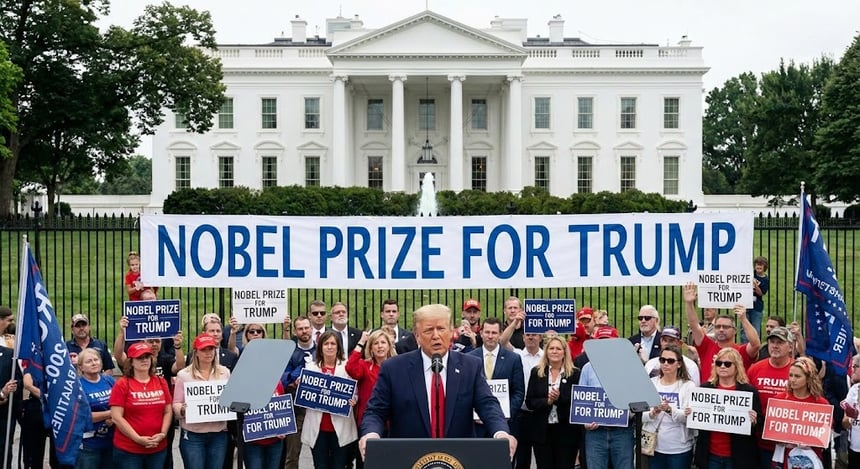
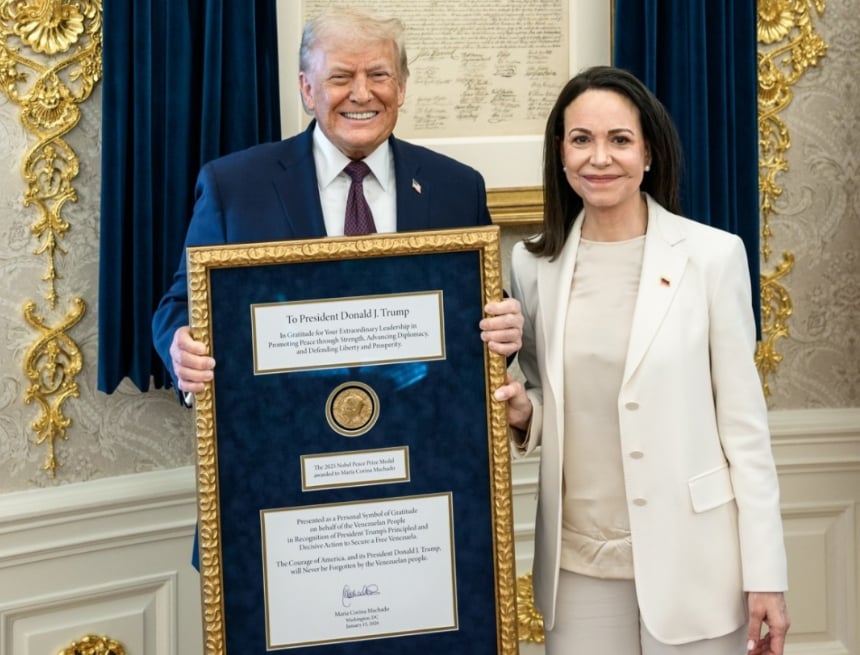
The issue attracted renewed attention after Venezuelan opposition leader María Corina Machado, the recipient of the 2025 Nobel Peace Prize, symbolically presented her medal to Trump. The gesture carried no formal standing within the Nobel Prize framework but intensified public discussion about Trump’s claims of being overlooked for the award.
White House spokespersons described the Nobel Committee’s decision as part of what they characterized as a broader pattern of institutional bias against Trump. They contended that comparable diplomatic initiatives undertaken by previous U.S. presidents were positively received and, in some cases, rewarded, while Trump’s actions were subjected to greater scrutiny due to political considerations.
Trump has repeatedly voiced dissatisfaction with the Nobel Committee’s decisions. Following the 2025 announcement, he reiterated that several former U.S. presidents received the Nobel Peace Prize despite ongoing military conflicts during their administrations. Trump contrasted those examples with his own approach, emphasizing negotiation and deal-making over extended military involvement.
Trump further suggested that the decision had practical implications beyond symbolic recognition. In comments reported by U.S. media outlets, he stated that being overlooked reduced his incentive to prioritize conciliatory diplomacy, particularly in disputes involving European allies and territorial negotiations.
International responses to the controversy were divided. Some conservative commentators supported the White House’s position, while critics argued that the Nobel Peace Prize is awarded based on demonstrable and lasting outcomes rather than stated intentions. Critics also noted that several of Trump’s diplomatic initiatives remain unresolved or continue to generate controversy.
European governments, including officials in Norway and Denmark, largely refrained from direct public comment on the White House’s criticism. Political analysts suggested that the episode reflected broader transatlantic tensions that emerged during Trump’s presidency, particularly regarding unilateral decision-making and pressure on allied nations.
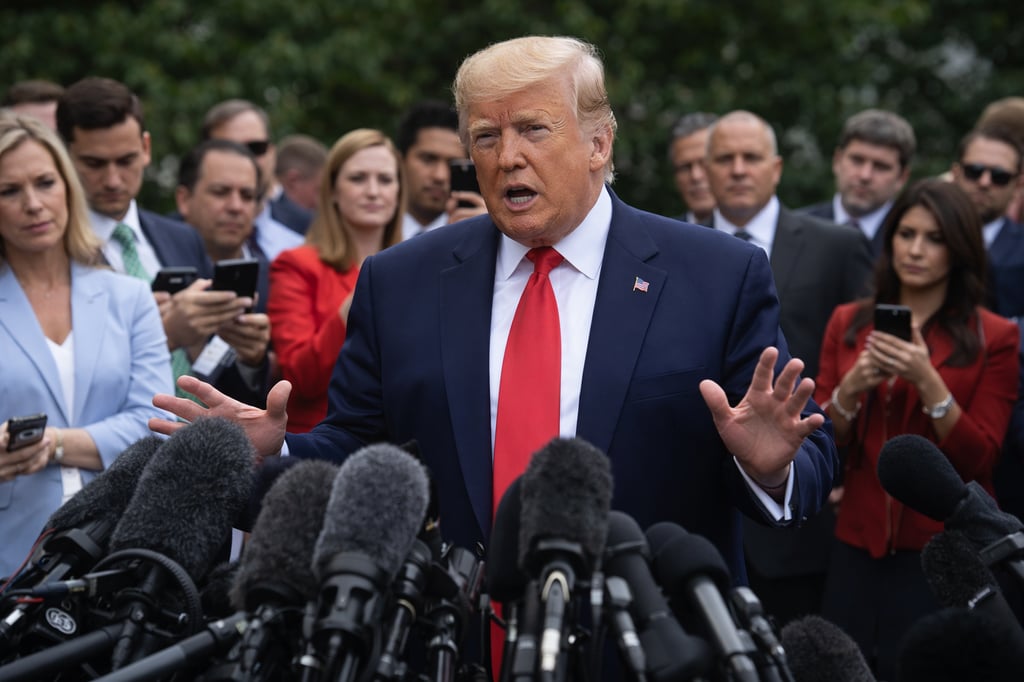
The Nobel Committee adhered to its long-standing policy of not responding to political criticism or post-award disputes. Under its statutes, the committee emphasizes independence and discretion, and it rarely provides detailed explanations beyond the official citations accompanying each award.
The debate over Trump’s relationship with the Nobel Peace Prize has continued among supporters and critics. Supporters describe his foreign policy as unconventional but effective, arguing that non-traditional methods achieved results where established diplomatic approaches failed. Critics maintain that sustainable peace depends on multilateral cooperation and institutional frameworks rather than individualized negotiations.
The controversy has contributed to broader discussions about the criteria used to define and reward peace in international politics. Questions regarding whether peace should be measured by the absence of armed conflict, the signing of agreements, or long-term stability remain central to differing interpretations of the Nobel Committee’s decisions.