
World leaders gathered in Davos, Switzerland this week for the World Economic Forum, but as usual, it wasn’t just policy discussions that captured public attention. From diplomatic tensions to unexpected soundbites, the event quickly became a spectacle that left many observers asking the same question: what exactly is going on?
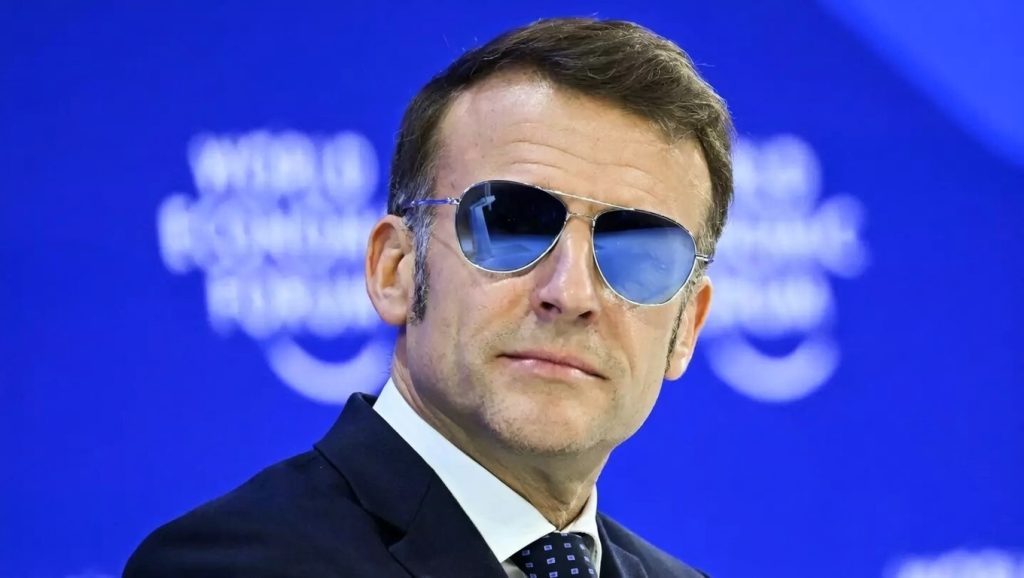
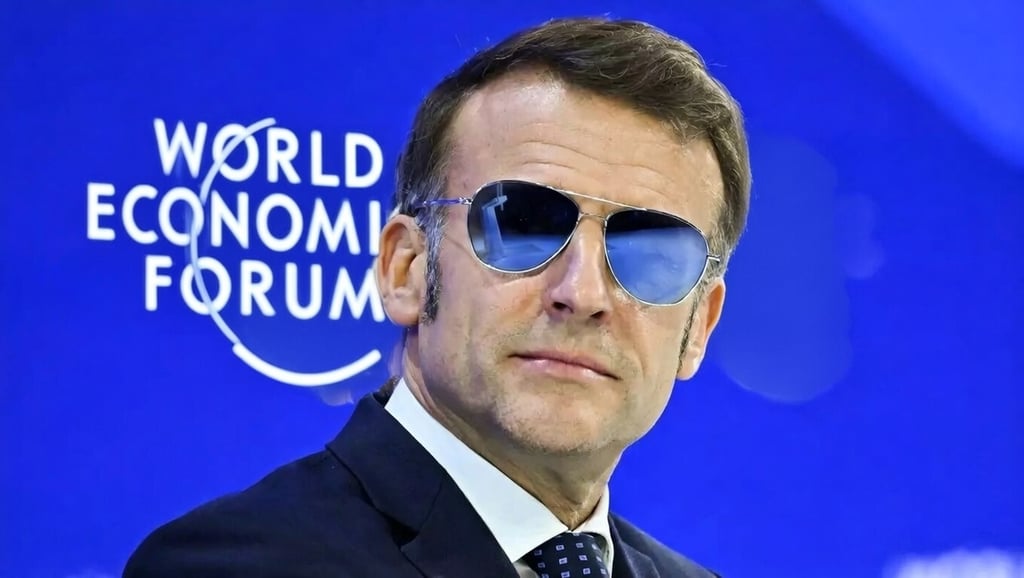
Among the many moments that raised eyebrows was French President Emmanuel Macron appearing indoors wearing sunglasses during a high-profile speech. In the middle of January, in the snowy Swiss Alps, the choice immediately sparked curiosity online and among political commentators.
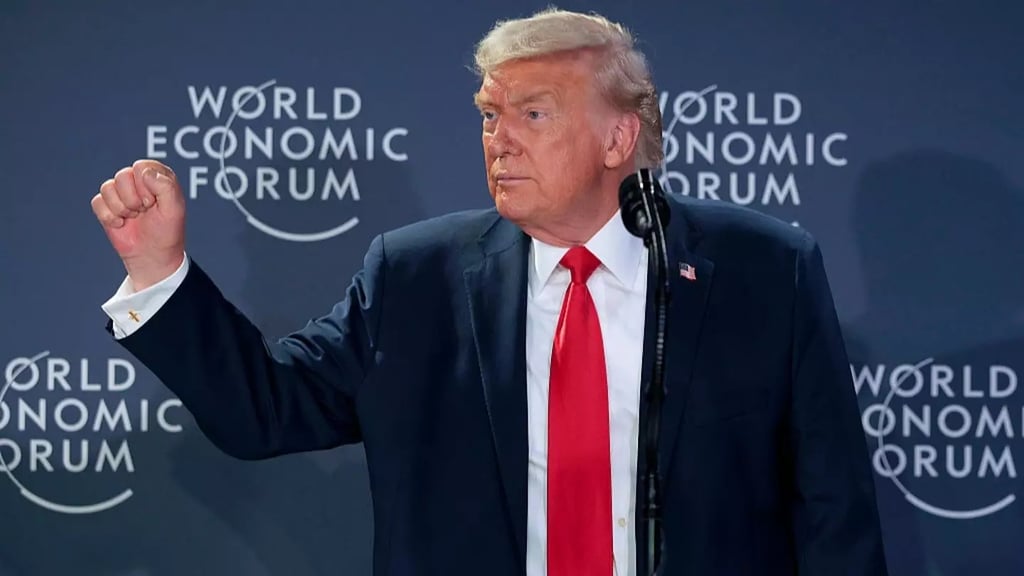
The moment didn’t escape the notice of US President Donald Trump either, who used it as another opportunity to take aim at European leaders during his own Davos appearance. “I watched him yesterday, with those beautiful sunglasses,” Trump remarked. “What the hell happened?”
Davos this year has been dominated by one issue in particular: Greenland. Trump, who has renewed his long-standing interest in acquiring the territory, used the forum to argue that the island is vital to US national security due to its proximity to Russia. Although he ruled out military force, he again floated the idea of purchasing Greenland from Denmark.
In the process, Trump caused a stir with several verbal slip-ups, including repeatedly confusing Greenland with Iceland. He also made comments that many interpreted as offensive toward his Swiss hosts, further fuelling criticism of his appearance at the summit.
At one point, Trump claimed that European leaders once praised him enthusiastically. “They called me daddy,” he said, before adding that relations cooled after he raised the Greenland issue. “Now what I’m asking for is a piece of ice, cold and poorly located,” he added, drawing laughter and disbelief in equal measure.
Macron’s sunglasses, however, turned out to have a far less dramatic explanation. Shortly after the speculation began, the French president addressed the issue directly, apologizing for what he called the “unsightly appearance” of his eye.
He joked that people should see it as an “unintentional reference to the ‘Eye of the Tiger’,” calling it a symbol of determination for those who caught the joke. Despite the humour, French media soon reported the real cause.
According to multiple reports, Macron was suffering from a sub-conjunctival haemorrhage, essentially a broken blood vessel in the eye. While it can look alarming, the condition is harmless, painless, and does not affect vision. It is commonly caused by something as simple as rubbing the eye too hard, sneezing forcefully, or minor irritation.
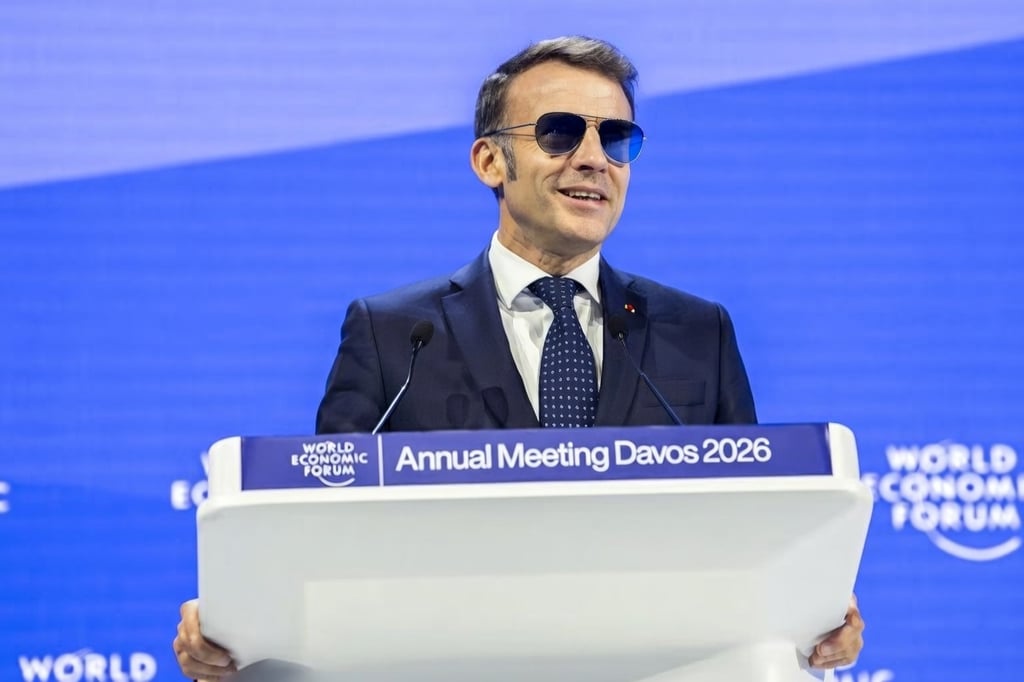
The sunglasses, then, were not a fashion statement or political signal, but a practical attempt to avoid drawing attention to the visible redness. Ironically, Trump’s comments ensured the opposite, turning a minor medical issue into an international talking point.
Beyond the optics, diplomatic tensions remain high. Trump revealed that Macron had privately messaged him in an attempt to de-escalate the Greenland situation. The message showed a stark contrast between public jabs and behind-the-scenes diplomacy.
In the text, Macron reportedly stressed cooperation on Syria and Iran, while questioning Trump’s approach to Greenland. He proposed hosting a G7 meeting in Paris following Davos, inviting key stakeholders including Denmark, Ukraine, Russia, and Syria, and even suggested a private dinner before Trump returned to the US.
As Europe largely rallies behind Denmark, Trump’s Greenland ambitions appear increasingly isolated. Meanwhile, Macron’s sunglasses episode serves as a reminder of how easily symbolism can overshadow substance on the world stage.
At Davos, where global power is meant to be quietly negotiated behind closed doors, it often takes just a pair of sunglasses — or a poorly chosen joke — to steal the spotlight.