
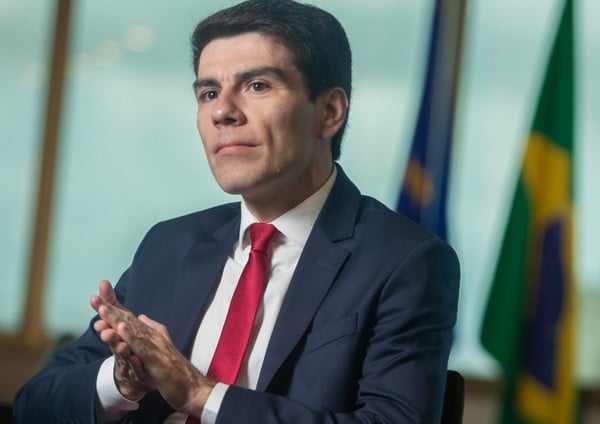
Despite vocal resistance from parts of the French economy, the Mercosur–European Union free trade agreement is being strongly welcomed by French businesses and investors operating in Brazil. According to Thierry Besse, president of the France-Brazil Chamber of Commerce (CCIFB), rejecting the deal at this stage would amount to a strategic mistake with long-term consequences for Europe.
After 25 years of negotiations, Besse argues that the agreement represents a rare opportunity to expand markets, reinforce industrial supply chains, and counter the growing influence of rival global players. “Signing the agreement was a last-minute, game-winning goal for Europe,” he told Valor. Blocking its ratification now, he warned, would be “like scoring an own goal and handing the match to China.”
Beyond trade volumes, Besse frames the deal as a geopolitical milestone. In an increasingly fragmented global economy, the agreement would bind two blocs that share institutional frameworks, regulatory traditions, and democratic values. At a time of heightened instability and trade weaponization, deeper EU–South America integration is, in his view, not optional but necessary.
The agreement, signed in Paraguay by Mercosur representatives and European Commission President Ursula von der Leyen, would create the world’s largest free trade area. It would cover more than 700 million consumers across 32 countries, with a combined GDP of roughly $22 trillion. Yet political momentum stalled when the European Parliament narrowly voted to request a legal review by the European Court of Justice, a move that could freeze the process for up to two years.

France has emerged as the epicenter of opposition, driven largely by pressure from its agricultural sector. Farmers argue that the deal creates unfair competition due to differences in environmental, sanitary, and pesticide regulations between the EU and Mercosur. Concerns over deforestation and production standards have dominated public debate, with fears that stricter EU rules will raise domestic costs and weaken competitiveness.
Besse acknowledges that some livestock-related concerns are valid but insists the broader debate has become distorted. He points to the EU-Canada trade agreement as a precedent: initially controversial in France, it ultimately boosted trade on both sides without the feared market collapse. “A decade later, the data speaks for itself,” he said.

Crucially, the Mercosur-EU deal includes safeguards. Beef imports from Mercosur into the EU will be capped at 99,000 tonnes annually—just 1.2% of total EU consumption. On the upside, sectors such as wine, champagne, spirits, dairy, and protected-origin products stand to gain immediately. France currently exports about 700,000 bottles of wine and champagne to Brazil each year, a figure expected to rise sharply as tariffs are reduced.
Industrial winners include aerospace, automotive, pharmaceuticals, cosmetics, infrastructure, and energy—particularly renewables. French and European firms already play a major role in Brazil’s wind, solar, hydropower, and transmission sectors, positioning them to scale further under the agreement.
French corporate presence in Brazil is substantial. Around 1,300 French companies operate in the country, generating over R$400 billion in revenue in 2024 and employing roughly 560,000 people—making France Brazil’s largest foreign employer and second-largest investor. Yet bilateral trade remains modest at €8 billion annually, highlighting what Besse calls “enormous untapped potential.”
For him, the deal opens a medium-term “highway” for trade expansion, especially for small and medium-sized enterprises. More broadly, it sends a signal that multilateralism still works. In a world of rising protectionism, Besse sees the agreement as a clear win-win—strengthening supply chains, diversifying partners, and anchoring prosperity on both sides of the Atlantic.