
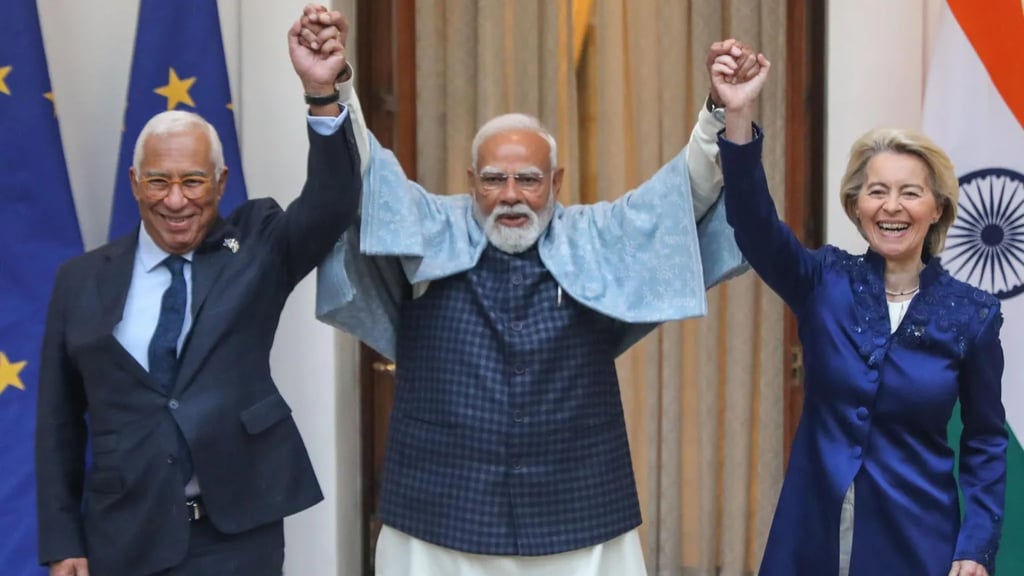
India and the European Union have announced a landmark free trade agreement, ending nearly 20 years of stop-start negotiations and marking one of the most significant economic partnerships in recent global history. European Commission President Ursula von der Leyen described the pact as “the mother of all deals,” while Indian Prime Minister Narendra Modi called it “historic.”
The agreement creates a free-trade framework between the EU’s 27 member states and the world’s most populous country, together accounting for nearly a quarter of global GDP and a combined market of around two billion people. Beyond trade, the pact also signals a strategic deepening of ties at a time of rising geopolitical and economic uncertainty.
Under the deal, the EU will eliminate tariffs on most exports of chemicals, machinery, electrical equipment, aircraft, and spacecraft through phased reductions. One of the most notable concessions involves automobiles: India will slash duties—currently as high as 110%—to 10% under a quota of 250,000 vehicles, a volume far exceeding similar quotas granted in previous trade deals.
India, in turn, will reduce or remove tariffs on a wide range of EU products, including wine, beer, and olive oil. Brussels said the agreement would boost investment flows, improve market access, and strengthen supply-chain integration between the two economies.
Delhi said nearly all Indian exports would gain preferential access to EU markets. Sectors such as textiles, leather, marine products, handicrafts, gems, and jewellery are expected to benefit significantly. While agricultural exports like tea, coffee, spices, and processed foods will see improved access, India has protected sensitive sectors including dairy, cereals, poultry, and certain fruits and vegetables to safeguard domestic priorities.
The agreement also includes a mobility framework, easing short-term travel for professionals between India and the EU. Modi said the deal would make it easier for Indian farmers, small businesses, manufacturers, and service providers to access European markets, while encouraging innovation-driven partnerships.
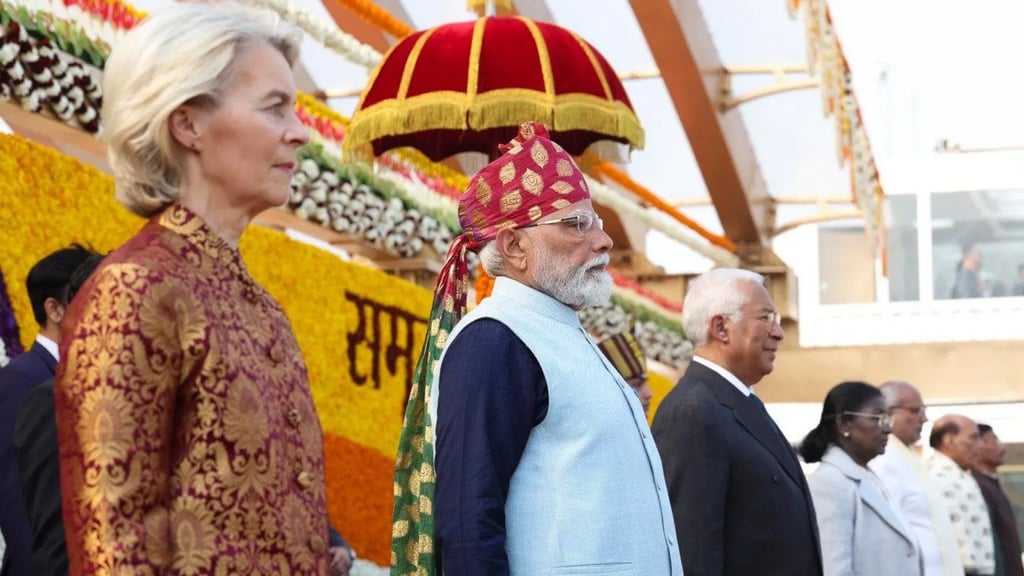
The deal comes against a tense global backdrop. Both India and the EU are facing economic pressure from the United States, with India contending with steep tariffs imposed last year under President Donald Trump, and Europe navigating renewed trade tensions with Washington. EU leaders have framed the agreement as a strong political signal in favour of cooperation over protectionism.
Economists say labour-intensive Indian sectors such as shrimp farming, textiles, and jewellery—hard hit by US tariffs—stand to gain. However, challenges remain, particularly in meeting stringent EU environmental and regulatory standards. Analysts argue India’s manufacturing sector will need rapid adaptation to fully capitalise on the opportunity.
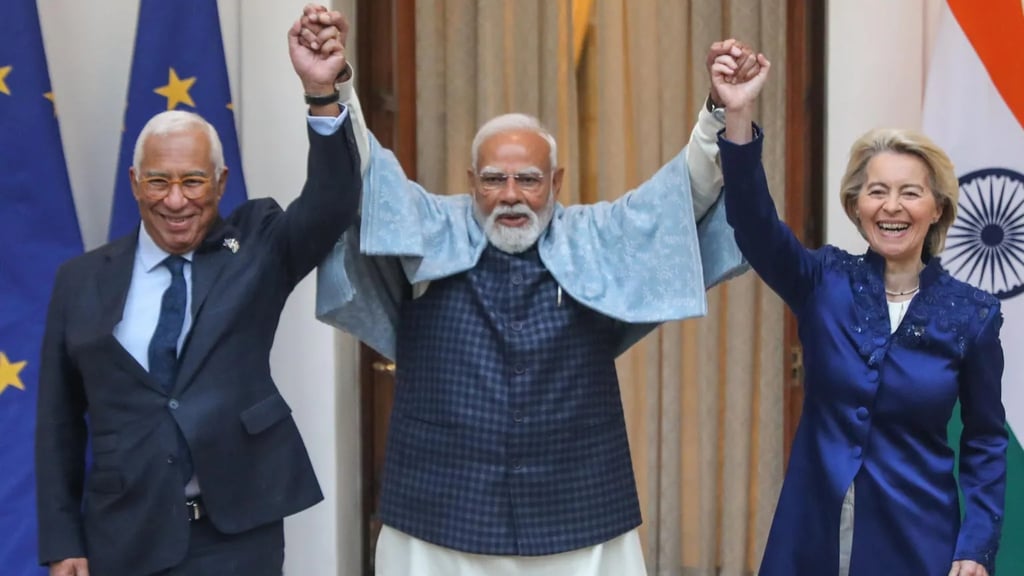
For Europe, the agreement offers economic security and access to a fast-growing market amid global turbulence. Germany and France are expected to be major beneficiaries. While the pact is not seen as the most ambitious version once imagined, experts describe it as a foundation for deeper future integration.
Formal signing is expected later this year, pending approval by the European Parliament and member states. Alongside trade, India and the EU are advancing parallel talks on security, defence cooperation, maritime safety, cyber threats, and climate action—underscoring that this deal is as strategic as it is economic.