
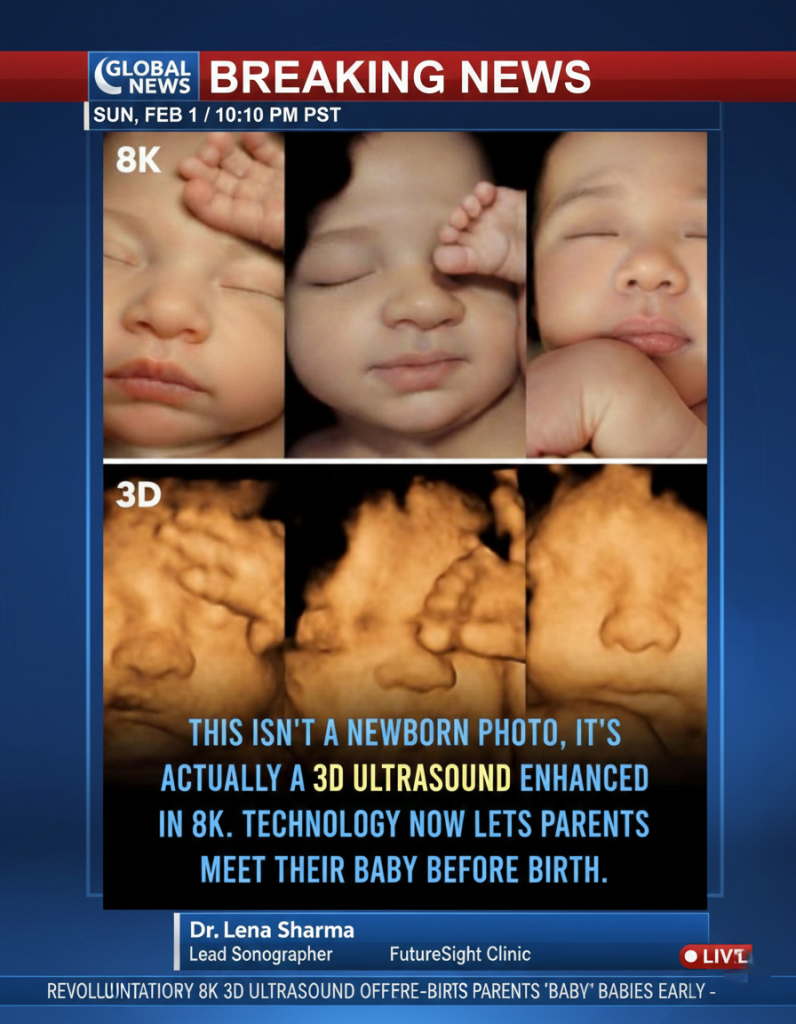
What used to be a grainy black-and-white scan is rapidly transforming into something astonishing.
New AI-enhanced imaging tools are now refining 3D/4D ultrasound data into ultra-detailed, near-photographic portraits—often described as 8K-style visualizations. The result? Parents can see remarkably lifelike images of their babies before birth, with facial details that closely resemble newborn photos.
It’s not magic. It’s machine learning—carefully enhancing existing ultrasound data to improve clarity, depth, and realism.
🔬 How It Works (In Simple Terms)
Traditional 3D/4D ultrasounds capture volumetric data
AI models analyze patterns, reduce noise, and sharpen features
The output is a high-resolution visualization that looks far more realistic
Importantly, this technology enhances visualization only—it does not replace medical imaging or diagnosis.
💬 Why Parents Are Amazed
Families are reacting strongly because:
The images feel more personal and emotionally connecting
Many parents say the portraits closely match their baby after birth
It allows bonding earlier in pregnancy
For many, it’s the first time they feel like they’re truly “seeing” their child.
🧠 What This Means for Prenatal Care
While the tech is primarily used for keepsake and bonding purposes, it signals a broader shift:
AI is improving how medical data is presented
Visualization is becoming more intuitive and human-centered
Expectant parents are more engaged than ever
This isn’t about replacing doctors—it’s about enhancing understanding and connection.
❓ Q&A Section