
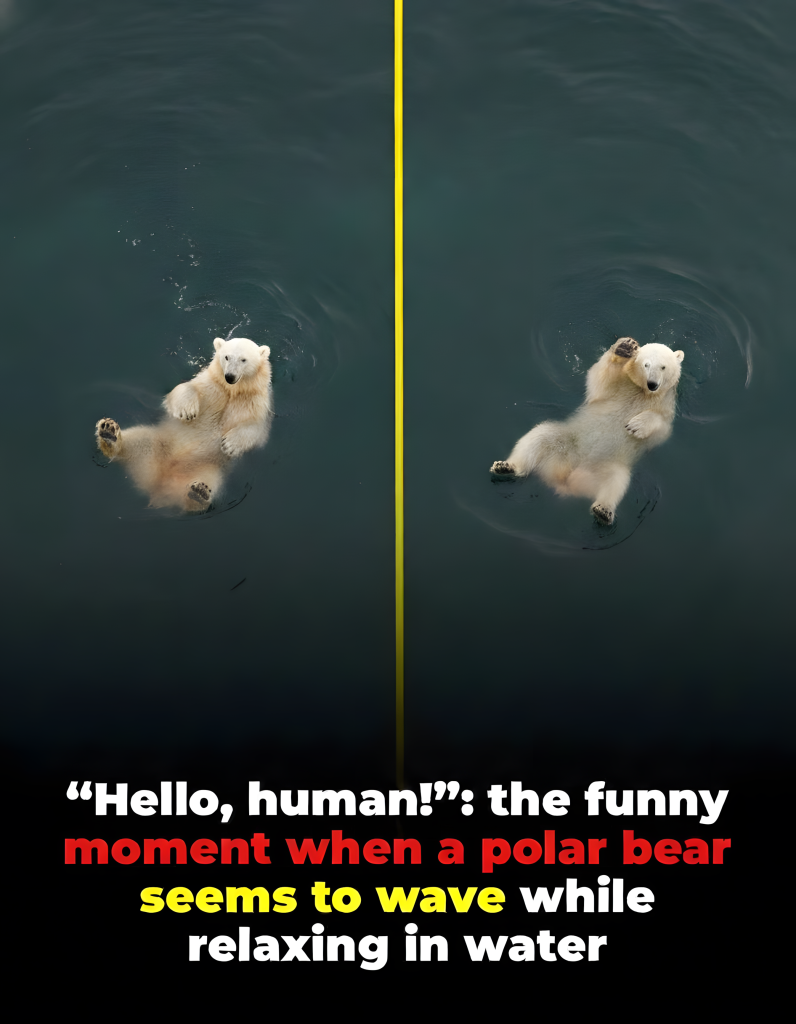
In the Arctic, a rare and tranquil scene was captured on camera: a polar bear calmly floating in icy summer waters, even appearing to wave at the recording device. The footage offers a glimpse of a peaceful side of a predator typically associated with harsh survival conditions.
The Arctic summer provides moments like these when polar bears can rest, despite their demanding lifestyle. With melting ice and shifting habitats, breaks from the constant search for food are critical for conserving energy and maintaining health.
Why Floating Is Important for Polar Bears
Polar bears travel vast distances across ice and open water to hunt for seals and other prey. Floating allows them to recover strength and conserve energy, which is essential in an environment that is increasingly affected by climate change and diminishing sea ice.
Researchers note that these brief respites are a normal but vital part of a polar bear’s survival strategy, enabling them to endure long periods of hunting and travel.
A Rare Glimpse Into Wildlife Behavior
The recorded moment highlights the less often seen behaviors of polar bears, showing their adaptability and resilience in the face of environmental challenges. While typically viewed as fierce hunters, this footage reminds us that even apex predators have moments of calm and recovery.
Such images also underscore the importance of protecting Arctic habitats to ensure that these animals continue to thrive despite changing climate conditions.
Conservation Implications
With the Arctic warming at an accelerated rate, the challenges for polar bears are growing. Observing natural behaviors like floating can help scientists better understand energy conservation strategies and the overall well-being of the species in a rapidly changing ecosystem.
Professional Q&A Section