
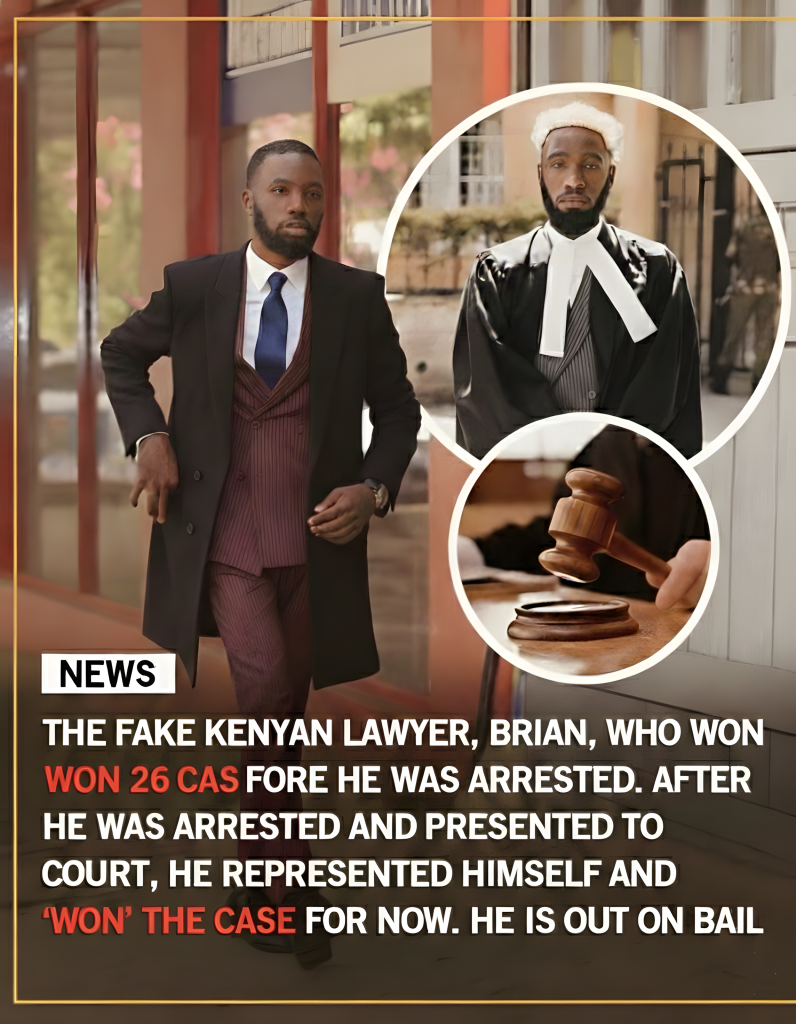
A man identified in reports as Brian has drawn national attention in Kenya after authorities accused him of practicing law without a license — and after he later represented himself in court following his arrest.
According to officials, Brian allegedly handled and won multiple court cases despite not being admitted to the bar or licensed to practice law. The case raised serious concerns about oversight within the legal system and how he was able to operate for an extended period without detection.
He was eventually arrested on allegations including impersonation and fraud.
Courtroom Twist
Following his arrest, Brian chose to represent himself in court rather than hire legal counsel. During his appearance, he successfully argued for bail and was granted release pending further proceedings.
The development sparked widespread public reaction, with some expressing disbelief that someone accused of impersonating a lawyer could competently argue his own case. Others questioned how systemic safeguards may have failed.
Legal Context
In most jurisdictions — including Kenya — practicing law without proper licensing is a criminal offense. Bar admission requirements exist to ensure attorneys meet professional standards and ethical obligations.
Representing oneself in court, however, is generally permitted. Defendants have the right to self-representation, though legal experts often caution that it can be risky without formal training.
Public Debate
The case has prompted debate across social media and news platforms:
- How did he manage to appear in court undetected?
- Were there verification failures within the system?
- Does courtroom skill equate to legal qualification?
Legal analysts note that winning procedural motions, such as bail applications, is different from defending against full criminal charges. The broader case remains a matter for the courts.
Bigger Questions
The situation highlights two parallel issues:
- Regulatory oversight in the legal profession
- Public fascination with unconventional courtroom success stories
While some have framed the story as impressive, legal authorities emphasize that licensing laws exist to protect clients and maintain trust in the justice system.
Professional Q&A Section