
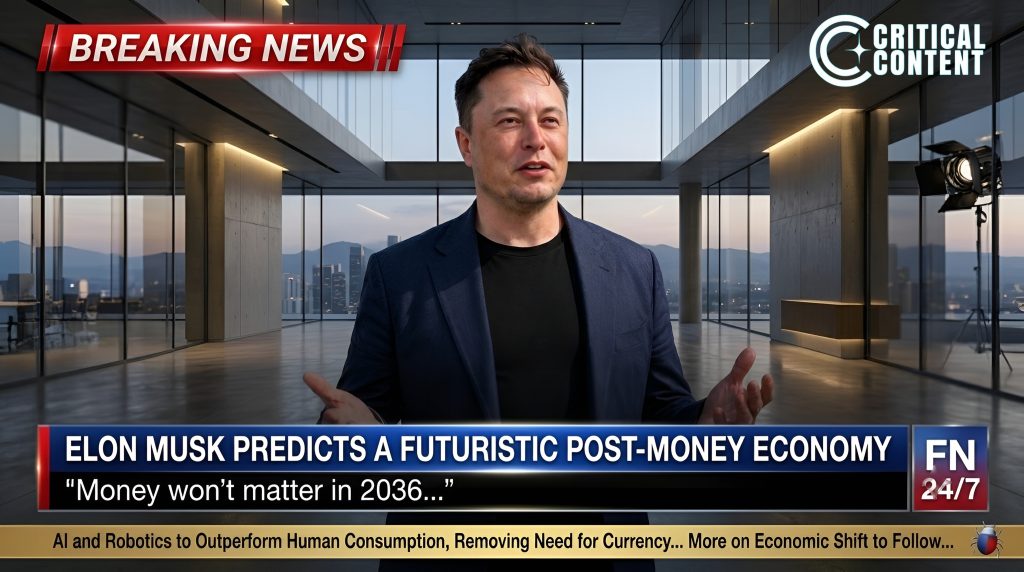
As artificial intelligence and robotics continue to advance, discussions about how these technologies could reshape the global economy are becoming increasingly common.
During a recent interview, Elon Musk shared a bold prediction about the future. According to Musk, rapid progress in AI, humanoid robots, autonomous factories, and self-driving technology could make goods and services so inexpensive that money may become far less important by 2036.
While Musk believes automation could usher in an era of unprecedented abundance, many economists caution that the outcome will depend on how the benefits of AI are distributed across society.
What Happened
In a recent interview, Musk discussed his long-term outlook for artificial intelligence and automation.
According to his comments, he expects continued advances in AI-powered systems to transform nearly every major industry over the next decade.
Musk suggested that future technologies—including Tesla’s Optimus humanoid robot, autonomous manufacturing facilities, self-driving transportation, and increasingly capable AI models—could dramatically lower production costs.
He argued that if robots perform much of the physical labor while AI handles many knowledge-based tasks, businesses may eventually produce goods and services at a fraction of today’s costs.
According to Musk, this could lead to an economy where scarcity becomes less of a limiting factor than it is today.
However, he did not suggest that this outcome is guaranteed, nor did he present it as an established forecast. Rather, it reflects his vision of how technological progress could reshape economic systems if current trends continue.
Background
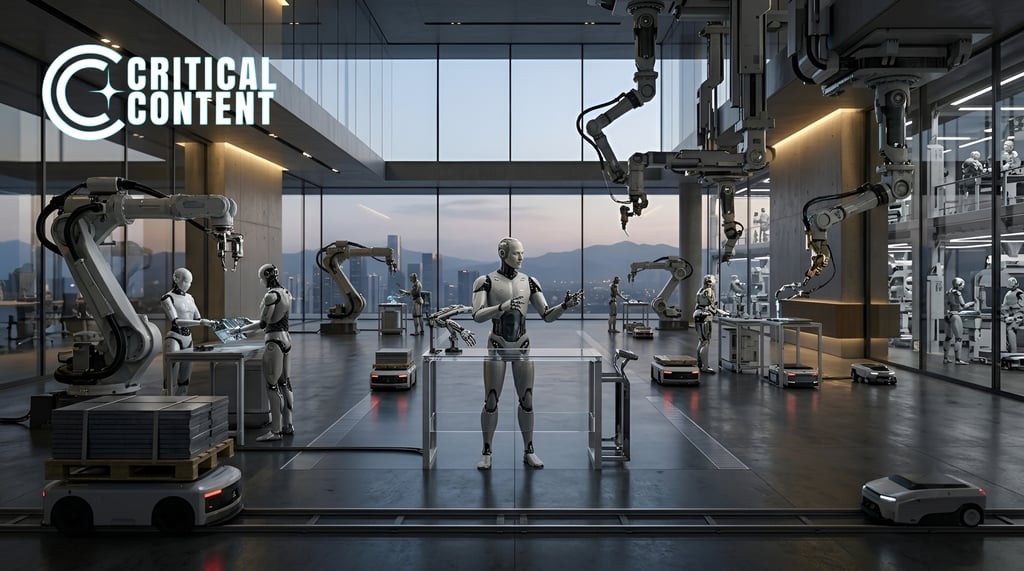
Artificial intelligence has advanced rapidly in recent years, with businesses increasingly adopting AI tools for software development, customer service, healthcare support, manufacturing, logistics, education, and research.
At the same time, robotics companies are developing machines capable of performing more complex physical tasks in warehouses, factories, and other workplaces.
Technology companies argue that automation can increase productivity, improve efficiency, and reduce production costs.
Historically, technological revolutions—from mechanized manufacturing to computers and the internet—have often lowered the cost of many products while also transforming labor markets.
Why This Matters
If AI and robotics continue to improve at their current pace, they could significantly influence how goods and services are produced.
Potential benefits often discussed include:
- Lower manufacturing costs.
- Increased productivity.
- Faster scientific research.
- Improved healthcare efficiency.
- More affordable transportation.
- Expanded access to education through AI tools.
At the same time, economists and policy experts point to several important challenges:
- Job displacement in some industries.
- Income inequality.
- Ownership of AI technologies.
- Workforce retraining.
- Government regulation.
- Distribution of economic gains.
The long-term impact will likely depend not only on technological progress but also on public policy, business practices, and broader economic conditions.
Public Reaction
Musk’s comments have generated considerable discussion online.
Supporters argue that AI and robotics could eventually reduce the cost of many everyday products and improve living standards around the world.
Others remain skeptical, suggesting that while automation may increase productivity, it does not automatically ensure that savings will be shared broadly with consumers.
Many observers believe the future will likely fall somewhere between these perspectives, with substantial technological benefits accompanied by significant economic and social challenges.
Expert or Wider Context
Many economists agree that artificial intelligence has the potential to boost productivity and economic growth.
However, there is less consensus on whether that would make money itself substantially less important.
Some researchers argue that abundant automation could reduce the prices of many manufactured goods and digital services.
Others note that resources such as housing, land, healthcare infrastructure, energy, and natural resources may continue to experience scarcity, meaning prices would still play an important role in allocating those resources.
Experts generally agree that the overall outcome will depend on factors including technological adoption, market competition, government policies, and who owns and controls increasingly powerful AI systems.
Final Thoughts
Elon Musk’s vision of a future in which AI and robots dramatically reduce the cost of goods and services is one possible outlook for the coming decade.
Whether that vision becomes reality remains uncertain.
While advances in automation may improve productivity and lower costs in many sectors, economists emphasize that technology alone will not determine how wealth, opportunity, and economic benefits are distributed.
As AI continues to evolve, debates about its impact on jobs, affordability, and the future of the global economy are likely to remain at the forefront of public discussion.
FAQ