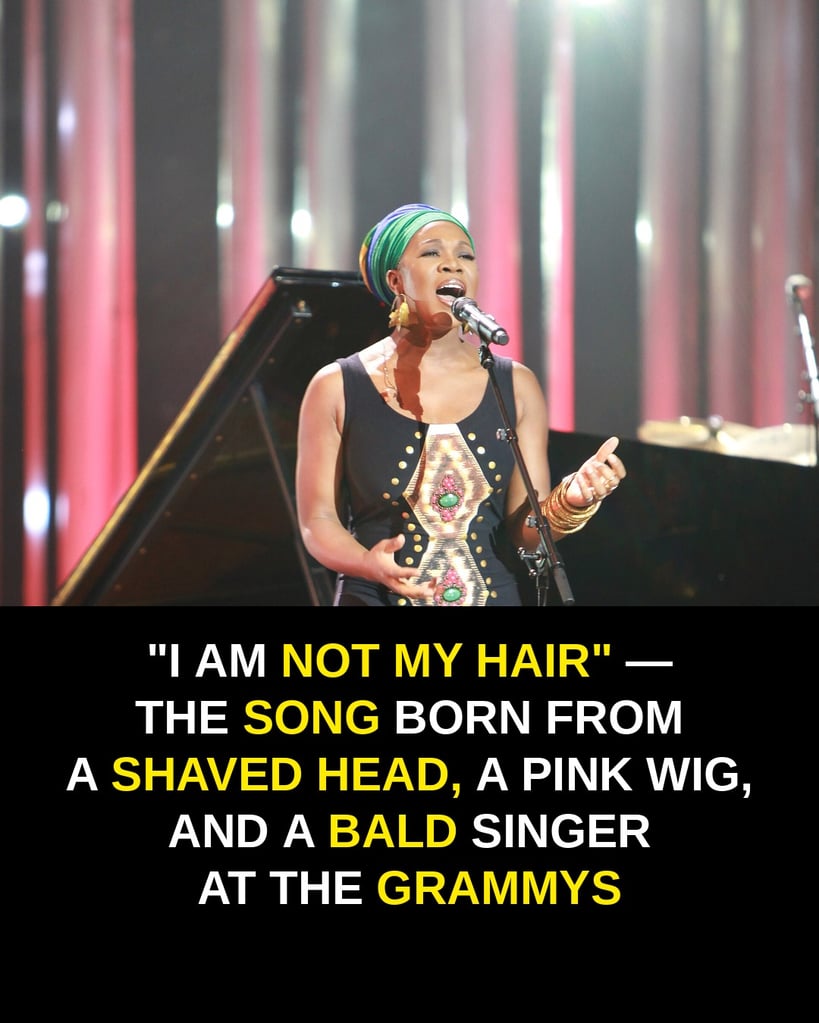
Everybody knows the chorus. Almost nobody knows the whole story. “I Am Not My Hair” was not born from one haircut — it came together from three threads at once: another singer’s famous pink hair, a bald performance at the Grammys that stopped her cold, and scars on her own scalp from childhood.
India.Arie’s “I Am Not My Hair” was released on November 15, 2005, as the lead single from Testimony: Vol. 1, Life & Relationship (2006). It became an anthem — the song women play at big chops, after breakups, after diagnoses, whenever the world has been measuring them by their hair and they are done with it. But the anthem’s origin is richer than the version that usually gets shared.
Thread one: it started with Pink
Here is the part that surprises people: Arie’s original concept was a duet sparked by Pink — yes, Pink — ditching her signature pink hair.
Think about what that means. Pink’s pink hair was her trademark, the thing that made her recognizable across a room. When she let it go, it raised the exact question Arie’s song would ask: if the hair everybody knows you by disappears, who are you underneath it?
The duet concept did not become the finished record. But it lit the fuse.
Thread two: Melissa Etheridge, bald at the Grammys
The final verse came from a television moment. Arie watched Melissa Etheridge perform at the 2005 Grammys — bald from chemotherapy, on one of music’s biggest stages, singing anyway.
Arie put it right into the lyric: “breast cancer and chemotherapy took away her crowning glory.”
That verse is why the song reaches so far beyond beauty standards. Etheridge was not making a fashion choice. Her hair was taken by illness and treatment, and she stood in front of millions without hiding it. Arie saw what that proved: a woman’s glory was never actually in the hair. The glory walked onto that stage bald, and sang.

Thread three: her own scissors — and her own scars
And it was personal, in the most literal way. While writing the song, Arie cut her own hair off.
She also carried a childhood history into those lyrics — one too many readers of this page will recognize. In her own words: “I had my hair burned off of my head with relaxers — I had scabs on my scalp.”
Read that again. Scabs. On a child’s scalp. From a product adults put on her head to make her hair acceptable. When Arie sang about hair, she was not theorizing. She had been burned by the standard she was now singing against, long before she had any say in the matter.
So no — the flattened version, “she wrote it because she shaved her head,” is only a third of the story. The song is a duet idea that became a solo testimony, a tribute to a cancer survivor’s courage, and a woman settling accounts with her own childhood burns, all at once.
The footnote she told Oprah
One more piece of the record deserves daylight. The label later insisted that Akon be added to the song for radio — a commercial decision layered onto a deeply personal record. Arie disclosed that herself, on Oprah in 2007. The anthem outlasted the argument: it is her voice, and her three threads, that people are still singing back nearly two decades later.
Join the conversation
Which thread hit you hardest — Pink walking away from her signature look, Melissa Etheridge singing bald at the Grammys, or India.Arie’s own relaxer burns as a little girl? And be honest: what did “I Am Not My Hair” play at in YOUR life — a big chop, a fresh start, or something harder? Tell us below.
Source note: “I Am Not My Hair” was released November 15, 2005 as the lead single from Testimony: Vol. 1, Life & Relationship (2006). The three-thread origin — the original duet concept sparked by Pink ditching her signature pink hair; the final verse following Melissa Etheridge’s bald-from-chemotherapy performance at the 2005 Grammys, reflected in the lyric “breast cancer and chemotherapy took away her crowning glory”; and Arie cutting her own hair while writing it, with her account of childhood relaxer burns (“I had my hair burned off of my head with relaxers — I had scabs on my scalp”) — is drawn from song scholarship with cited interviews and Arie’s Pride Source interview (July 27, 2006). The label’s insistence on adding Akon for radio was disclosed by Arie on Oprah (April 16, 2007). The flattened claim that she wrote the song simply because she shaved her head is incomplete.
Tell us in the comments below - we read every single one, and the best takes get featured.