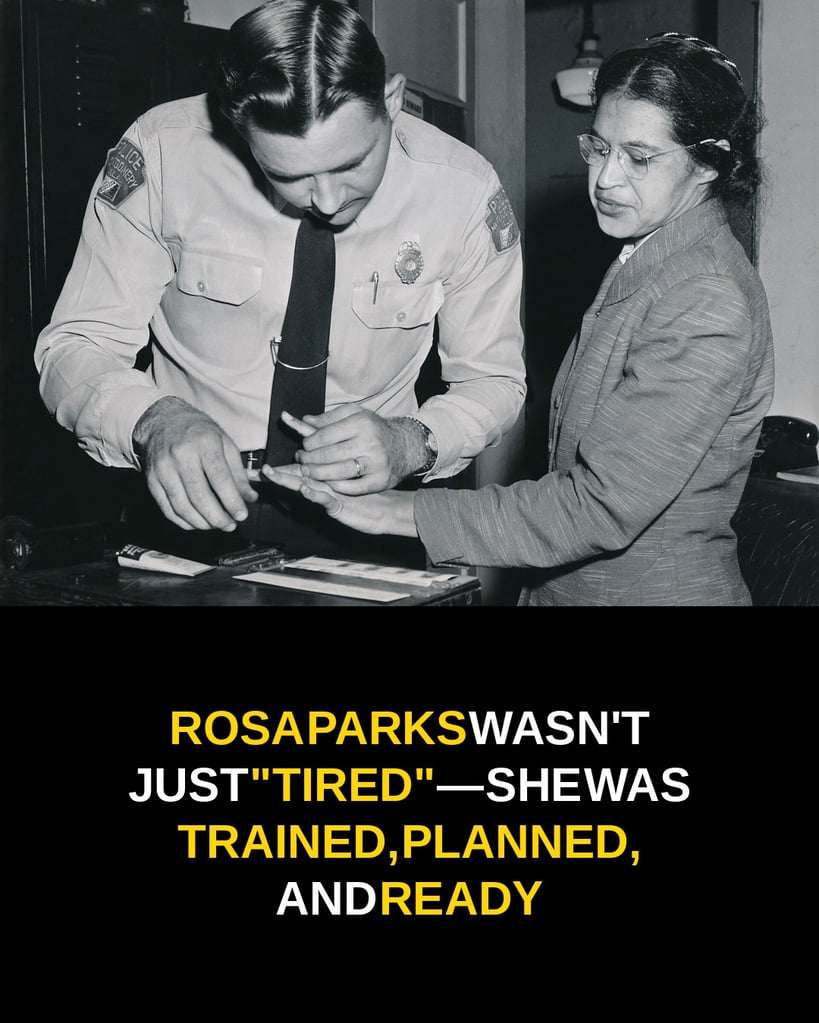
You’ve seen this one: a tired seamstress, done with a long day, who simply couldn’t get up from her bus seat one more time. It’s a gentle story. It’s also wrong — and the woman herself corrected it in her own book. Rosa Parks wasn’t an accident of fatigue. She was trained, she was planned, and she was ready.
Because this page checks before it posts, here is the claim against the record.
The claim vs. the truth
The claim: On December 1, 1955, Rosa Parks spontaneously refused to give up her seat because she was tired from work — a quiet, unplanned act by an ordinary woman who’d simply had enough that day.
The truth: Parks had been secretary of the Montgomery NAACP chapter from 1943 to 1956 — more than a decade of civil rights work before she ever boarded that bus. And in the summer of 1955, months before her arrest, she attended a two-week desegregation workshop at the Highlander Folk School, training ground for the movement. She was a seamstress, yes. She was also one of the most prepared people in Montgomery.
In her own words
Nobody corrects the myth better than Parks herself did. In Rosa Parks: My Story (1992), she wrote: “People always say that I didn’t give up my seat because I was tired, but that isn’t true. I was not tired physically… I was not old… I was forty-two. No, the only tired I was, was tired of giving in.”

Forty-two. An NAACP secretary of twelve years’ standing. Fresh from a desegregation workshop. That is not a woman swept up by a moment — that is a woman a moment had been prepared for, by years of her own deliberate work.
Why the correction makes her bigger, not smaller
Some people resist this version, as if preparation takes something away from courage. It does the opposite. The tired-feet story makes her arrest a fluke — history happening to a tired woman. The true story makes it what it was: a trained organizer, embedded in a movement, who understood exactly what her refusal would cost and what it could start, and did it with her eyes open.
A movement doesn’t run on accidents. It runs on people who did the unglamorous years first — the meetings, the secretary’s minutes, the summer workshop nobody photographed. December 1, 1955 was the day the preparation became visible. The preparation was the story all along.
Join the conversation
Be honest: were you taught the “tired seamstress” version in school? And which Rosa Parks do you find more inspiring — the accident, or the organizer who spent twelve years getting ready? Tell us below.
Source note: The correction of the “tired seamstress” version rests on the documented record: Rosa Parks served as secretary of the Montgomery NAACP chapter from 1943 to 1956 and attended a two-week desegregation workshop at the Highlander Folk School in the summer of 1955, months before her December 1, 1955 arrest. Her own correction — “People always say that I didn’t give up my seat because I was tired, but that isn’t true. I was not tired physically… I was not old… I was forty-two. No, the only tired I was, was tired of giving in” — is from Rosa Parks: My Story (1992), as quoted in Oxford University Press, Black Women in America.
Tell us in the comments below - we read every single one, and the best takes get featured.