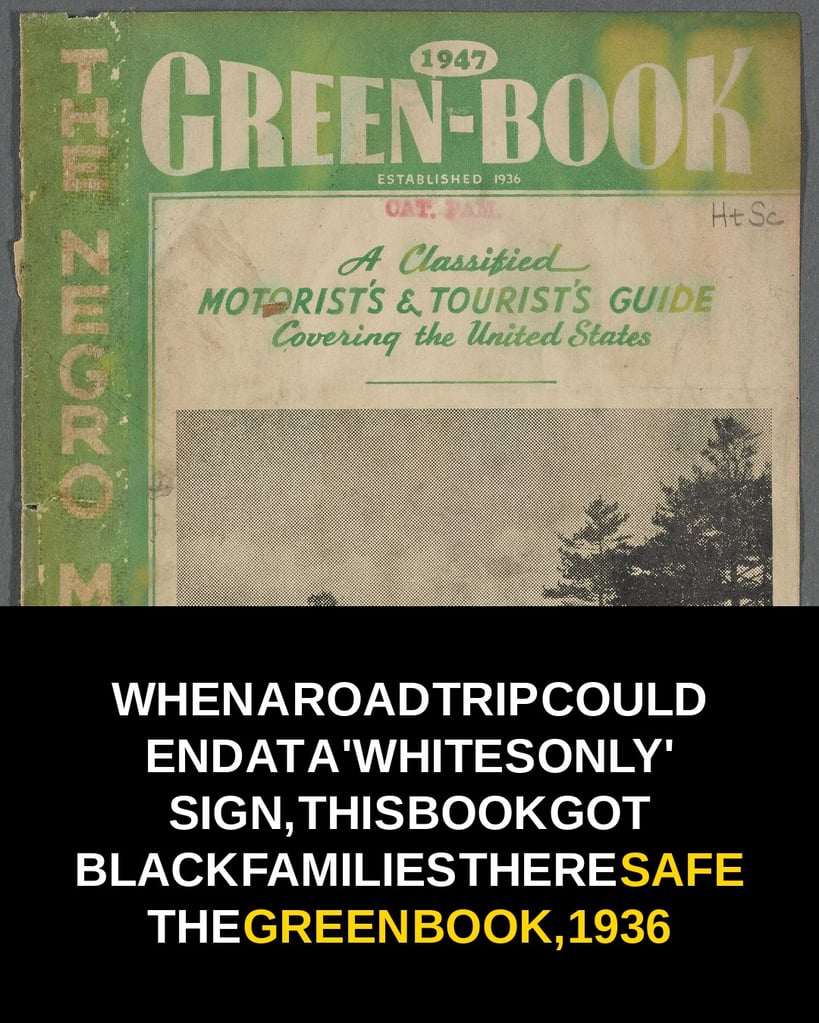
This week, families are packing cars and hitting the road to get to the people they love. There was a time when that same trip, for a Black family, could end at a “Whites Only” sign with nowhere safe to stop. A Harlem mailman printed the book that got them there safe.
Victor Hugo Green was born on November 9, 1892. He was a Harlem postal worker — a mailman, a man whose everyday job was making sure things reached the people they were meant for. In 1936, he turned that instinct toward the road, and first published The Negro Motorist Green Book.
The first edition covered the New York City area and sold for 25 cents. Twenty-five cents for the difference between driving blind into a segregated country and driving with a plan: here is where you can eat, here is where you can sleep, here is where your family will be served. Few purchases in American history have ever carried that much weight for a quarter.
A guide that grew with the road
The Green Book grew into a nationwide annual guide to hotels, restaurants, gas stations and businesses that would serve Black travelers during segregation. It was sold through Esso gas stations and by mail order, and at its height it moved roughly 15,000 copies a year. Fifteen thousand copies a year — and every copy was shared, passed hand to hand, carried in glove boxes across state lines, protecting far more families than the sales number alone can count.
Understand what the book really was. It was not a travel luxury. It was safety equipment — as necessary to a Black road trip as gas in the tank. A family planning a long drive did not just pack clothes and food. They packed the Green Book, and they planned the whole journey around what it told them, because guessing wrong about a town could cost far more than a night’s sleep.
The book that wanted to end itself
Green published the guide until his death in 1960. His wife Alma kept it going after him, and the final edition covered 1966–67 — after the Civil Rights Act had begun the work the book always said it wanted. Because here is the most remarkable thing about Victor Hugo Green: he wrote that one day the guide would no longer need to exist. He was not building a business to last forever. He was building a bridge to a day when nobody would need it, and he said so in his own book.
Victor Hugo Green died on October 16, 1960, before that day fully arrived. His wife carried his work the rest of the way. So this Thanksgiving week, when the car is loaded and the road is open and nobody has to check a guide to know where their family can stop — remember the mailman from Harlem who printed the map through the years when they did.
Join the conversation
Did anyone in your family ever travel with a Green Book in the glove box — or have you heard their road-trip stories from those years? And had you heard Victor Hugo Green’s name before today? Tell us below.
Source note: Victor Hugo Green’s story — born November 9, 1892, and died October 16, 1960; a Harlem postal worker who first published The Negro Motorist Green Book in 1936, with the first edition covering the New York City area and selling for 25 cents; its growth into a nationwide annual guide to hotels, restaurants, gas stations and businesses that would serve Black travelers during segregation, sold through Esso gas stations and by mail order and moving roughly 15,000 copies a year at its height; Green publishing it until his death in 1960, his wife Alma keeping it going, and the final edition covering 1966–67, after the Civil Rights Act had begun the work the book always said it wanted, including Green’s own writing that one day the guide would no longer need to exist — is from Wikipedia (Green / Green Book, sourced to Smithsonian and NYPL records), the National Park Service historic-context study, and Transportation History.