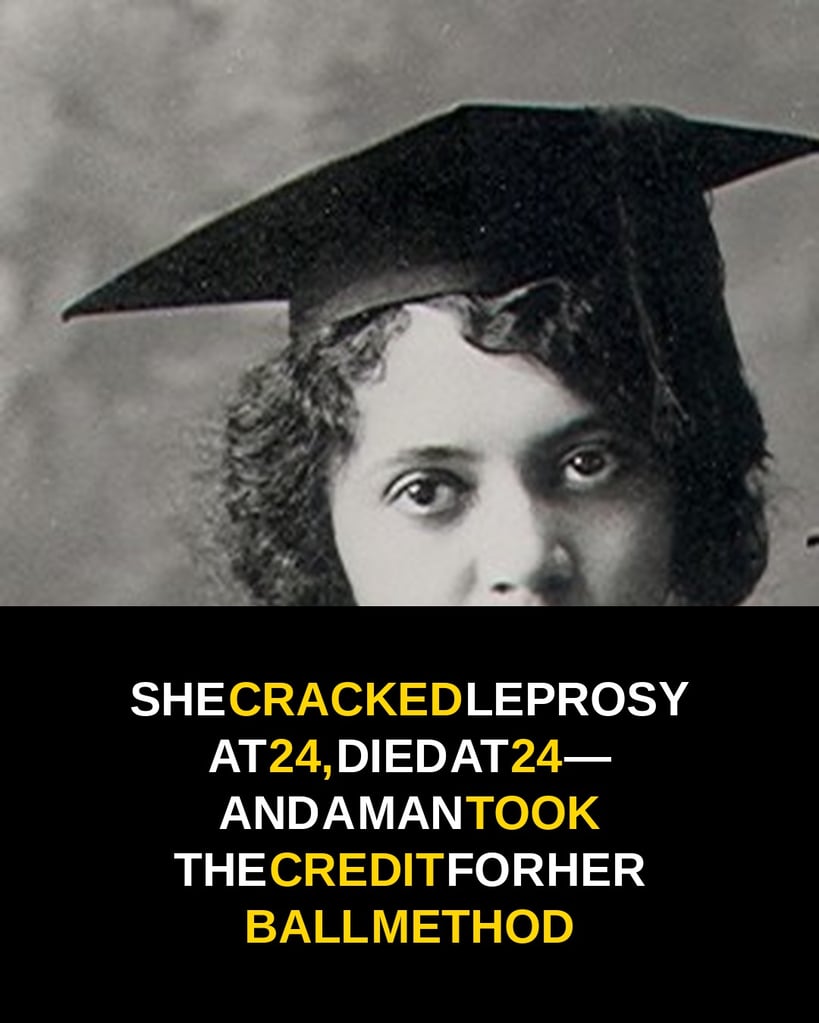
She solved a problem that had defeated medicine, she did it in her early twenties, and she was gone before she could even publish it. Alice Augusta Ball, a chemist from Seattle, created the first effective leprosy treatment — and then watched from beyond the grave, in a manner of speaking, as another man put his own name on her work. This page is putting her name back where it always belonged: on the method itself.
In 1915, Ball became the first woman and the first African American to earn a master’s degree from the College of Hawaiʻi. She also became its first Black female chemistry instructor and department head. Those firsts alone would make a life remarkable. She was just getting started — and she had almost no time left.
The problem she was asked to solve was brutal. Chaulmoogra oil helped patients with leprosy — Hansen’s disease — but the oil was too thick to inject, and it made patients sick. A treatment that helps in theory but harms in practice is not yet a treatment people can live with. Ball found the way through: she isolated the oil’s ethyl esters, creating the first injectable, absorbable version of it.
The Ball Method — and the name that replaced hers
That breakthrough became known as the “Ball Method” — the first effective leprosy treatment. It remained the standard of care until sulfone drugs arrived in the 1940s, which means her work carried patients for decades. The results spoke in human beings, not just in journals: by 1920, 78 patients treated at Kalihi Hospital had been discharged as cured/released, with 94 more in 1921.
Ball herself never saw those numbers. She died on Dec. 31, 1916, at just 24, before she could publish her work. What happened next is the part of this story that should make every reader sit up. The university’s president, Arthur Dean, continued her work, published it without crediting her — and called it the “Dean Method.” Her method. His name.
It took a surgeon, Dr. Harry Hollmann, to restore her name in print in 1922. And the restoration has continued: the American Chemical Society has since approved a National Historic Chemical Landmark in her honor. Read that arc carefully, family, because it is the whole lesson. The work was hers at 24. The credit was taken after her death. The name came back because someone who knew the truth refused to let the record stand wrong.
Twenty-four years. A master’s degree nobody like her had earned there before. A department led. A disease given its first effective treatment. And a name — Ball — that had to be fought back onto her own discovery. Say it the way it should always have been said: the Ball Method, by Alice Ball.
Join the conversation
Be honest — had YOU ever heard Alice Ball’s name before today, or did the “Dean Method” steal her from your history books too? And who is the hidden figure in science you wish every child learned first? Tell us below.
Source note: Alice Augusta Ball (1892–1916), a chemist from Seattle, in 1915 became the first woman and the first African American to earn a master’s degree from the College of Hawaiʻi and its first Black female chemistry instructor and department head; asked to solve the problem that chaulmoogra oil helped leprosy (Hansen’s disease) patients but was too thick to inject and made patients sick, she isolated the oil’s ethyl esters, creating the first injectable, absorbable treatment, the “Ball Method,” the first effective leprosy treatment and the standard of care until sulfone drugs arrived in the 1940s, with 78 patients treated at Kalihi Hospital discharged as cured/released by 1920 and 94 more in 1921; Ball died on Dec. 31, 1916, at just 24, before she could publish, university president Arthur Dean continued her work and published it without crediting her, calling it the “Dean Method,” surgeon Dr. Harry Hollmann restored her name in print in 1922, and the American Chemical Society has since approved a National Historic Chemical Landmark in her honor — from the University of Hawaiʻi, Smithsonian Magazine, and the British Pharmacological Society.