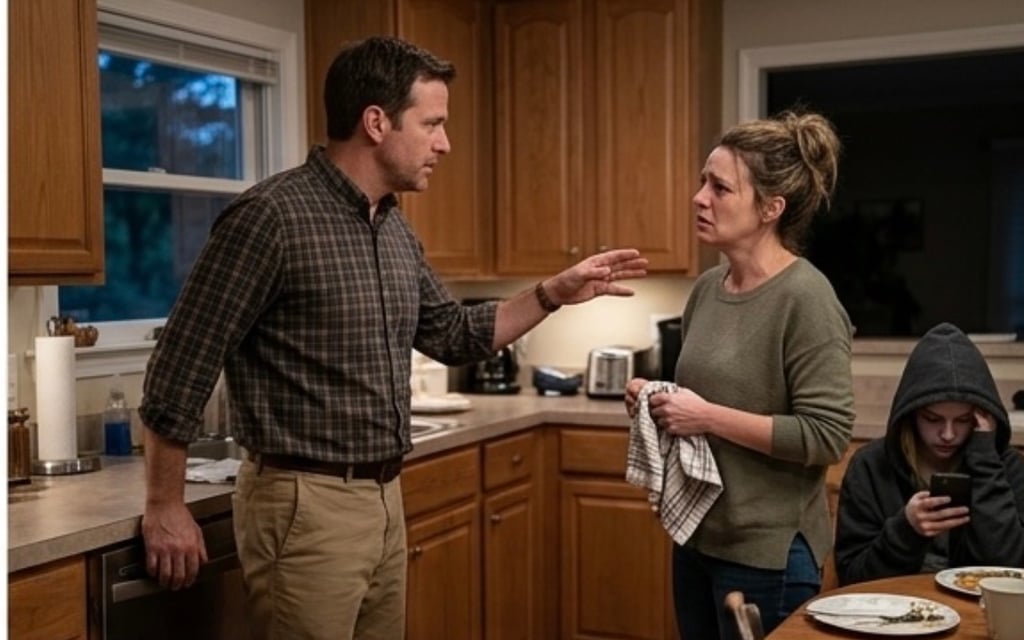
For weeks I watched my fifteen-year-old fade in front of me. My husband called it teenage drama. A hospital scan called it something else entirely.
Hailey had been the kind of teenager who spent her afternoons on the soccer field, stayed up laughing with friends, and always had a camera in her hand. Then, slowly, she started disappearing. She woke up nauseous almost every morning. She complained of stomach pain so severe she would curl forward until it passed. She was dizzy, exhausted, sleeping far more than any teenager should, and losing weight. She rarely left her room, barely talked, and wore oversized hoodies even in warm weather, as if she were trying to hide from the world.
As her mother, I knew this was not normal. My husband, Mark, saw it completely differently.
“Teenagers Exaggerate Everything”
Every concern I raised was dismissed. When I pointed out the weight loss, he shrugged. When I mentioned the constant fatigue, he rolled his eyes. He told me repeatedly that she was fine, that teenagers exaggerate, that she was being dramatic and I was making too much of it.
But I kept watching. I watched her push food around her plate without eating. I watched her sleep half the day and still wake up exhausted. I watched the colour leave her face. The more certain he became, the more worried I grew — because deep down, I knew something was seriously wrong.
The Night I Stopped Waiting
One evening, after Mark had gone to bed, I checked on Hailey before turning in. She was curled into a ball on her bed, clutching her stomach, her face ghostly pale, her pillow soaked with tears. She whispered that it hurt, and begged me to make it stop.
Every remaining doubt vanished. In that moment I stopped worrying about arguments, about money, about whether Mark would be angry. This was not drama. This was pain — real pain — and I was not going to ignore it.
The next day, while Mark was at work, I took Hailey to the hospital alone. She barely spoke on the drive, and even sitting in the waiting room seemed to exhaust her. Doctors ordered blood work and tests, and hours later she was wheeled in for an ultrasound while I waited, counting every minute.
When the doctor came back, his expression told me the news before he said a word. In his office, he pointed to the scan on his screen and explained there was a mass, approximately six centimetres. When I asked if it was cancer, he chose his words carefully: they could not know for certain until a biopsy, but given her symptoms and its location, it had to be investigated immediately.
My daughter was fifteen. She should have been worrying about exams, friends and soccer games — not this.
A Father’s Wake-Up Call
When I called Mark from the hospital, I expected concern. What I got first was anger that I had taken her without discussing it with him. I told him they had found a mass. Silence, then a promise to talk when he got there.
A few days later the biopsy results arrived. The tumour was cancerous — identified, in the story, as a germ cell tumour, a rare form of cancer that often affects children and young adults. It was terrifying news with one thing in our favour: they had caught it early. Had I waited longer, the outcome could have been very different.
Treatment began almost immediately. Chemotherapy was brutal: within weeks Hailey’s hair began falling out, and some days simply getting out of bed felt impossible. But she was fighting, and she was alive.
Two weeks into her hospitalisation, Mark finally sat beside her bed long enough to truly see her — the daughter he had accused of exaggerating, now bald, weak and connected to machines. After she fell asleep, I told him quietly that if I had listened to him, she might not be there. He did not argue. I told him that if he ever ignored something like this again, I would not stay. The words were calm, and I meant every one of them.
Three Years Later
Today, three years on, Hailey is healthy. Her hair has grown back, and she is back at school, back on the soccer field, back behind her camera — back to all the small things that make a teenager who she is.
The experience changed our family, our marriage and the way we parent. And it left me with a lesson I will never forget: when your child tells you something is wrong, listen. When your instincts tell you something is not right, trust them. Never wave pain away just because it is inconvenient, expensive, or hard to understand. Sometimes a child is not being dramatic. Sometimes they are asking for help — and sometimes, listening is what saves a life. Hailey is here today because someone believed her, and as her mother, that is a decision I will never regret.
Source note: Original story via ViralStrange (https://viralstrange.com/my-husband-said-our-daughter-was-faking-her-symptoms-then-one-hospital-scan-changed-everything/). Retold in our own words for Critical Content; story as originally narrated, not independently verified.