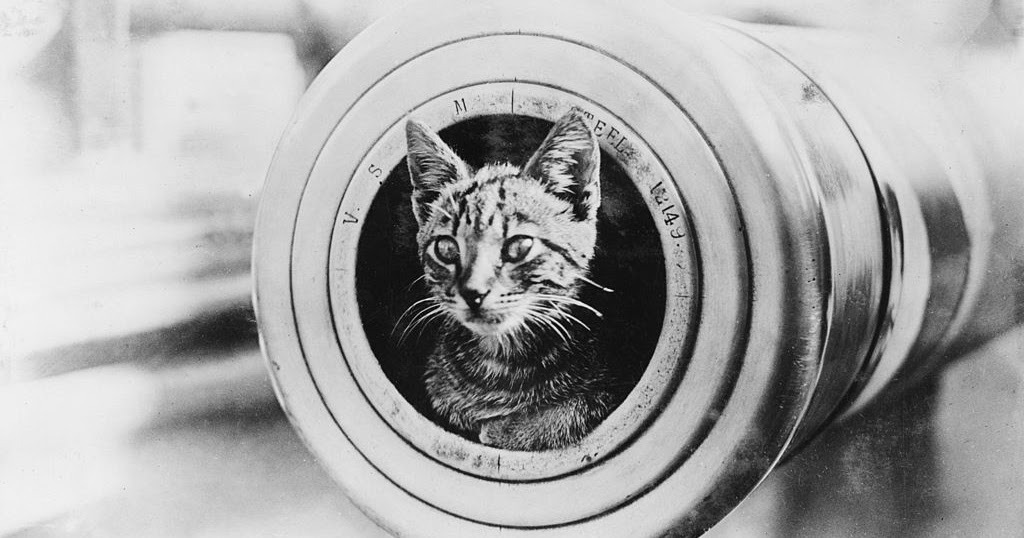
Three warships went down beneath him in six months. Every time, rescuers found the same black-and-white cat — alive, floating on wreckage, and reportedly in a foul mood.
The story begins in May 1941 aboard the German battleship Bismarck. When British forces sank her, a cat was pulled from the sea by the destroyer HMS Cossack. Unable to learn his German name, the crew called him Oscar.
Five months later, Cossack herself was torpedoed and sank. Oscar was rescued again — found clinging to floating debris, described in reports as “angry but quite unharmed.”
Third Time at Sea
Transferred to the aircraft carrier HMS Ark Royal, the cat barely had time to settle before Ark Royal was torpedoed in November 1941 and sank near Gibraltar. And once again, there he was in the water — clinging to a plank, alive.
At that point, the Royal Navy decided his seagoing career was over, for everyone’s sake. “Oscar” became “Sam,” and then a legend: Unsinkable Sam.
Retirement on Dry Land
Sam spent a short time in the office of the Governor of Gibraltar, then sailed — safely, this time — to a seamen’s home in Belfast, where he lived out his days and died peacefully in 1955.
A portrait of Sam hangs in the National Maritime Museum in Greenwich, London.
❓ Q&A
Q: Is the story fully verified? A: Sam is a genuine piece of Royal Navy folklore — the sinkings, dates and rescues of a cat from Ark Royal are recorded, though historians note some details grew in the telling, as sea legends do.
Q: Why was he renamed Sam? A: “Oscar” was the name the Cossack crew gave him (from the signal code for a man overboard). “Sam” came later, along with his “unsinkable” title.
Story compiled from widely reported Royal Navy accounts of Unsinkable Sam.
Tell us in the comments below - we read every single one, and the best takes get featured.