The churchyard keeper tried to chase him off. The little dog just came back. Every day, in all weather, for fourteen years.
Bobby was a Skye Terrier belonging to John Gray, an Edinburgh night watchman. The two were inseparable — workers in the city knew them as a pair, the small dog trotting at the watchman’s heels through the night streets.
In February 1858, John Gray died of tuberculosis and was buried in Greyfriars Kirkyard. The day after the funeral, Bobby was found lying on the fresh grave. He would not be moved.
Fourteen Years of Devotion
Keepers of the churchyard initially removed him; Bobby returned every time. Eventually the city gave in. A shelter was built for him inside the grounds, locals fed him, and when a new law required all dogs to be licensed or be destroyed, the Lord Provost of Edinburgh paid for Bobby’s licence himself and gave him a collar with a brass plate — the city’s own dog, for life.
Each day at the one o’clock gun from Edinburgh Castle, Bobby reportedly trotted to the coffee house where he and his master had once eaten, and was given his dinner.
Still There Today
Bobby stayed until his own death in January 1872 — fourteen years at the grave. He was buried just inside the churchyard gate, not far from his master, under a red granite headstone.

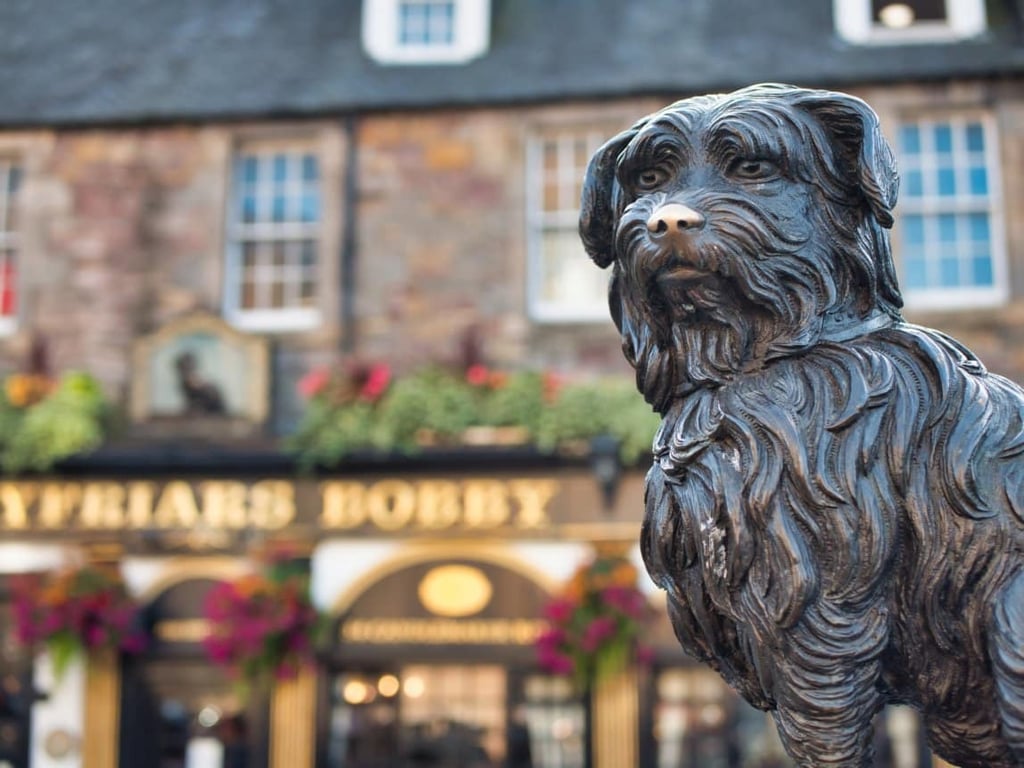
A statue of Bobby stands outside Greyfriars Kirk today, one of Edinburgh’s best-loved landmarks, its nose worn bright by generations of visitors rubbing it for luck.
❓ Q&A
Q: Is the story real? A: Bobby was a real dog, documented in Edinburgh records of the time; some details have been polished by 150 years of retelling, but his long vigil at Greyfriars is a matter of city history.
Q: Where can you see his statue? A: On George IV Bridge in Edinburgh, opposite Greyfriars Kirkyard.
Story compiled from widely reported historical accounts of Greyfriars Bobby.
Tell us in the comments below - we read every single one, and the best takes get featured.