
Australia has slapped a 10% tariff on steel ceiling frames imported from China after an investigation confirmed that some Chinese producers were dumping products into the local market. The decision came after a probe by Australia’s Anti-Dumping Commission, which found evidence that the products were being sold at unfairly low prices, undercutting domestic manufacturers.
Industry and Innovation Minister Tim Ayres approved the tariff, warning that Australia would not tolerate trade practices that harm local industries. According to government officials, the move is designed to protect domestic steel producers while still keeping the country committed to open, rules-based global trade.
Officials stressed that the decision was not political but evidence-driven. The tariff, they said, follows a detailed investigation and aligns with Australia’s international trade obligations. The government insists that such measures are necessary when unfair pricing threatens local manufacturing capacity.
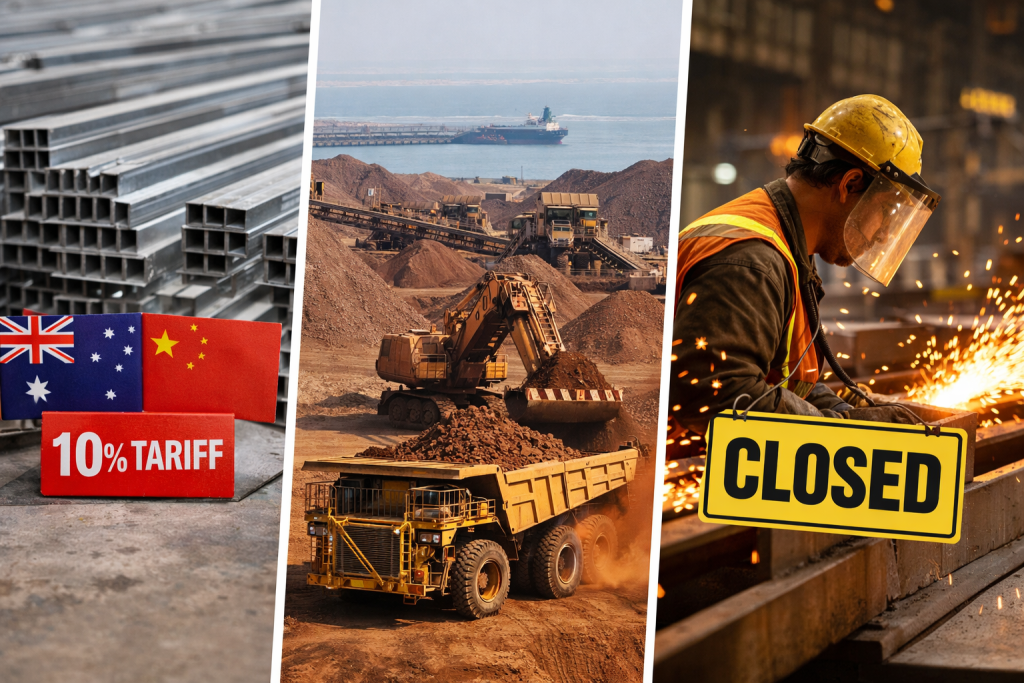
The decision, however, carries geopolitical risks. China is Australia’s biggest customer for iron ore, the raw material used to make steel. Exports of iron ore to China are projected to reach about A$114 billion ($80 billion) in the year through June, making the trade relationship critically important for Australia’s economy.
Any escalation in trade tensions could affect this delicate balance. China has already taken steps to increase control over the iron ore market through a state-backed buyer, a move that could weaken the pricing power of Australian miners and commodity traders.
Despite the concerns, China’s steel shipments to Australia remain relatively small in the broader global context. Shipments recorded strong growth in 2023 and 2024 but stayed largely flat in 2025 at around 782,000 tons, according to trade data. That figure represents less than 1% of China’s total steel exports last year.
The latest tariff is not an isolated action. Australia has already imposed duties on other Chinese steel products, including hot-rolled coil steel, as part of ongoing efforts to shield domestic manufacturers from what authorities describe as unfair competition.
In January, the country’s Productivity Commission launched a formal inquiry into protections for the fabricated steel sector. The review aims to determine whether additional safeguards are needed as local producers struggle against cheaper imports.
Industry groups have been sounding the alarm for months. The Australian Steel Institute recently called for emergency trade relief, warning about a surge in low-priced imported steel. The group claims that more than a dozen steel manufacturers in New South Wales alone shut down last year, largely because they could not compete with overseas prices.
For now, the 10% tariff represents a targeted attempt to stabilize the domestic market without triggering a broader trade conflict. But with Australia’s economy heavily tied to exports to China, the decision underscores the tightrope the country must walk between protecting local industry and preserving its most important trading relationship.