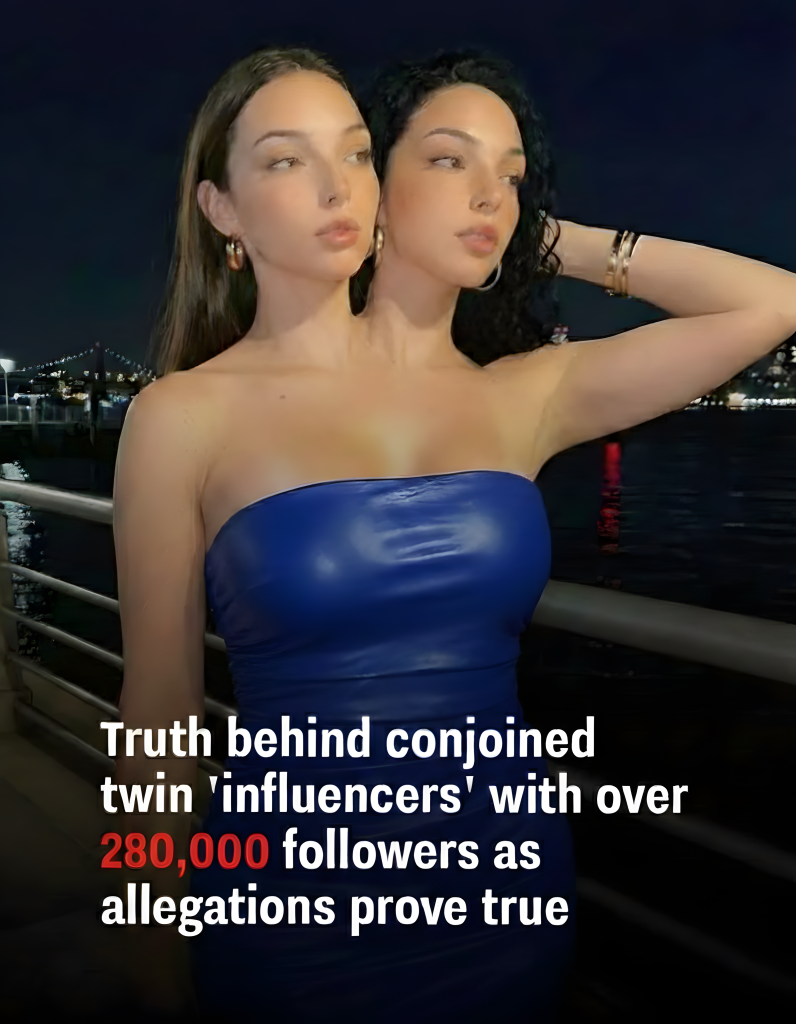
Two so-called conjoined twin influencers, known online as Valeria and Camila, built a massive following in a matter of weeks—only to be revealed as AI-generated personas, despite repeatedly denying the claims.
The account launched on Instagram on December 13, 2025, and by early 2026 had amassed over 280,000 followers. The twins appeared conjoined at the base of the neck, sharing one body, and regularly posted polished lifestyle photos—shopping, eating ice cream, and posing in public spaces.
But something felt off.
🔍 The Internet Starts Asking Questions
Almost immediately, users began scrutinizing the images. Comment sections filled with skepticism:
“AI!!!! None of this is real.”
“If it’s real, go live stream.”
“I Googled them… they aren’t real.”
One viral moment came from an image taken inside an ice cream shop. Viewers zoomed in and noticed nonsensical text on signs and menus, a common giveaway of AI-generated imagery.
🧠 Expert Confirms: It’s AI
Speaking to Daily Mail, AI prompt engineer Andrew Hulbert confirmed the suspicions.
“The narrative is created to hype potential interaction. It’s the perfect story of the perfect person to give the perfect result of engagement.”
He explained that the images were clearly AI-generated, pointing out key red flags:
Unrealistic perfection
No physical flaws
Inconsistent details (ears, fingers, markings)
Background elements that don’t make logical sense
“These images are the personification of what the media thinks beauty is,” Hulbert added.
“It’s improbable to have multiple ‘perfect’ people with flawless bodies in the same photo.”
🎥 The Denial That Didn’t Hold
Despite mounting evidence, Valeria and Camila attempted to deny the allegations.
In an Instagram Story video, they claimed:
“We move, we talk, we’re obviously not AI.”
But experts say motion alone doesn’t prove authenticity—AI video generation has advanced rapidly, especially for short clips.
Ultimately, Hulbert confirmed the account was entirely artificial—a carefully crafted engagement experiment powered by generative AI.
🌐 Why This Story Matters
This incident highlights a growing issue on social platforms:
AI personas can now build real influence
Audiences can be emotionally invested in non-existent people
Verification is becoming harder as AI realism improves
It also raises serious questions about trust, transparency, and how easily reality can be simulated online.
❓ Q&A Section (Professional)