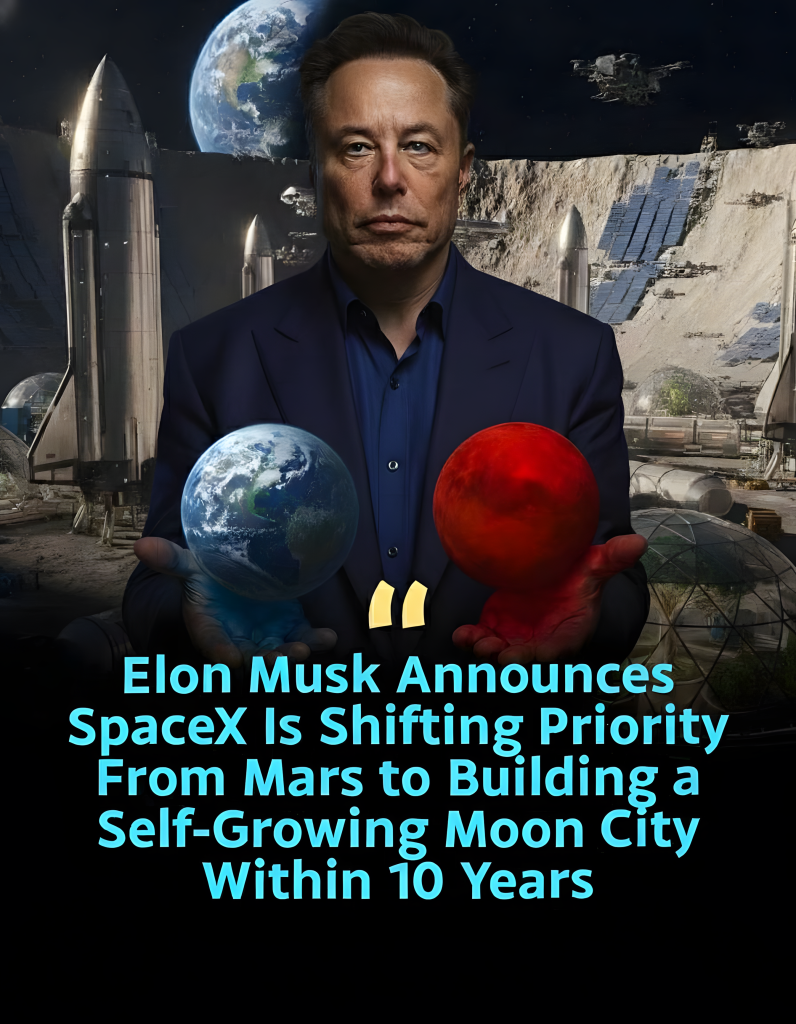
Elon Musk has sparked fresh discussion in the space and technology community after stating that SpaceX is shifting its immediate priority from Mars to the Moon, with the goal of building a self-growing lunar city within the next 10 years.
According to the statement, the Moon would serve as a critical “gas station” and staging ground before long-term missions to Mars become viable. The idea centers on using lunar infrastructure to support deeper space travel, including refueling, manufacturing, and sustained human presence.
At this time, the information has been shared for informational purposes, and no detailed roadmap or official program documentation has been publicly released.
What Is Being Claimed
The concept described involves establishing a permanent, expanding human settlement on the Moon that could support future interplanetary missions. Musk has previously discussed the Moon’s strategic value due to its proximity to Earth and lower gravity, which makes launches beyond Earth more energy-efficient.
However, SpaceX has not formally announced a cancellation or suspension of Mars plans, and existing public statements still describe Mars as a long-term objective.
What SpaceX Has Officially Said Before
Historically, SpaceX has emphasized Mars colonization as its ultimate goal, with projects like Starship designed for interplanetary travel. The Moon has also been part of SpaceX’s plans, particularly through NASA’s Artemis program and lunar lander development.
Experts note that prioritization does not necessarily mean abandonment, and strategic focus can shift depending on technology readiness, funding, and partnerships.
Why the Claim Is Drawing Attention
The idea of a “self-growing Moon city” within a decade represents a significant acceleration compared to previous public timelines for lunar habitation. The claim has generated excitement as well as skepticism, with analysts pointing out the immense technical, logistical, and regulatory challenges involved.
Without an official SpaceX briefing or documentation, the statement remains aspirational rather than confirmed policy.
Professional Q&A Section