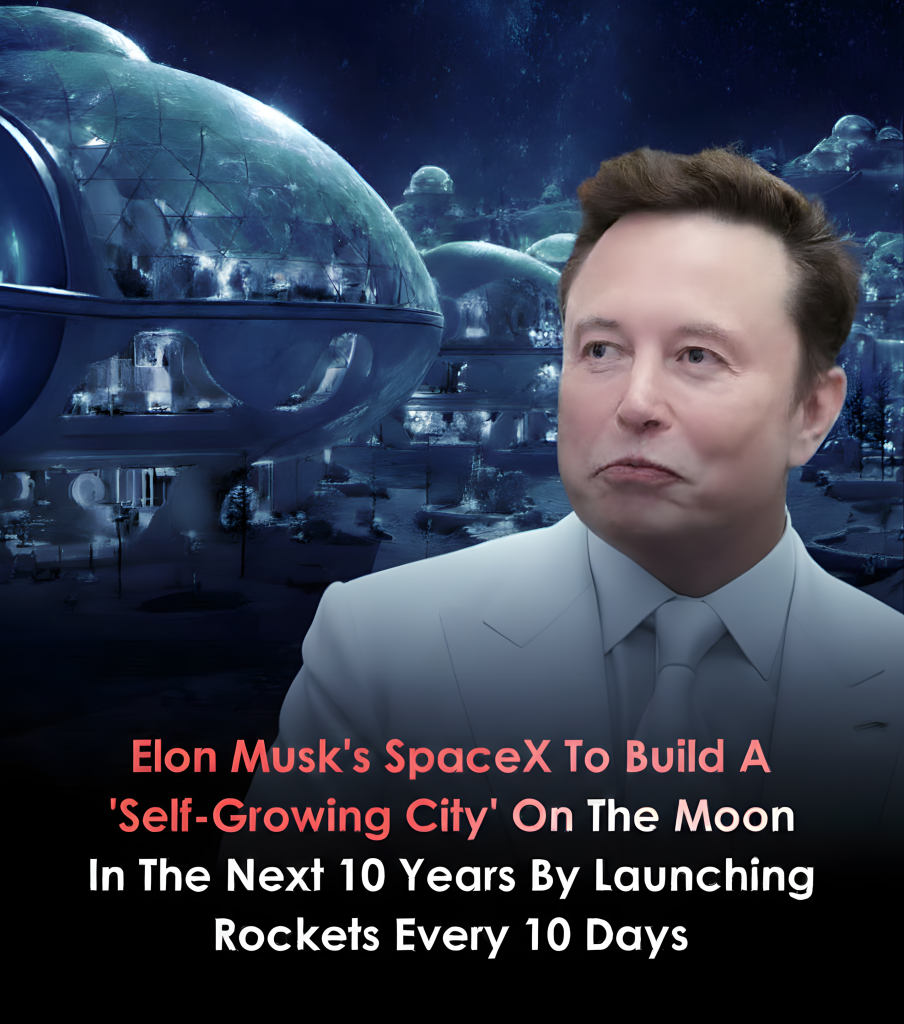
In a surprising announcement, Elon Musk revealed that SpaceX is prioritizing a new goal: establishing a self-growing city on the Moon. The move signals a strategic shift from previous Mars-focused plans, positioning the Moon as a testing ground for future interplanetary settlement.
Musk explained that lunar missions offer faster turnaround times, with launches possible every 10 days and travel taking just two days, compared to the Mars launch window, which occurs only once every 26 months.
Why the Moon Comes First
Frequent lunar trips would allow SpaceX to:
- Test habitats and living quarters
- Develop factories and infrastructure in space
- Refine life-support systems and resource management
By starting on the Moon, Musk believes engineers can experiment more efficiently, making mistakes and iterating designs without the extreme constraints and distance posed by Mars.
A Self-Growing Lunar Settlement
The concept of a “self-growing city” involves gradually expanding human presence on the Moon:
- Initial infrastructure would serve astronauts and researchers
- Automated systems could construct habitats and facilities
- Over time, the settlement could grow with minimal Earth-based support
This approach could help humanity learn, adapt, and scale off-world living before attempting more distant Martian colonization.
Public Reaction
Musk’s announcement has sparked excitement and skepticism alike. Supporters praise the pragmatic focus on incremental progress, while critics question the feasibility, cost, and technological hurdles of sustaining life on the Moon long-term.
Experts note that lunar colonization remains challenging due to radiation, extreme temperatures, and limited resources. However, SpaceX’s ambitious plan reflects the broader trend of private companies pushing the boundaries of space exploration.
Professional Q&A Section