
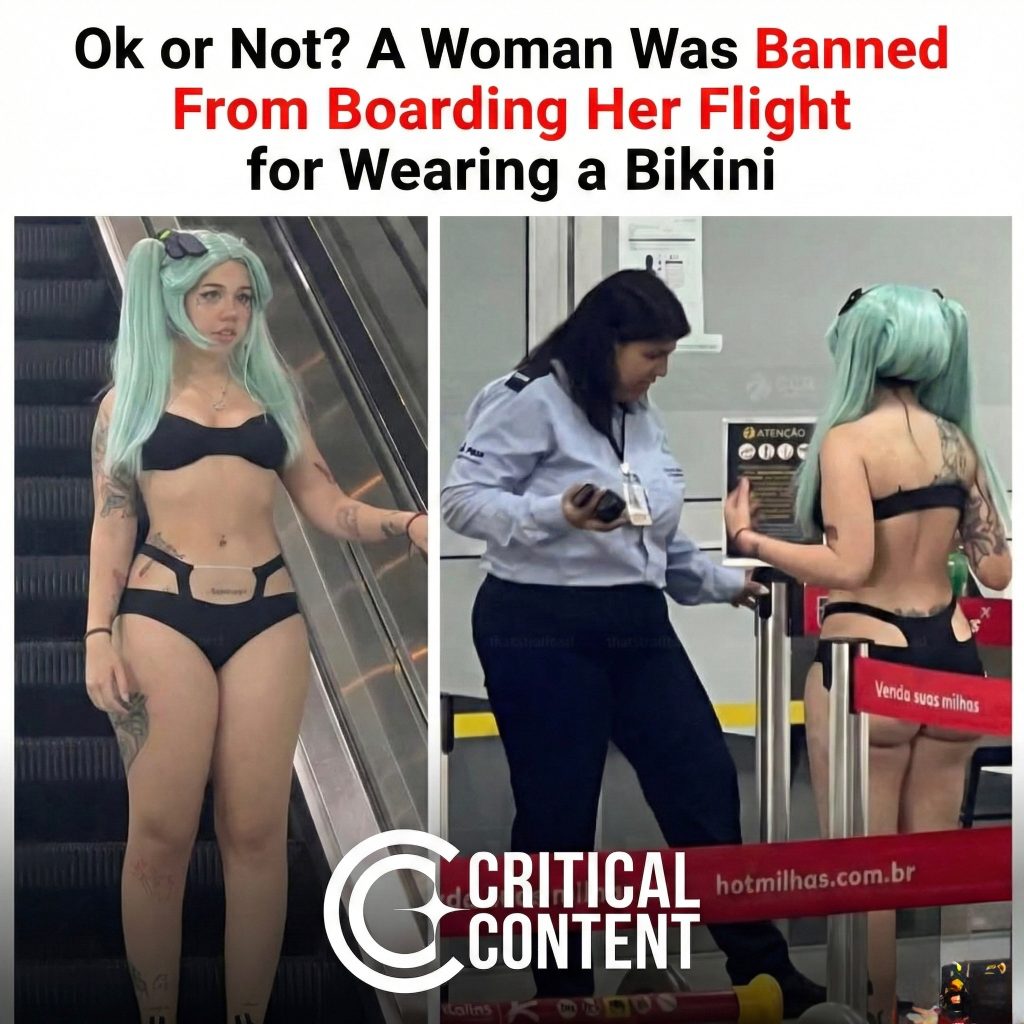
Brazilian model and cosplayer Kine-Chan found herself at the center of controversy after being rejected from flight at airport Navegantes Airport in Brazil. Earlier that day, she had attended a public event dressed as Rebecca, a character from the anime series Cyberpunk: Edgerunners (2022). Her cosplay featured a black bikini, a vibrant blue wig, and black sandals, perfectly recreating the character’s iconic look. Fans praised her attention to detail, and photos of her outfit quickly spread across social media.
The celebration of her cosplay took an unexpected turn when Kine-Chan arrived at the airport to board her flight. According to her, airline staff refused to let her on the plane, claiming her bikini outfit was “inappropriate” for travel. The rejection left her frustrated and confused, as she explained that her costume was designed for a public event and not meant to violate any rules or dress codes.
The incident quickly went viral, sparking debate online about the limits of personal expression and airline policies. Many cosplayers and fans rushed to her defense, arguing that cosplay is a legitimate art form and should be respected even in public spaces. Others weighed in on airline rules, emphasizing the need for decorum on flights while questioning where lines should be drawn.
Kine-Chan’s experience highlights the challenges cosplayers face when translating event attire into everyday settings, raising larger questions about self-expression, societal expectations, and what is considered acceptable in public spaces.
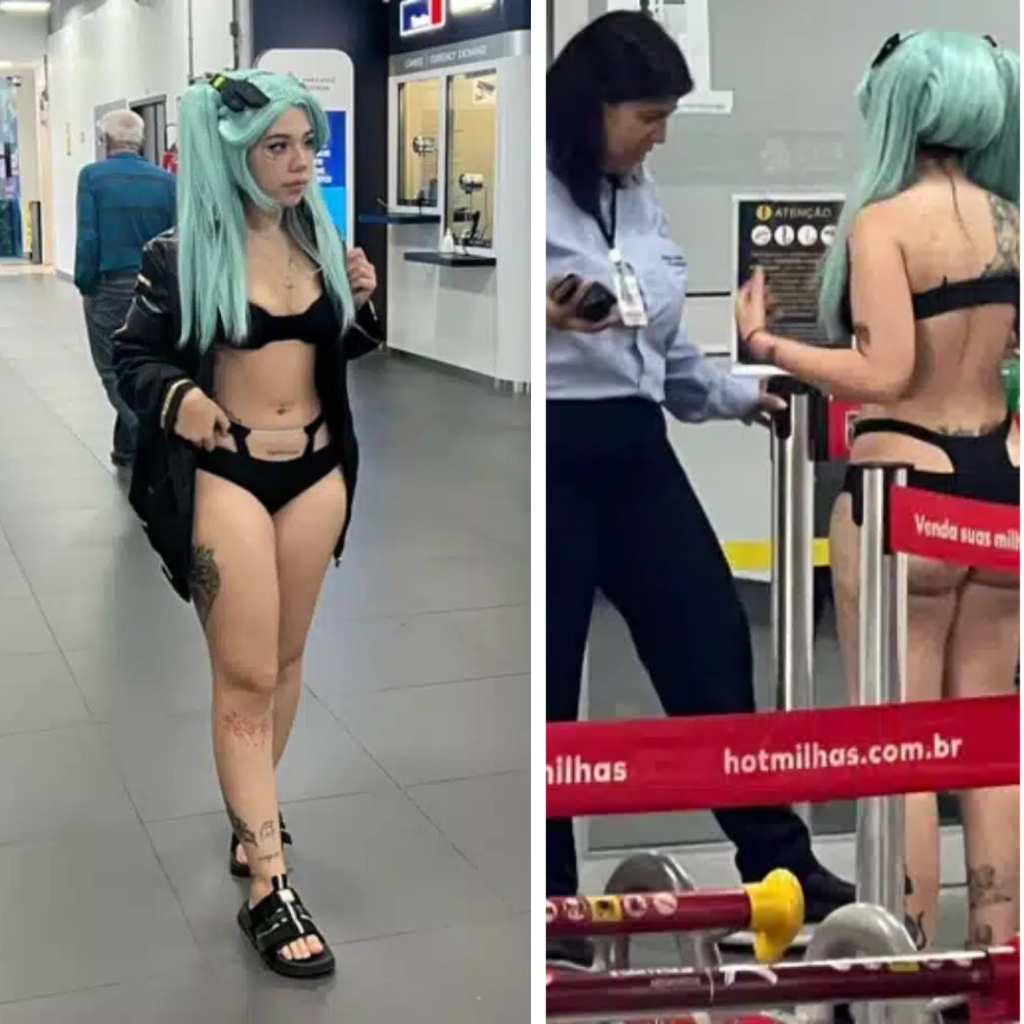
Kine-Chan’s post quickly drew mixed reactions from followers, sparking a lively debate about cosplay, personal expression, and appropriateness in public spaces. Some users felt her outfit was too revealing for air travel. One commenter wrote, “Kine, I love you, but you could’ve worn something easier to slip on—like a wrap dress or even a button-down shirt.” Others echoed similar concerns, suggesting that while cosplay is creative, airports are not convention spaces and certain outfits might make other travelers uncomfortable.
At the same time, many fans came to Kine-Chan’s defense, praising her confidence and artistic expression. “She’s representing the character perfectly,” one supporter noted. “Cosplay isn’t just about clothes; it’s about art and dedication.” Another user added, “Airports should allow people to express themselves. It’s her body, her choice.”
The discussion quickly highlighted the divide between societal expectations and individual freedom, especially when it comes to creative or unconventional attire. For cosplayers like Kine-Chan, navigating spaces outside conventions can be tricky, as what is celebrated at events may be scrutinized elsewhere. The incident sparked broader conversations online about personal expression, body positivity, and how public institutions like airlines handle situations involving unique outfits.
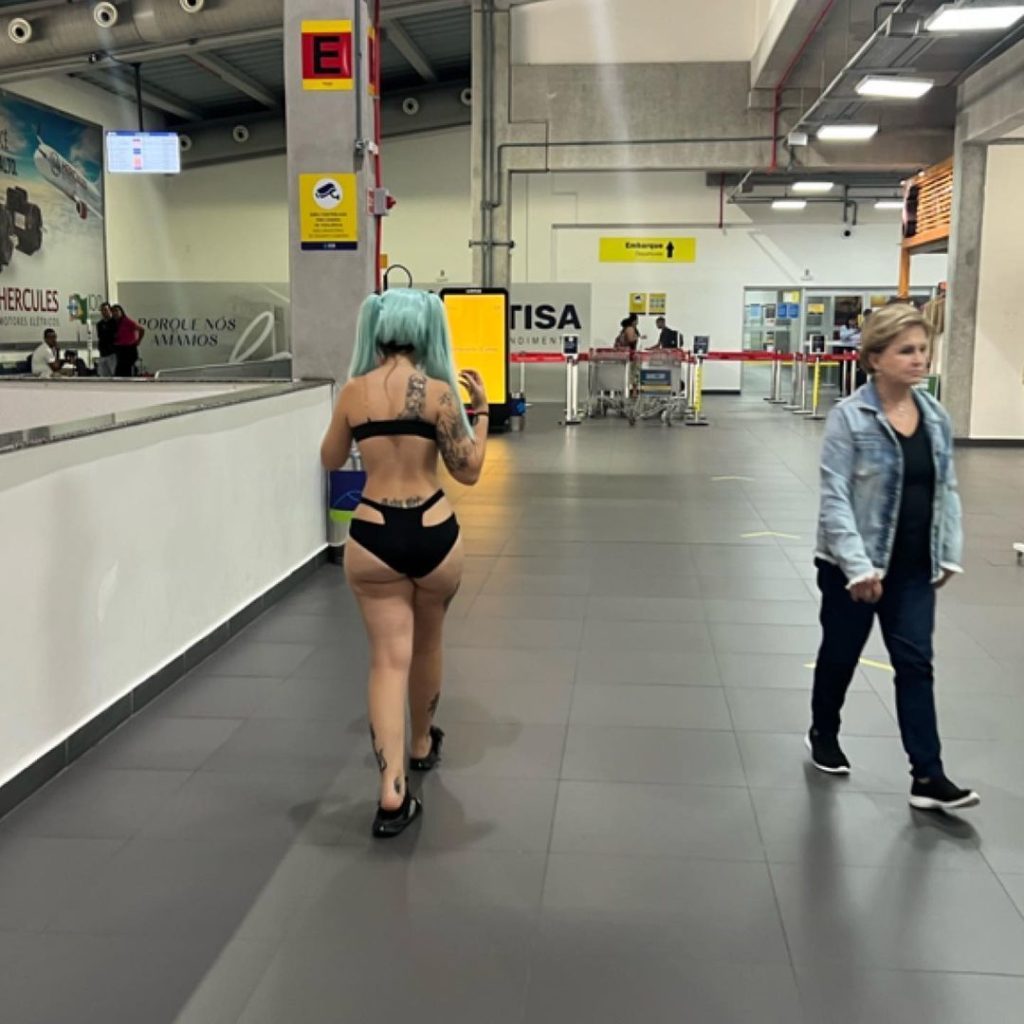
The incident involving Kine-Chan has sparked a broader conversation about dress codes, personal expression, and travel etiquette. Social media users have debated whether airlines should enforce strict standards on what passengers can wear or allow more flexibility for creative expression, such as cosplay or unconventional outfits. Many pointed out that the debate is not just about clothing but about how travelers navigate shared public spaces and respect others’ comfort while still being able to express themselves.
This conversation is part of a growing trend of viral airport disputes that capture public attention online. Similar incidents have included a widely shared TikTok video where a woman refused to give up her seat for a mother traveling with two children, sparking debates about fairness, passenger rights, and social responsibility on flights. These moments highlight the tensions between individual choice and communal expectations, as travelers try to balance self-expression, practicality, and etiquette in confined spaces.
For cosplayers, models, and others who wear distinctive outfits in public, such incidents illustrate the challenges of navigating spaces that were not designed for creativity or unconventional attire. Kine-Chan’s experience has brought renewed attention to these issues, prompting discussions about how airlines, passengers, and society at large can approach questions of personal expression, inclusivity, and travel norms in a fair and respectful way.