
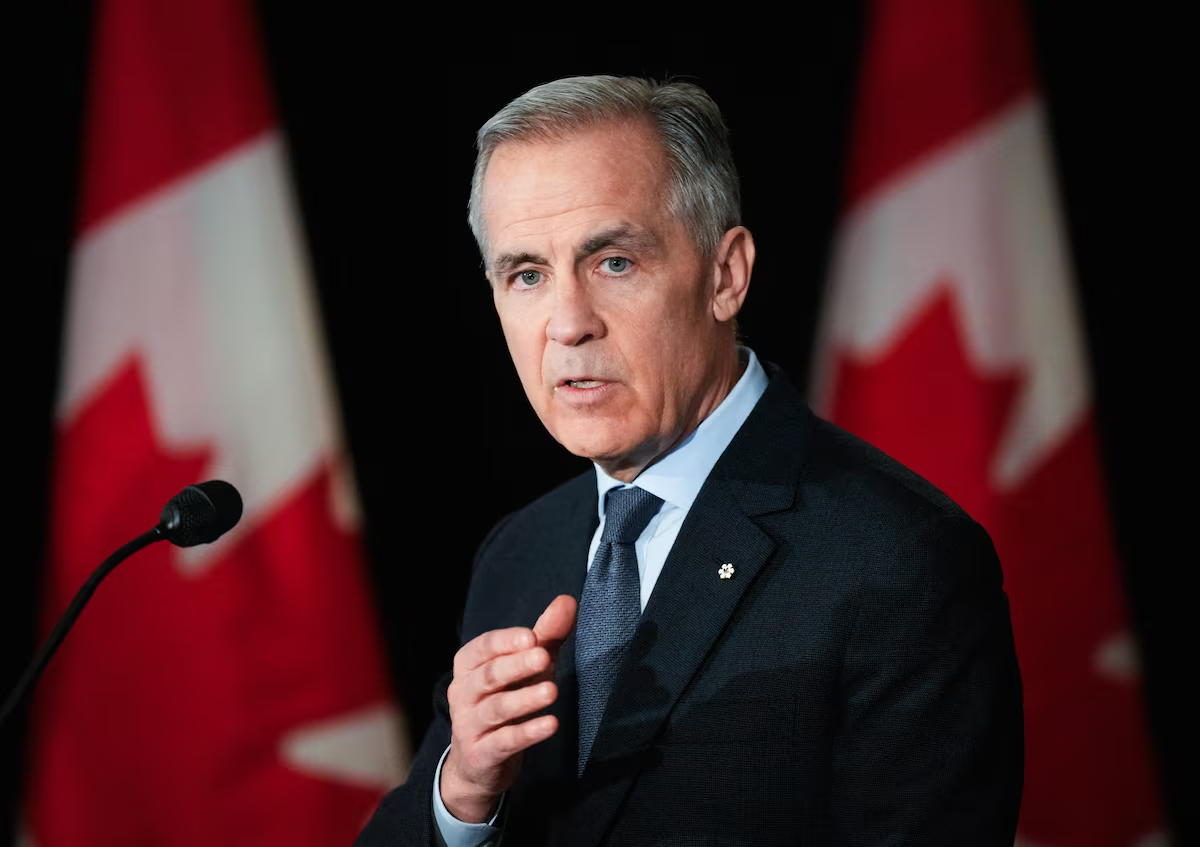
Australia and Canada are moving to deepen their strategic alignment at a time when the foundations of the global economic system are being openly questioned. On January 25, Australian Prime Minister Anthony Albanese confirmed that Canadian Prime Minister Mark Carney will visit Australia in March, including a rare address to the Australian parliament.
“My friend Mark Carney will visit Australia with an address to the parliament in March,” Albanese said in remarks on Australian Broadcasting Corp television.
The announcement underscores growing coordination between like-minded middle powers navigating an increasingly fractured international landscape.
Albanese’s remarks followed Carney’s high-profile speech at the World Economic Forum in Davos, where the Canadian leader argued that the era of a stable, rules-based global order is effectively over. Carney warned that powerful nations are increasingly weaponising economic integration—using tariffs, trade restrictions, and financial leverage as tools of geopolitical pressure rather than cooperation.

Speaking on Australian Broadcasting Corporation television, Albanese said he strongly agreed with Carney’s assessment. He echoed the view that countries such as Australia and Canada, while not superpowers, can act collectively to protect their interests and avoid being “victimized” by great-power rivalry, particularly amid what Carney described as American economic hegemony.
Carney’s Davos comments struck a chord with many global leaders but also drew sharp criticism from U.S. President Donald Trump, who has defended the aggressive use of tariffs and trade policy as essential to safeguarding American interests. For Canberra and Ottawa, however, the message was less about confrontation and more about adaptation—recognizing that old assumptions about free trade and multilateralism no longer fully apply.

The upcoming visit also reflects the steady deepening of Australia–Canada relations beyond rhetoric. In October, the two countries signed a major agreement aimed at promoting cooperation and trade in critical minerals—resources that are increasingly central to clean energy, defence technologies, and industrial resilience. As supply chains become more politicized, partnerships between trusted allies are gaining strategic importance.
Carney’s parliamentary address is expected to build on this theme, outlining how middle powers can coordinate policies, diversify trade links, and invest jointly in strategic sectors. For Australia, the visit offers an opportunity to reinforce its own foreign policy narrative: pragmatic, alliance-focused, but realistic about the erosion of global norms that once governed trade and diplomacy.
In a world where economic tools are now routinely deployed as instruments of power, Australia and Canada appear determined to shape outcomes rather than simply react to them. Carney’s March visit will serve as both a symbolic and practical step in that direction—signalling that middle powers still intend to have a collective voice in redefining the global order.