
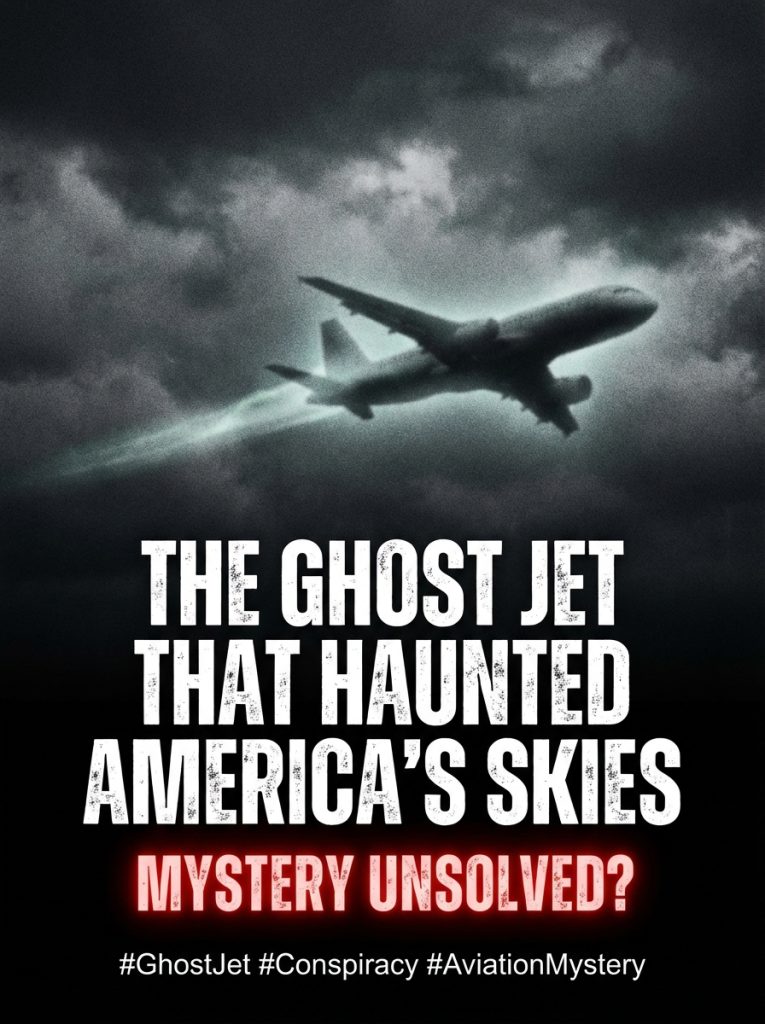
ORLANDO, Fla., October 25, 1999 – As the morning sun glinted off the tarmac at Orlando International Airport, PGA legend Payne Stewart—fresh off his epic U.S. Open victory just months earlier—boarded a sleek Learjet 35 with a grin and his signature tam-o’-shanter cap. Flanked by his agents Robert Fraley and Van Ardan, golf architect Bruce Borland, and pilots Michael Kling and Stephanie Bellegarrigue, the group was Dallas-bound for a quick business meeting before the Tour Championship. “Routine flight,” Stewart reportedly joked to ground crew. Little did anyone know, this takeoff would launch one of aviation’s eeriest tales—a “ghost plane” saga that gripped the nation for four agonizing hours.
At 9:19 a.m. EDT, N47BA roared into the blue, climbing smoothly on autopilot toward 39,000 feet. The last radio call came at 9:27 a.m.—a casual acknowledgment from the cockpit as air traffic control cleared them higher. Then… silence. No distress signal. No mayday. Just dead air.

Controllers in Jacksonville scrambled, hailing the jet repeatedly. Nothing. By 9:33 a.m., the Learjet overshot its assigned altitude, rocketing to 46,400 feet on a straight northwest heading—ignoring the planned turn toward Texas. Alarms blared in towers from Florida to the Midwest. This wasn’t mechanical failure; the plane flew arrow-straight, engines humming like nothing was wrong.
Enter the military. At 9:54 a.m., an F-16 from Eglin Air Force Base intercepted the rogue bird. The pilot’s report chilled NORAD: “No visible damage. Engines running. Beacon on. But the windows… they’re frosted over. No movement inside. It’s like a tomb up here.” More jets joined—Oklahoma Air National Guard F-16s, then North Dakota fighters. Peering through canopies, they saw the same horror: opaque windshields coated in ice or condensation, a cabin plunged into frozen darkness. No souls stirring. Hypoxia—the silent killer at altitude—had struck fast, robbing oxygen and consciousness in mere seconds.
For nearly four hours, America watched in real-time dread. CNN looped radar tracks as the jet ghosted over Gainesville, St. Louis, Stewart’s hometown in Missouri. It crossed half the country—1,400 miles—on autopilot, a silver specter defying gravity. Whispers of shoot-down orders swirled; Canadian PM Jean Chrétien later admitted authorizing it if the plane veered north toward Winnipeg. But U.S. brass held fire, hoping for a miracle that never came.
Fuel gauges ticked to empty. At 12:10 p.m. CDT, the cockpit voice recorder captured the engines whining down. The jet nosed over, spiraling wildly into a South Dakota field near tiny Mina. Impact at 12:13 p.m.—a supersonic plunge carving a 42-foot crater. All six aboard perished instantly. No survivors. No black box revelations beyond those final mechanical gasps.
Payne Stewart, 42, the flamboyant golfer who’d battled back from slumps to claim three majors, was gone. His plus-fours and fist-pumps immortalized in tragedy. Tributes poured in: a lone bagpiper at the Tour Championship, posthumous Hall of Fame induction. But the why? That’s the ghost that haunts.
NTSB’s probe painted a grim picture: “Incapacitation of the flight crew as a result of their failure to receive supplemental oxygen following a loss of cabin pressurization, for undetermined reasons.” Translation? A sudden depressurization turned the cabin into a vacuum, but the exact trigger? Vanished in the wreckage’s pulverized remains.
Clues teased torment. Maintenance logs screamed red flags—multiple pressurization gripes in prior months, deferred fixes, poor documentation by operator Sunjet Aviation. A cracked valve adapter? Speculated in lawsuits, but a 2005 jury cleared Learjet of liability. Emergency oxygen? Possibly undercharged or ignored. Pilots trained, but did they don masks in time? The CVR’s 30-minute loop offered no screams, no chaos—just eerie quiet before the end.
This wasn’t just a crash; it was a wake-up. FAA scrutiny on Learjet 35/36 systems followed. Hypoxia drills ramped up industry-wide. Yet 26 years on, experts still debate: Was it a pinhole leak that snowballed? Faulty bleed air valves? Or human error in a high-stakes cockpit?
In Mina, farmer Jon Hoffman remembers the boom that shook his pheasant hunt. “Sounded like the world ending,” he says. Today, a simple marker honors the lost. Stewart’s widow Tracey penned grateful letters to the town that became an unwilling final resting place.
The ghost jet’s legacy? A reminder that skies hold secrets. Autopilot can carry you far, but one breath stolen changes everything. Aviation’s safer now, but that October flight whispers: What if it happens again?
What’s your take on the unsolved depressurization? Conspiracy or cockpit oversight? Share below—we’re diving into the skies’ darkest mysteries.
Inspired by the NTSB’s official investigation into N47BA. Flying soon? Know your plane’s oxygen systems—your life might depend on it.