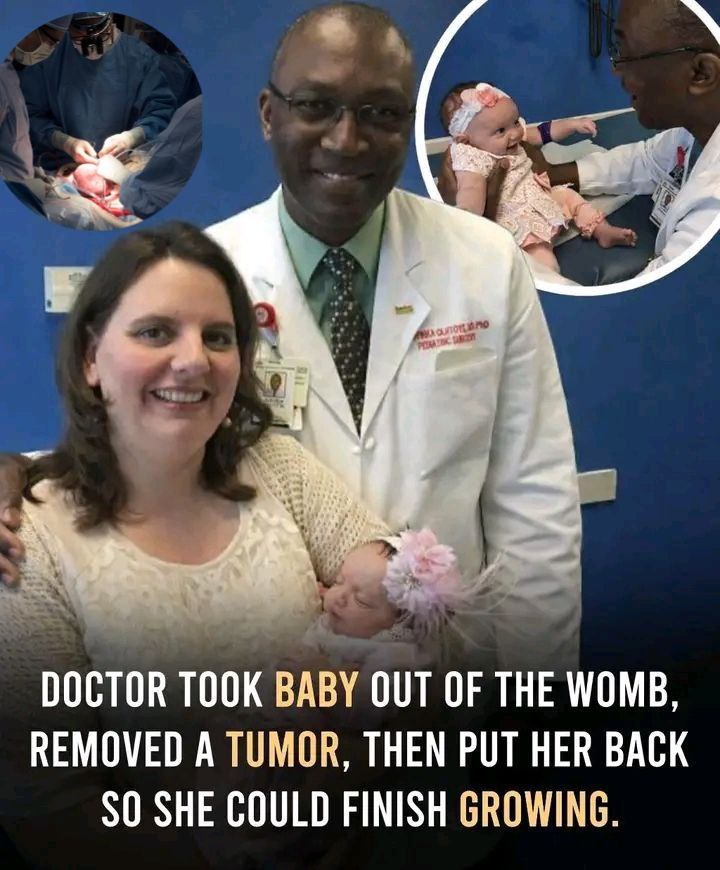
At 23 weeks pregnant, doctors discovered a life-threatening tumor on an unborn baby—one that could not wait until birth.
What followed was one of the most daring procedures modern medicine can offer.
Surgeons temporarily removed the baby from the womb, carefully keeping her connected to the placenta so oxygen and nutrients continued to flow. In that brief window, they removed the tumor, then gently returned her to the womb, allowing her to continue developing as if nothing had happened.
Thirteen weeks later, she was born healthy.
A moment made possible by courage, precision, and science 🙌🏻❤️
🔬 How This Was Possible
The procedure belongs to a rare category of advanced fetal surgery, sometimes referred to as an EXIT-type approach (Ex Utero Intrapartum Treatment), designed to:
Protect the baby’s oxygen supply
Allow surgeons to act without triggering early delivery
Give the fetus time to keep growing safely
These operations require large, multidisciplinary teams and are only attempted when the risk of doing nothing is far greater.
🧠 Why This Matters
This wasn’t just a medical success—it was a shift in what’s possible.
It showed that:
Patients can be treated before birth
The womb can be a place of healing, not just development
Timing and innovation can save lives that once had no options
🌱 A Life Given Time
Instead of an emergency birth at the edge of viability, this baby was given 13 more weeks to grow—a difference that can mean everything.
Sometimes, miracles aren’t sudden.
They’re carefully planned, skillfully executed, and quietly extraordinary.
❓ Q&A Section (Professional)