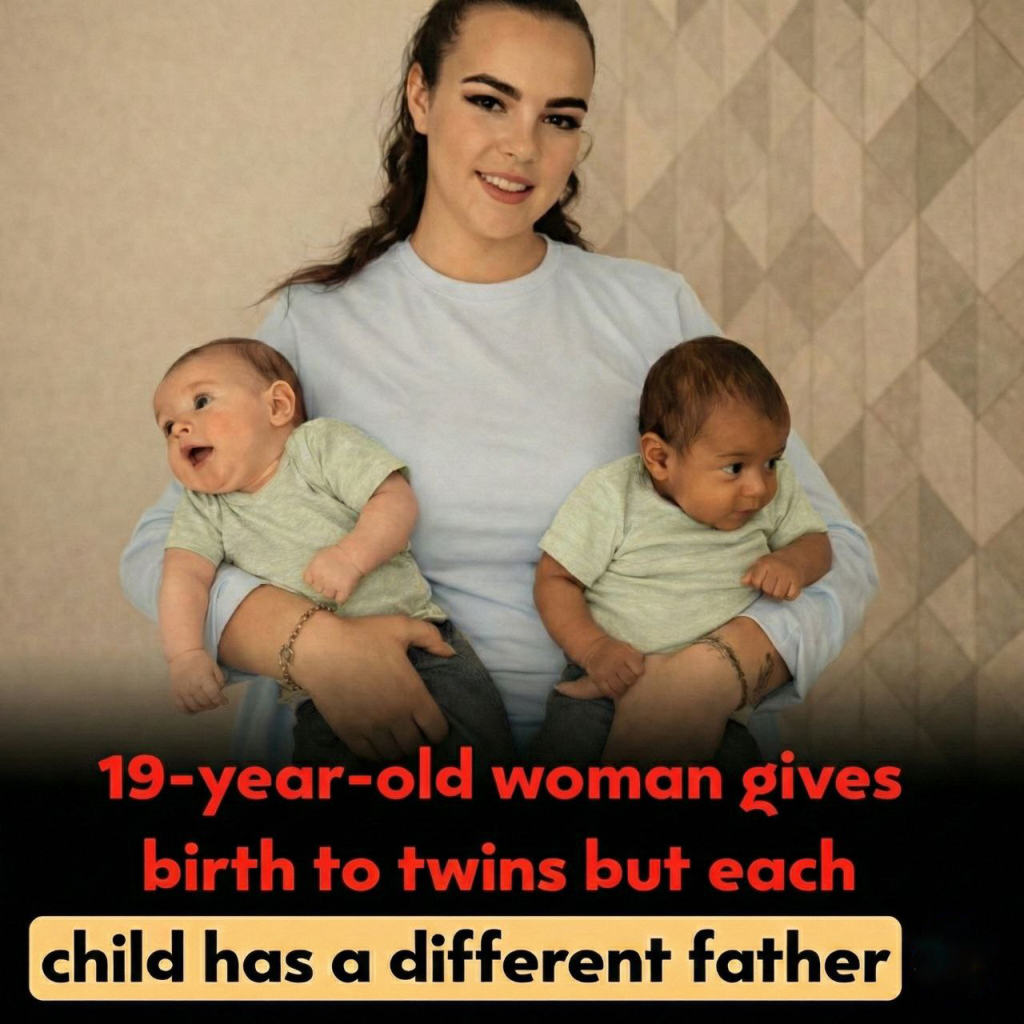
It sounds like a soap-opera twist—but it’s a real biological phenomenon.
A 19-year-old woman gave birth to twins who shared the same womb and the same birthday 🎂—yet each baby has a different father.
Science calmly nodded.
The internet collectively screamed: “WAIT… WHAT?!” 😳
How This Is Possible
The phenomenon is called heteropaternal superfecundation.
In simple terms:
Two eggs are released during the same ovulation window
Each egg is fertilized by sperm from different men
Both embryos implant and develop together
The result? Twins who grow side by side for nine months—but are genetically half-siblings.
Rare, But Documented
While extremely uncommon in humans, doctors have documented multiple confirmed cases. Many are discovered years later, often when:
DNA tests are done for medical reasons
Paternity questions arise
Genetic traits don’t line up
That’s when families get blindsided by science 🧪
What Makes These Twins UniqueSame pregnancy
Same womb
Same birthday 🎉
Different fathers
They’re siblings in every social sense—yet genetically, they share only one parent.
The Bigger Takeaway
Human biology doesn’t always follow simple rules.
Nature sometimes does what feels impossible—and doesn’t ask for permission first.
❓ Q&A Section (Professional)