

US health officials insist a controversial vaccine trial in Guinea-Bissau is still moving forward. African health leaders say it has been cancelled. Caught in the middle is Guinea-Bissau, a fragile west African nation and one of the poorest countries in the world, now at the center of an international dispute over medical ethics, power, and sovereignty.
The trial, funded by the United States and led by Danish researchers, was designed to study the effects of administering the hepatitis B vaccine at birth. But it quickly became a flashpoint after details emerged that some newborns would have their vaccines deliberately delayed. The controversy intensified amid political instability in Guinea-Bissau, which experienced a coup in November and recently replaced several top officials.
On Thursday, the newly appointed health minister, Quinhin Nantote, confirmed that the study had been “cancelled or suspended,” citing concerns that the science had not been properly reviewed. His statement directly contradicted US officials, setting the stage for a diplomatic and scientific standoff.

At Nantote’s request, a team of experts from the Africa Centres for Disease Control and Prevention (Africa CDC) will travel to Guinea-Bissau to independently review the study. Officials from Denmark and the US have also been invited to participate. Jean Kaseya, director-general of the Africa CDC, stressed that the final decision rests solely with Guinea-Bissau.
“This is about sovereignty,” Kaseya said. “The decision belongs to the country, and whatever the minister decides, we will support.”
US officials responded sharply. Andrew Nixon, a spokesperson for the Department of Health and Human Services (HHS), stated that the trial would “proceed as planned” and accused the Africa CDC of running a public-relations campaign instead of engaging with scientific facts. No evidence was provided to support the claim. Another HHS official went further, dismissing the Africa CDC as “a powerless, fake organization.”
Kaseya rejected the criticism, noting that senior HHS officials later told him they were unaware of the statement. He also pointed to the Africa CDC’s central role in responding to outbreaks with global consequences.
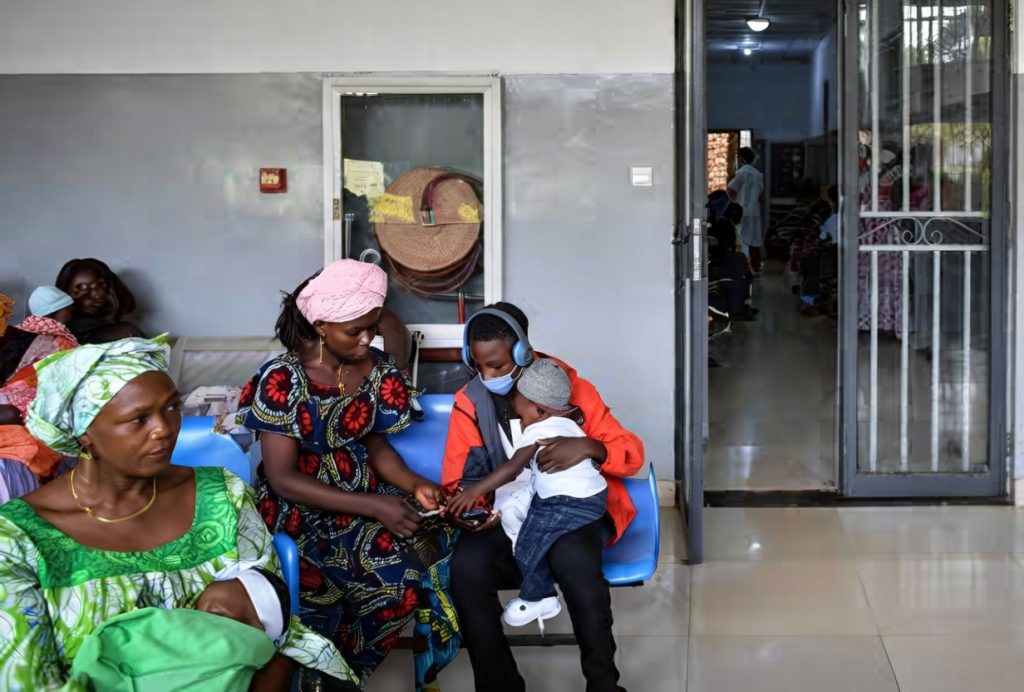
Beyond the political back-and-forth lies a deeper ethical concern. The trial proposed vaccinating 7,000 infants at birth while delaying vaccination for another 7,000 until six weeks of age. This is in a country where nearly one in five adults and about 11% of young children live with hepatitis B, a disease that can be fatal if contracted early in life.
“This is not acceptable,” said Abdulhammad Babatunde, a Nigerian medical doctor and global health researcher. He argued that withholding a proven vaccine violates basic ethical principles. “To avoid repeating tragedies like the Tuskegee study, the control group must receive the standard of care.”
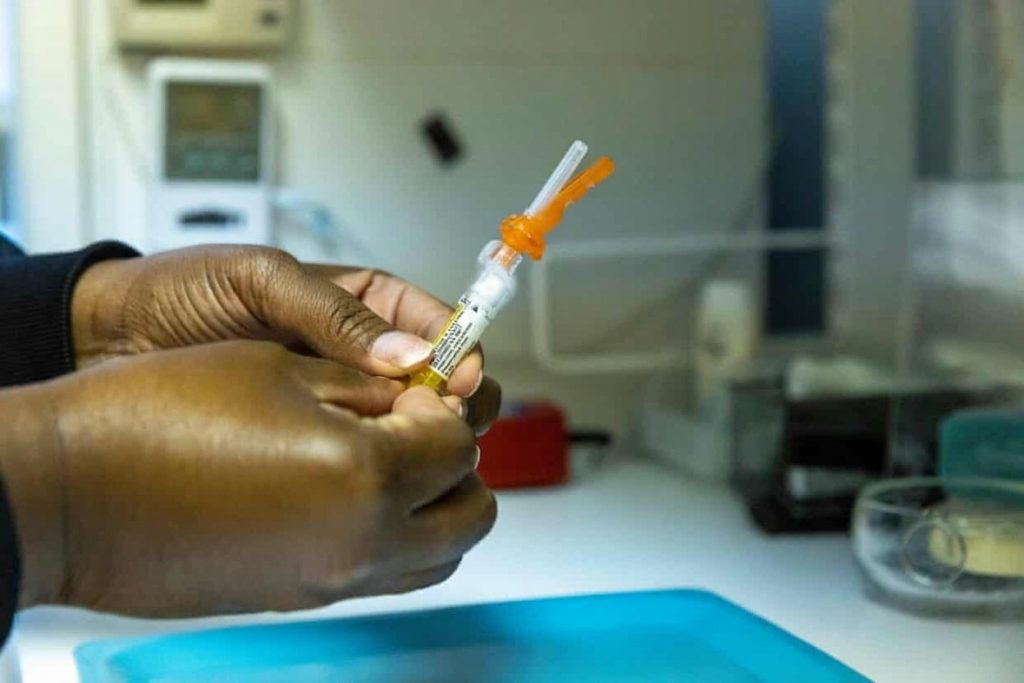
The World Health Organization recommends that all newborns receive the hepatitis B vaccine within 24 hours of birth. Guinea-Bissau currently administers the shot at six weeks, largely due to funding constraints, with full newborn coverage planned for 2028. Critics argue that research funding should be used to expand access, not delay it.
Babatunde also warned of power imbalances. Poor countries, he said, may feel pressured to accept ethically questionable studies for fear of losing international support. “This is the moment for African states to stand with Guinea-Bissau and protect its children,” he said.
Questions have also been raised about how the trial was approved. An early version received clearance from Guinea-Bissau’s six-member ethics committee in November, but later changes were never formally reviewed. According to officials, the original submission did not clearly state that some infants would go unvaccinated at birth.
Compounding the issue, the researchers appear not to have sought ethical approval in Denmark or the US, despite international rules requiring oversight in both sponsoring and host countries.
As Guinea-Bissau grapples with poverty, limited healthcare access, high maternal mortality, and endemic malaria, the stakes are high. “They know their challenges,” Kaseya said. “And they are doing their best to address them.”
The outcome of this dispute may set a precedent—not just for vaccine research, but for who ultimately gets to decide how science is conducted in the world’s most vulnerable countries.