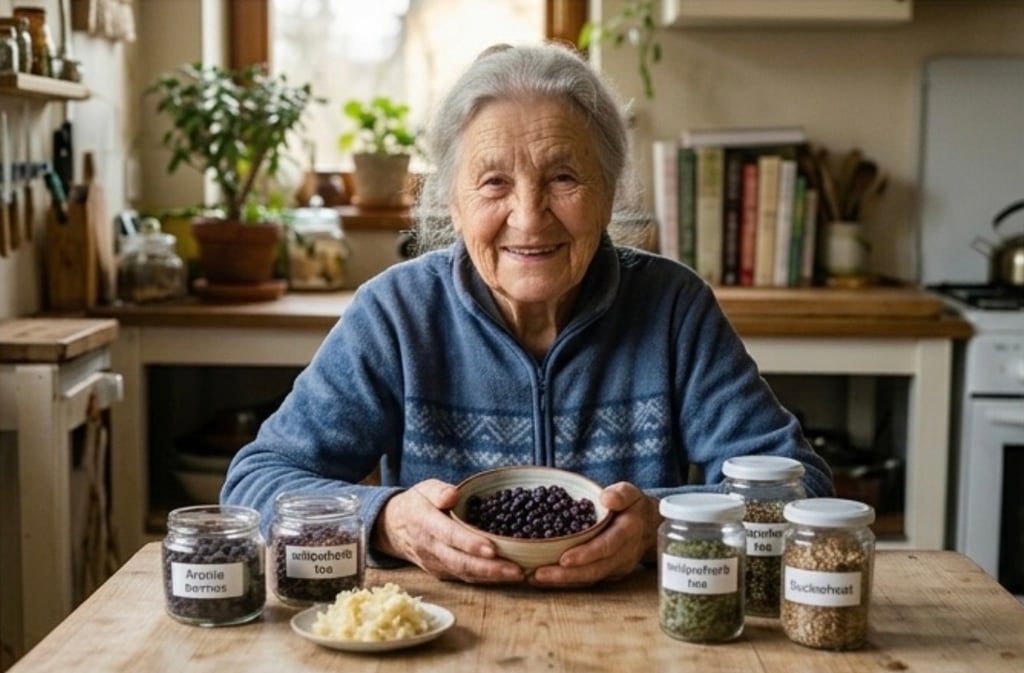
Many people expect getting older to mean joint pain, fatigue, and a growing list of medications. Margarita, who is 90, says her experience has been very different.
She says she has not been sick in more than four decades. She acknowledges genetics may play a role, but she believes the foods she has eaten consistently over her life deserve much of the credit. According to her account, she does not have diabetes or high blood pressure, prepares her own meals, takes daily walks, reads without glasses, and prides herself on a sharp memory. Others call it luck. She disagrees. These are the five foods she says are staples of her routine — presented here as her claims and habits, not as proven medical fact.
1. Aronia Berries
Margarita says she began eating aronia berries, also called chokeberries, roughly three decades ago after a neighbor recommended them, believing they support healthy circulation. Over time, she says, she noticed fewer episodes of head pressure, hands that no longer felt constantly cold, and a general improvement in how she felt.
Aronia berries contain antioxidants and plant compounds including polyphenols, flavonoids, and anthocyanins, along with vitamins C, A, and E and minerals such as potassium, iron, and manganese. She adds them to oatmeal and simple desserts, and makes infusions by soaking a handful of dried berries in hot water for several hours, then drinking a small serving.
2. Willowherb Tea
Willowherb tea has been part of her routine for decades, usually in the late afternoon or evening, and she describes it as one of the most relaxing parts of her day. She says it helps her unwind, supports restful sleep, leaves her calmer after stressful days, and, in her experience, aids digestion after larger meals.
Her method is simple: a teaspoon of dried willowherb steeped in hot water for about ten to fifteen minutes, enjoyed warm. Unlike coffee, it has no stimulating effect. The herb contains naturally occurring compounds including flavonoids, tannins, and mucilage.
3. Buckwheat
Buckwheat, Margarita says, is one of the most important changes she ever made. Years ago she noticed her energy fluctuating after meals and often felt sluggish. Looking for an alternative to refined grains, she gradually replaced much of the bread in her diet with buckwheat. She says the difference was noticeable: more energy, feeling satisfied longer, and none of the heaviness she associated with certain meals.
Despite being grouped with grains, buckwheat is technically a seed and a source of fiber, magnesium, and plant compounds. She prepares it plainly: one cup simmered in two cups of water until tender, sometimes with a little flaxseed oil.
4. Seaweed
In her forties, Margarita says, she struggled with persistent fatigue and sensitivity to cold. Medical testing, she says, showed low iodine levels affecting her thyroid function. Following her doctor’s advice, she began adding seaweed to her diet. Over time, she says, her energy improved and she became less sensitive to temperature changes.
Seaweed is naturally rich in iodine, essential for thyroid function, and also contains B vitamins, iron, and magnesium. She eats it in forms such as soups and salads, and recommends minimally processed varieties, avoiding products with excessive additives, sugar, or preservatives.
5. Sauerkraut — and More Than Food
Fermented cabbage has been in Margarita’s life since childhood, a traditional family food she now calls one of the cornerstones of how she eats. She considers it one of the most valuable foods for digestive wellness. Because it is naturally fermented, sauerkraut contains beneficial bacteria, and it is also a source of vitamin C and several B vitamins. She eats small portions alongside meals, believing it helps her digestion.
Still, Margarita insists no single ingredient explains her health. She describes longevity as consistent habits over many years: limiting highly processed foods, avoiding excessive sugar and artificial additives, drinking plenty of water, staying active every day, getting adequate sleep, listening to her body, and choosing whole foods. Even a daily walk, she says, can matter over time.
Her story is best read as one woman’s account of her own life, not a prescription. No food can guarantee freedom from illness, and anyone considering significant dietary changes should consult a qualified healthcare professional. But at 90, Margarita remains convinced that what we put on our plates today can shape how we feel decades from now.
Source note: Original story via ViralStrange (https://viralstrange.com/a-90-year-old-woman-says-she-hasnt-been-sick-in-43-years-these-are-the-5-foods-she-credits-for-her-health/). Retold in our own words for Critical Content; story as originally narrated, not independently verified.