Long before travel rewards became a popular topic on social media, one California engineer discovered an opportunity that would become one of the most famous loyalty-program stories ever told.
In 1999, David Phillips, later nicknamed “The Pudding Guy,” reportedly earned more than 1.2 million American Airlines frequent-flyer miles by taking advantage of a promotional offer from Healthy Choice Foods. What began as a careful calculation during a grocery shopping trip eventually led to years of international travel, lifetime airline status, and even inspiration for a Hollywood film.
More than two decades later, the story remains a favorite example of how promotional offers can sometimes produce unexpected outcomes.
What Happened
According to published accounts, Phillips noticed a Healthy Choice promotion offering 500 American Airlines AAdvantage miles for every 10 qualifying product barcodes mailed to the company.
During the promotion’s introductory period, submissions qualified for double miles, increasing the reward to 1,000 miles per 10 barcodes.
Phillips calculated that the promotion’s value exceeded the cost of certain qualifying products.
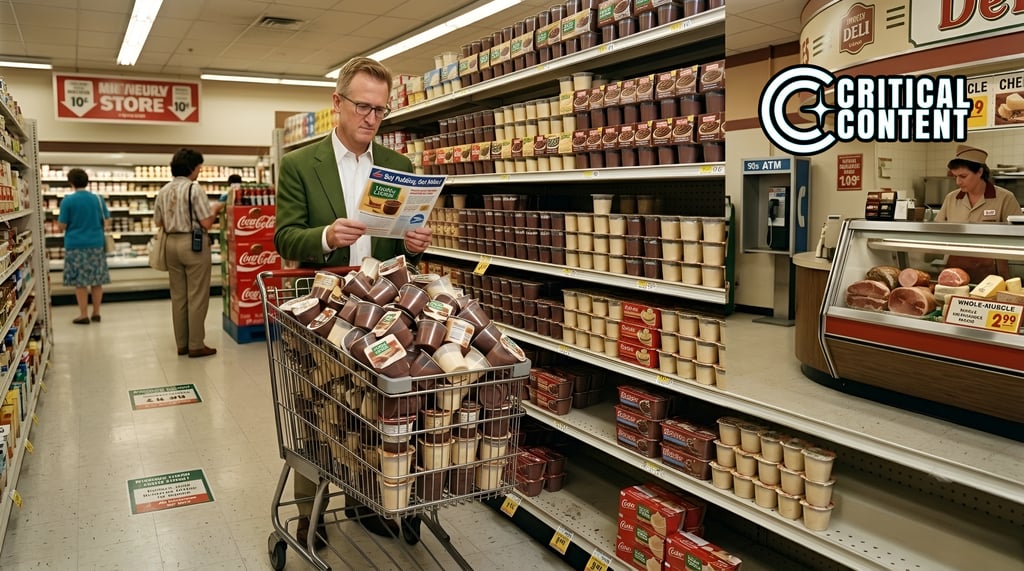
While many Healthy Choice frozen meals sold for around $2.00, he reportedly found individual Healthy Choice pudding cups selling for $0.25 each at a warehouse outlet.
Each pudding cup carried its own eligible barcode.
Seeing an opportunity, Phillips purchased approximately 12,150 pudding cups from multiple grocery stores around the Sacramento area, spending about $3,140.
The next challenge came when he needed to remove thousands of barcodes before the promotion’s deadline.
According to reports, Phillips and his family initially attempted to peel the labels themselves but soon found the task overwhelming.
He then approached the Salvation Army with an unusual proposal.
Phillips offered to donate every pudding cup if volunteers would remove the barcodes and return them to him. The organization accepted the donation, allowing the food to benefit people in need while helping Phillips meet the submission deadline.
Because the food was donated, Phillips also reportedly claimed an $815 federal tax deduction, reducing his overall cost.
After mailing the barcodes, he waited for the results.
According to published reports, Healthy Choice and American Airlines honored the promotion.
Phillips ultimately received approximately 1,253,000 AAdvantage miles, which also qualified him for Lifetime AAdvantage Gold status under the airline’s program at that time.
Background
Frequent-flyer programs have long encouraged customer loyalty by awarding miles that can be redeemed for flights, upgrades, and other travel benefits.
Promotional campaigns occasionally offer bonus miles through purchases of everyday consumer products.
Phillips’ strategy became widely known because he identified an unusually favorable promotion and carefully calculated how to maximize its value while remaining within the published rules.
According to reports, his net out-of-pocket cost after the tax deduction was approximately $2,325, while the travel value of the miles was estimated at around $150,000, depending on how they were redeemed.
Why This Matters
The “Pudding Guy” story continues to attract attention because it combines careful planning, mathematical thinking, and an unconventional approach to a promotional offer.
It also highlights several important ideas:
Reading promotional terms carefully can uncover valuable opportunities.
Loyalty rewards can sometimes provide substantial value when used strategically.
Food donations can benefit charitable organizations while reducing waste.
Creativity and analytical thinking can produce unexpected results.
However, experts note that promotions like this are extremely uncommon today. Many modern loyalty programs have stricter rules and safeguards designed to prevent similar large-scale point accumulation.
Public Reaction
Phillips’ story quickly became legendary among travel enthusiasts and frequent-flyer communities.
Many admired his creativity and attention to detail, while others viewed the promotion as a remarkable example of “thinking outside the box.”
The story also gained broader recognition after director Paul Thomas Anderson reportedly drew inspiration from Phillips when creating a frequent-flyer-focused storyline for the 2002 film Punch-Drunk Love, starring Adam Sandler.
Although the film tells a fictional story, many fans have noted similarities to Phillips’ real-life experience.
Final Thoughts
David Phillips’ pudding purchase has become part of travel rewards history.
According to published reports, his willingness to analyze the numbers, act quickly, and donate thousands of pudding cups allowed him to earn more than 1.2 million airline miles, travel with his family to 43 countries, and secure lifetime airline status.
While promotions of this scale are rare today, his story continues to illustrate how careful planning and creative problem-solving can sometimes turn an ordinary shopping trip into an extraordinary adventure.