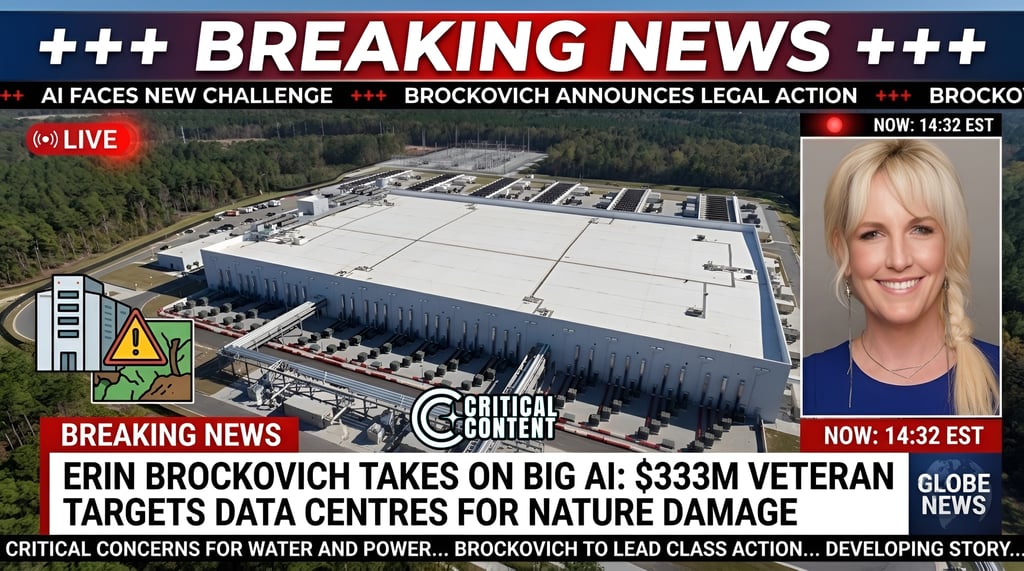
Environmental advocate Erin Brockovich, best known for helping uncover the groundwater contamination case involving Pacific Gas and Electric Company (PG&E) in Hinkley, California, has turned her attention to a new issue: the rapid expansion of artificial intelligence (AI) data centers across the United States.
Rather than announcing legal action, Brockovich is encouraging residents to document data centers being built or proposed near their communities. Through a public reporting platform, she hopes to better understand how these large facilities may affect local resources, infrastructure, and surrounding neighborhoods.
According to Brockovich’s initiative, thousands of reports have already been submitted by people sharing concerns and observations about AI-related development in their areas.
What Happened
Erin Brockovich has launched a public map and reporting platform that allows people across the United States to identify existing or proposed AI data centers in their communities.
According to her organization, the initiative is designed to gather information about local experiences and identify broader trends as AI infrastructure continues to expand.
The platform has reportedly received more than 8,200 submissions from community members.
Reported concerns include:
- Water consumption.
- Electricity demand and potential energy costs.
- Noise generated by cooling systems.
- Environmental impacts.
- Wildlife disruption.
- Local planning and public awareness during approval processes.
Brockovich has emphasized that the project is not based on the assumption that every data center is harmful.
Instead, she says the goal is to collect information, identify patterns, and encourage greater transparency regarding the environmental and community impacts of large-scale AI infrastructure.
Background
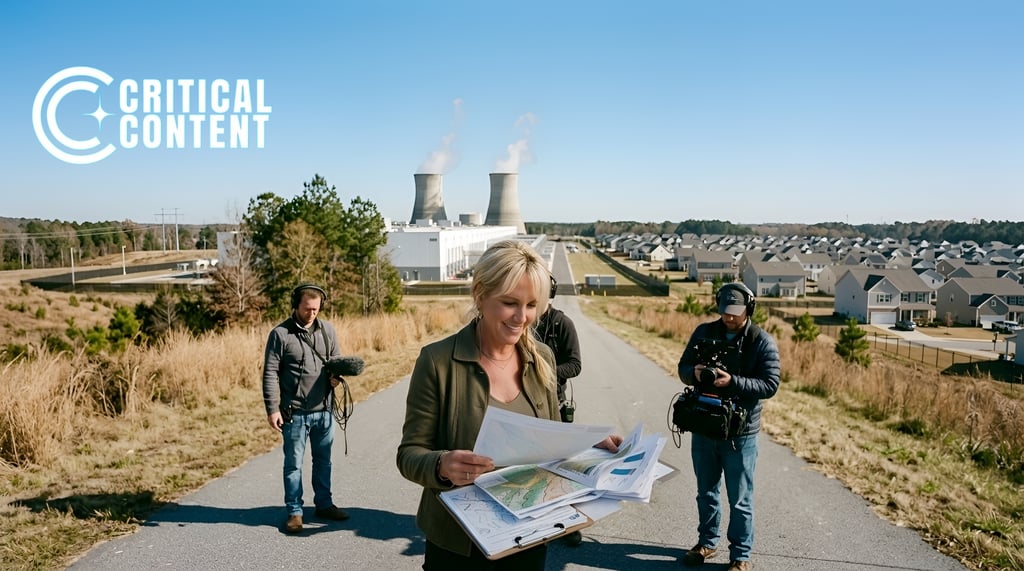
Erin Brockovich became internationally known during the 1990s after investigating groundwater contamination in Hinkley, California.
Working alongside attorney Ed Masry, she helped gather information from residents who believed their drinking water had been contaminated with hexavalent chromium, a chemical linked to industrial operations.
The case ultimately resulted in a $333 million settlement in 1996 involving more than 600 residents. The story later inspired the Academy Award-winning film Erin Brockovich, starring Julia Roberts.
Today, Brockovich continues to advocate for environmental transparency and community involvement in infrastructure and public health issues.
Why This Matters
The rapid growth of AI has increased demand for powerful computing facilities capable of training and operating advanced artificial intelligence systems.
These facilities, commonly known as data centers, require substantial amounts of electricity for computing and cooling. Some also consume significant volumes of water, depending on their cooling technology and local climate.
Experts note that impacts vary widely from one facility to another and depend on factors such as:
- Facility size.
- Cooling methods.
- Regional water availability.
- Local energy infrastructure.
- Environmental regulations.
Brockovich’s initiative reflects a broader public discussion about balancing technological innovation with environmental stewardship and community engagement.
Public Reaction
The reporting initiative has generated discussion among residents, environmental groups, technology observers, and local officials.
Supporters argue that gathering information from communities can improve transparency and help residents better understand projects proposed in their neighborhoods.
Others note that AI infrastructure also brings potential economic benefits, including investment, construction activity, and employment opportunities.
The conversation illustrates the ongoing debate surrounding how rapidly expanding technologies should be planned and managed while considering both economic development and environmental impacts.
Final Thoughts
Three decades after helping bring national attention to one of the United States’ most well-known environmental contamination cases, Erin Brockovich is once again asking communities to share their experiences.
This time, the focus is not contaminated groundwater but the expanding network of AI data centers supporting the next generation of technology.
Rather than alleging widespread wrongdoing, Brockovich says she wants communities to participate in understanding how these projects affect local environments and public resources. As AI infrastructure continues to grow, discussions about transparency, sustainability, and community involvement are likely to remain an important part of the conversation.
Source: Erin Brockovich’s public initiative and published news reports
FAQ