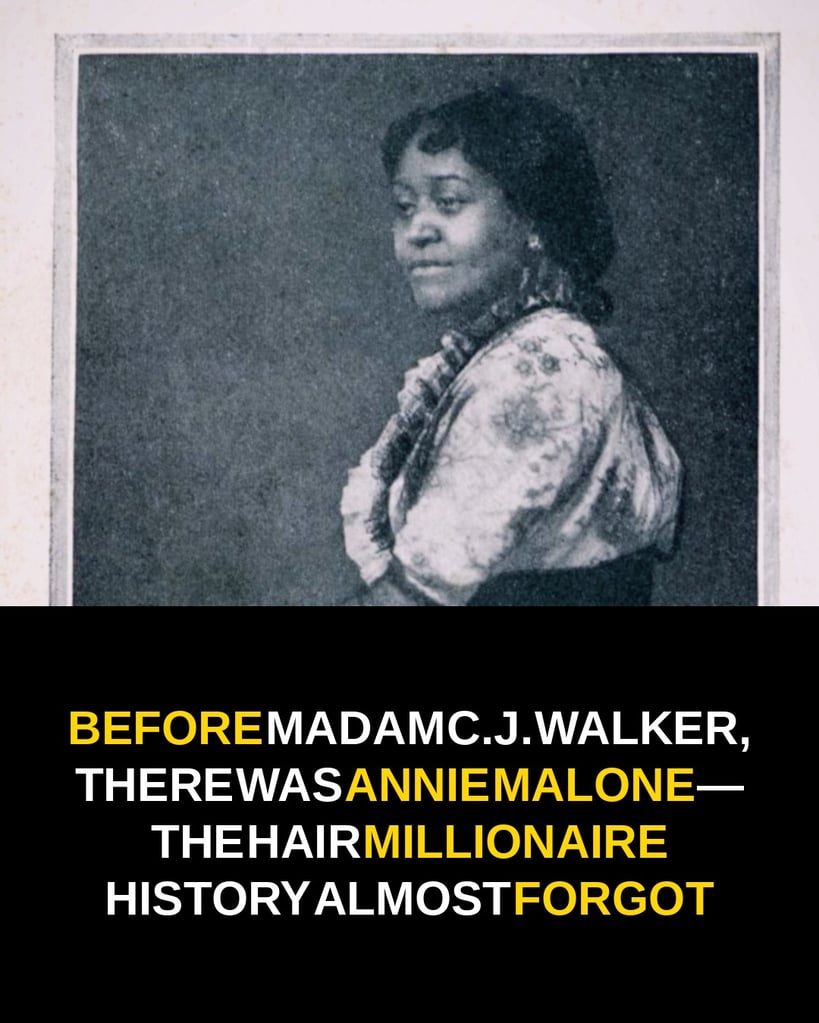
Before there was Madam C.J. Walker, there was the woman who hired her. Annie Minerva Turnbo Malone built one of the first great Black hair fortunes in America — a company called Poro, a four-story college to house it, and a sales army of agents across the country. History remembers her most famous employee in lights. This page exists to put the founder back in the frame.
Malone was born on August 9, 1869, in Metropolis, Illinois, and was orphaned and raised by her sister. She began experimenting in the 1890s with safer, non-damaging hair preparations for Black women — after watching the harsh products of the day destroy hair and scalps. By 1900 she was manufacturing her “Wonderful Hair Grower.” In 1902 she moved to St. Louis and built a door-to-door sales network, trademarking her line as Poro — the name, drawn from a West African society devoted to physical and spiritual betterment, was copyrighted in 1906.
And yes — one of her early Poro sales agents, for about a year, was a young widow named Sarah Breedlove, who would later become Madam C.J. Walker. Our series told Walker’s story on its own day; this piece is Malone’s, and it stays hers. But the fact belongs in her record too: the pipeline that produced the most famous name in Black hair history ran, for a while, through Annie Malone’s sales force.
Poro College: a headquarters like a city block
In 1918 Malone opened Poro College in St. Louis’s Ville neighborhood — and “college” undersells it. The four-story complex held a factory, a beauty school, a retail store, a 500-seat auditorium, dormitory rooms, a gym and a chapel, employing some 175 people locally. It was a factory, a campus and a community center in one building, run by a Black woman in 1918.
Period reporting put her assets at $14 million in 1920 — printed here as reported, the way period figures deserve — making her one of America’s first Black women millionaires. Period accounts credit Poro with employing tens of thousands of agents at its height: women earning real money, on their own routes, in an economy that offered them almost nothing else.
Her giving was structural, not decorative. She donated the first $10,000 toward the St. Louis Colored Orphans Home’s new building in 1919 and served as its board president from 1919 to 1943. She gave Howard University $25,000 — among the largest gifts it had then received from a Black donor. The fortune faded in the Depression and a costly divorce; she moved the business to Chicago in 1930 and died on May 10, 1957, with Poro colleges still operating in more than 30 cities. Almost forgotten is a strange fate for a woman who built all that. Almost — not quite.
Join the conversation
Be honest: had you ever heard the name Annie Malone before today — or only the name of the woman who once sold for her? And who is the almost-forgotten founder in YOUR industry or family whose credit is overdue? Tell us below.
Source note: Annie Malone’s account — Annie Minerva Turnbo Malone, born August 9, 1869 in Metropolis, Illinois, orphaned and raised by her sister; experimenting in the 1890s with safer, non-damaging hair preparations for Black women; manufacturing her “Wonderful Hair Grower” by 1900; moving to St. Louis in 1902 and building a door-to-door sales network, trademarking the line as Poro (copyrighted 1906, the name from a West African society devoted to physical and spiritual betterment); Sarah Breedlove — later Madam C.J. Walker — serving as an early Poro sales agent for about a year; the 1918 opening of Poro College in St. Louis’s Ville neighborhood (factory, beauty school, retail store, 500-seat auditorium, dormitory, gym and chapel, employing some 175 people locally); period reporting putting her assets at $14 million in 1920 and crediting Poro with employing tens of thousands of agents, both printed attributed as period reporting rather than audited fact; her donation of the first $10,000 toward the St. Louis Colored Orphans Home’s new building (1919), her board presidency of it (1919–1943), and her $25,000 gift to Howard University; the fortune’s fading in the Depression and a costly divorce, the business’s move to Chicago in 1930, and her death on May 10, 1957, with Poro colleges still operating in 30+ cities — is from the Digital Research Library of Illinois History Journal (Dr. Neil Gale’s compilation), Shoppe Black, Greater Good / brand-history coverage, and the Multicultural Kid Blogs fact sheet.