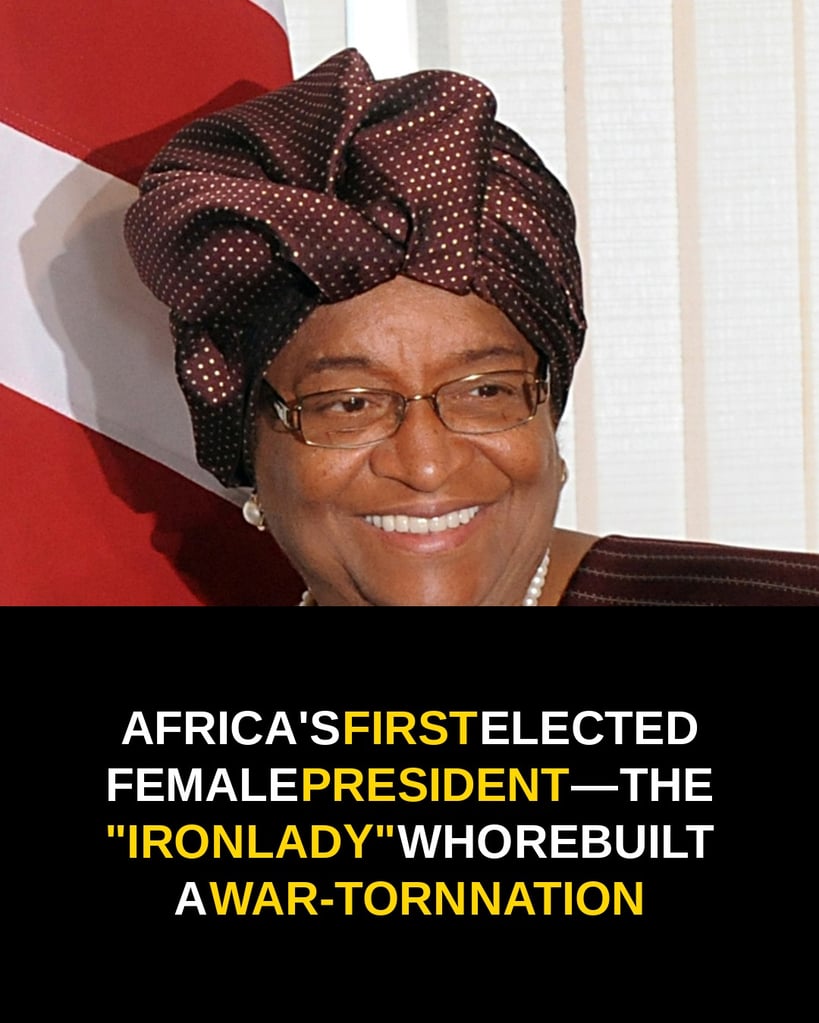
Say it with the qualifier, because the qualifier is the achievement: Ellen Johnson Sirleaf was Africa’s first democratically elected female head of state. Not appointed. Not interim. Elected — by voters, at the ballot box, to rebuild a country that war had torn apart. Liberia inaugurated her as its 24th president on January 16, 2006.
The qualifier matters, and this page prints it the accurate way: other women had served African nations as interim or acting heads of state. Sirleaf was the first to win the office by election and hold it by a people’s vote. In a continent of more than fifty nations, in all of recorded history to that day, no woman had done that. A Harvard-trained economist from Liberia did it first.
The Iron Lady’s assignment
Her nickname was the “Iron Lady,” and the job she was handed explains why she needed to be one. She led Liberia’s recovery after its civil war — the rebuilding of a nation whose institutions, economy and trust had been shattered. And later in her presidency, when the Ebola crisis struck, she led the country through that too: an epidemic layered on top of a post-war recovery, in one of the most demanding presidencies on earth.
Re-elected in 2011, she holds a record that runs on two tracks at once: longevity in an office women weren’t supposed to reach, and a governing burden — war’s aftermath, then plague — that would have tested any leader of any era.
The Nobel, in the committee’s own words
In 2011, Sirleaf shared the Nobel Peace Prize with Leymah Gbowee and Tawakkol Karman. The committee’s citation named the ground of the award: “for their non-violent struggle for the safety of women and for women’s rights to full participation in peace-building work.”

Read that citation against her story and the fit is exact. A woman who won power through an election in a post-war nation, governing explicitly in the frame of women’s safety and women’s participation in building peace — the Nobel wasn’t decorating a résumé. It was recognizing a theory of leadership and the woman who had governed by it.
She was re-elected the same year. The voters of Liberia, given the choice again, chose the Iron Lady again — which remains the bluntest verdict on a presidency that any headline can offer.
Her path to that inauguration ran through economics, and it mattered. Sirleaf was a Harvard-trained economist before she was a president — a formation built for exactly the presidency she inherited, in a country whose recovery was as much about budgets, institutions and credibility as it was about security. The “Iron Lady” nickname attached itself to that combination: a finance mind with the nerve to govern a post-war state, and then, when Ebola came, to face down an epidemic with the same refusal to flinch from either the numbers or the politics.
Join the conversation
First democratically elected female head of state in Africa — did Ellen Johnson Sirleaf get the recognition in this country that her record earned? And what does the “Iron Lady” story tell girls watching in YOUR house about what leadership can look like? Tell us below.
Source note: Ellen Johnson Sirleaf’s record — inaugurated as Liberia’s 24th president on January 16, 2006, Africa’s first democratically elected female head of state; the Harvard-trained economist nicknamed the “Iron Lady” who led Liberia’s recovery after its civil war and later through the Ebola crisis; sharing the 2011 Nobel Peace Prize with Leymah Gbowee and Tawakkol Karman “for their non-violent struggle for the safety of women and for women’s rights to full participation in peace-building work”; and her re-election the same year — is from the Nobel Committee citation, via BlackPast and the Academy of Achievement, the ECOWAS profile, and the AP inauguration record (January 16, 2006). The “democratically elected” qualifier is retained throughout because it is the accurate form of the first.
Tell us in the comments below - we read every single one, and the best takes get featured.