Critical Content Editorial Desk | October 25, 2026
What looked like an odd rock in a California creek turned out to be a remarkably preserved relic of the Ice Age. Geomorphologist Brigid Lynch spotted the object while surveying habitat for the threatened California red-legged frog in a San Mateo County open-space preserve. Specialists later identified it as a molar from an adult Pacific mastodon.
The Midpeninsula Regional Open Space District announced the find on September 9, 2026, and Stanford University published details about its ongoing examination on September 21. This is a look back at that documented discovery, not a new fossil unearthed in late October.
A field survey took an unexpected turn
Lynch was studying a creek in connection with work to improve habitat for frogs. The tooth was partly visible in the water and unusual enough to warrant closer examination. Paleontologists confirmed that it belonged to Mammut pacificus, an extinct elephant relative associated with western North America.
The specimen is especially valuable because it is unusually complete. It retains structures that often break apart or disappear over thousands of years. The exact age of this particular tooth has not yet been established through final dating; descriptions of a roughly 10,000-year-old fossil are preliminary.
What scientists can learn
Pacific mastodons fed on leafy vegetation rather than grazing exactly like some other large mammals of their time. Fossil evidence helps researchers reconstruct earlier landscapes and the plants and animals that shared them.
Stanford’s Geoscience Specimen Collection received the molar for preservation and study. Researchers have described plans for carbon dating and three-dimensional imaging, allowing students and scientists to examine the fossil while protecting the original from unnecessary handling.
Why the discovery site remains private
Officials have not released the preserve’s precise location. That helps prevent disturbance to a sensitive habitat and reduces the risk of people searching unsafely for objects they might mistake for fossils. The discovery happened during authorized fieldwork, not a public treasure hunt.
The coincidence gives this story its appeal: a project designed to help an animal that still lives in California uncovered evidence of a very different creature that vanished long ago. Protecting today’s habitats can also help preserve clues to the ecosystems that came before them.
Sources and further reading
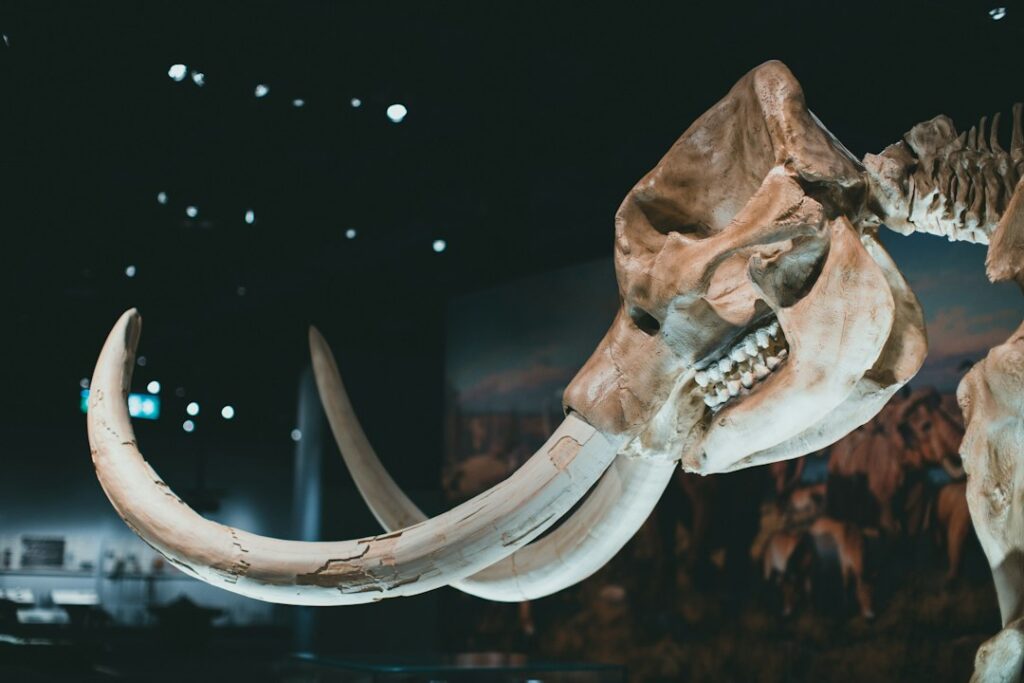
Featured image: An illustrative museum skull display, not the mastodon tooth found in California. Photograph by Jonathan Cooper / Unsplash; used under the Unsplash License.