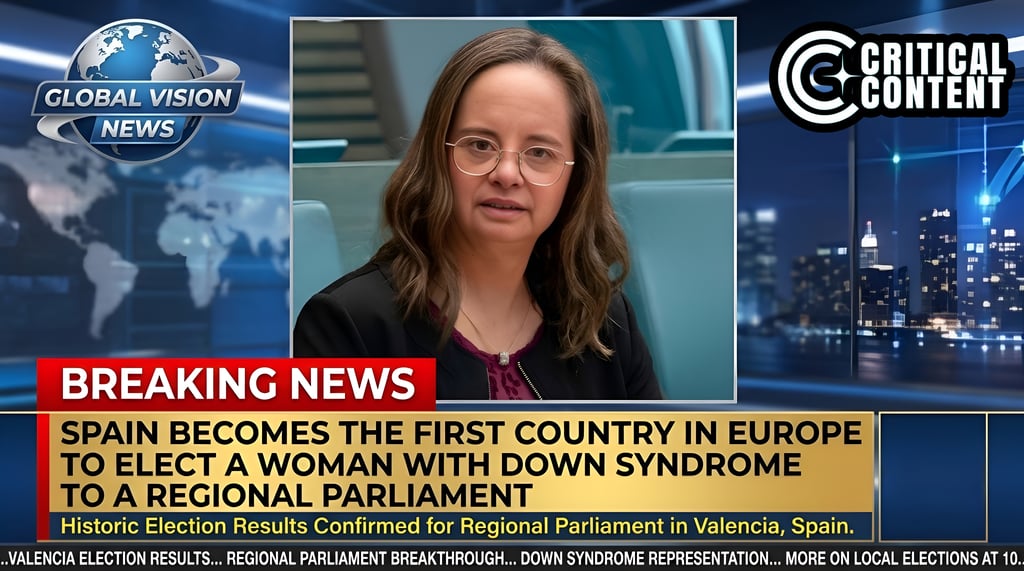
Mar Galcerán has made history by becoming the first person with Down syndrome to serve in Spain’s regional parliament, a landmark achievement that has drawn attention across Europe and beyond.
Galcerán took her seat in the Valencian regional parliament after years of public service and advocacy. Her appointment has been widely recognized as a significant step forward for disability representation in politics and has been described by many reports as a European first for a regional parliament.
According to published reports, Galcerán hopes her election will help challenge stereotypes and demonstrate that people with Down syndrome can make meaningful contributions to public life.
What Happened
Mar Galcerán, a member of Spain’s People’s Party (PP), officially joined the regional parliament of Valencia after being selected to fill a vacant parliamentary seat.
Her appointment followed more than two decades of advocacy on behalf of people with intellectual disabilities.
Throughout her career, Galcerán has worked to promote inclusion, accessibility, and equal opportunities for people with disabilities in education, employment, and civic life.
Following her appointment, she said she hoped her presence in parliament would help change public perceptions about Down syndrome.
According to her public statements, she wants more people to recognize that individuals with Down syndrome are capable of participating fully in society, including in positions of public leadership and decision-making.
Background
Down syndrome is a genetic condition caused by the presence of an extra copy of chromosome 21. People with Down syndrome have a wide range of abilities, interests, and life experiences.
In recent decades, disability rights advocates have pushed for greater inclusion in schools, workplaces, and public institutions.
Political representation has become an important part of that conversation, with campaigners arguing that legislative bodies should better reflect the diversity of the communities they serve.
According to published reports, Galcerán’s appointment is believed to be the first time a person with Down syndrome has served in a regional parliament in Europe.
Why This Matters
Galcerán’s election represents more than a personal achievement.
Many disability advocates see it as an important milestone because it demonstrates that barriers to public service can be reduced through inclusive policies and equal opportunities.
Her appointment also highlights:
Greater visibility for people with intellectual disabilities.
The importance of representation in political institutions.
Progress toward more inclusive public leadership.
Ongoing efforts to challenge stereotypes about disability.
Advocates say increased representation can encourage broader participation in education, employment, and civic life.
Public Reaction
Galcerán’s appointment has been welcomed by disability organizations, political leaders, and many members of the public.
Supporters have described her achievement as an inspiring example of greater inclusion in democratic institutions.
Many social media users praised her years of advocacy and expressed hope that her election would encourage more opportunities for people with disabilities in public life.
The story has also prompted broader discussions about accessibility, equal representation, and the importance of removing barriers that prevent talented individuals from serving in leadership roles.
Expert or Wider Context
Organizations representing people with disabilities have long advocated for greater participation in political decision-making.
The United Nations Convention on the Rights of Persons with Disabilities (CRPD) recognizes the right of people with disabilities to participate fully and effectively in political and public life on an equal basis with others.
Experts note that representation in elected office can help ensure that policies affecting people with disabilities are informed by lived experience and diverse perspectives.
While Galcerán’s appointment is historically significant, advocates emphasize that continued progress will depend on expanding opportunities and improving accessibility across all levels of government.
Final Thoughts
Mar Galcerán’s appointment to Spain’s regional parliament marks an important moment for disability inclusion and political representation.
After more than 20 years of advocacy, she has become a symbol of the progress that can be achieved when barriers to participation are reduced.
According to her own public statements, she hopes her historic role will encourage people to look beyond stereotypes and recognize the abilities, talents, and contributions of individuals with Down syndrome.
As conversations about inclusion continue around the world, Galcerán’s achievement stands as a reminder that public institutions are strengthened when they reflect the diversity of the communities they represent.
FAQ