
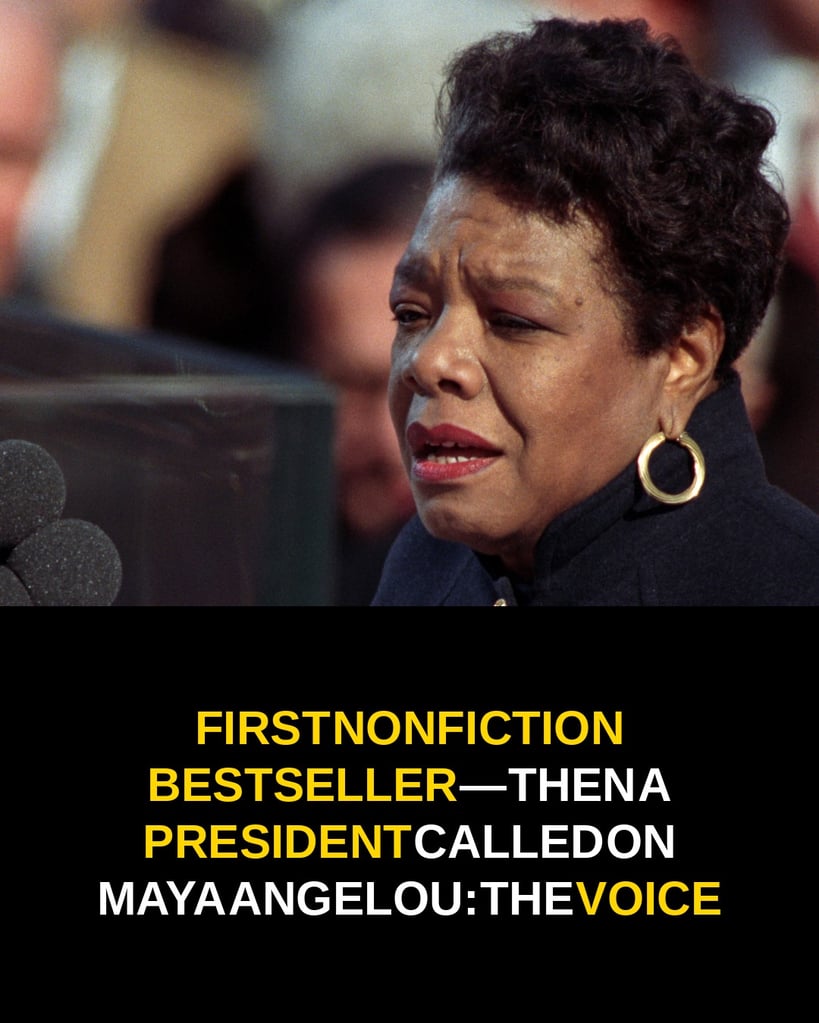
This is a tribute to a voice that was built, improbably, out of silence. Maya Angelou did not speak for nearly five years as a girl — and in that silence she memorized the Bible, Shakespeare and Black poets, constructing the instrument the whole world would one day hear. She became the first Black woman to write a nonfiction bestseller. Then a president asked her to speak for the nation.
Maya Angelou was born Marguerite Annie Johnson on April 4, 1928, in St. Louis. In 1969 she published I Know Why the Caged Bird Sings — a memoir of her Arkansas childhood that made literary history as the first nonfiction bestseller by a Black woman, and began a seven-volume autobiography.
The book tells, among much else, the story of those silent years: how, after childhood trauma, she did not speak for nearly five years — years in which her mind became a library. She memorized the Bible. She memorized Shakespeare. She memorized Black poets. The voice that would later fill inaugurations and auditoriums was assembled in a girl’s silence, one memorized line at a time, before she ever trusted it out loud again.
On the Pulse of Morning
On January 20, 1993, at President Bill Clinton’s request, Angelou stood at his inauguration and recited her poem “On the Pulse of Morning.” She was the first poet to give an inaugural recitation since Robert Frost in 1961 — a Black woman from Stamps, Arkansas, giving the nation its poem at the seat of its power. The recording of that performance won a Grammy.
The honors gathered the way the voice had: steadily, and then all at once in history’s memory. She received the National Medal of Arts in 2000 and the Presidential Medal of Freedom from President Obama in 2010 — the nation’s highest civilian honor, placed in the hands of a woman whose first book proved that a Black girlhood in the segregated South was not a footnote to American literature. It was American literature, and it had been all along.
She died on May 28, 2014, in Winston-Salem, North Carolina, at 86. But “still she rises” isn’t a slogan on this page — it’s a summary. The girl who couldn’t speak became the woman a president asked to do the speaking, for all of us, on the biggest morning in American public life. Every writer who has been told her story isn’t literature walks in carrying Caged Bird — the bestseller that proved the door could open, written by a woman who opened it herself.
Rest well, Dr. Angelou. The voice is still in the room.
Join the conversation
Be honest: when did Maya Angelou first reach YOU — Caged Bird in school, the 1993 inauguration, a line somebody who loved you quoted at the right moment? And which of her words do you carry? Tell us below.
Source note: Maya Angelou’s record — born Marguerite Annie Johnson on April 4, 1928, in St. Louis; publishing I Know Why the Caged Bird Sings in 1969, the first nonfiction bestseller by a Black woman, beginning a seven-volume autobiography; the memoir’s account of her nearly five years of not speaking after childhood trauma, during which she memorized the Bible, Shakespeare and Black poets; reciting “On the Pulse of Morning” on January 20, 1993, at President Bill Clinton’s request, the first poet to give an inaugural recitation since Robert Frost in 1961, with the recording winning a Grammy; receiving the National Medal of Arts in 2000 and the Presidential Medal of Freedom from President Obama in 2010; and her death on May 28, 2014, in Winston-Salem, North Carolina, at 86 — is from the Academy of American Poets, the New York Public Library, and History.com.

