Critical Content | Reported October 26, 2026
One of the stranger seasonal stories online involves families discovering dozens of tiny praying mantises on a Christmas tree. The biological explanation is real: egg cases attached to branches can be brought indoors with a cut tree, and indoor warmth may affect when the young hatch. This is a science explainer inspired by a recurring viral story, not a new October 2026 infestation report.
The foam-like case has a name
Female praying mantises deposit clusters of eggs inside a protective case known as an ootheca. These cases often resemble a dry, tan or brown patch of hardened foam attached to a twig or stem rather than the individual eggs that people might expect to see.
The Bucks County Audubon Society’s Honey Hollow Nature Center has explained how branches of a real Christmas tree can carry an ootheca home. Numbers of offspring vary by mantis species, and no single count applies to every egg case.
A warm room can change the calendar
In colder climates, many mantis egg cases overwinter outdoors and young emerge when spring conditions return. Moving a branch into a heated home can speed development, potentially producing a surprise hatching after the tree has been decorated.
This does not mean every natural Christmas tree contains a mantis nursery. Nor do the insects represent the same risk as a venomous pest: mantises are predators of other insects and generally do not target people. The sudden appearance of many hatchlings is understandably unsettling, but it is explainable biology.
What to do if you discover one
If you find a suspected egg case before bringing a tree inside, seek local extension advice to identify it, because native and introduced mantis species may be treated differently in different areas. Avoid spraying unknown chemicals around living spaces or fragile decorations.
For a case that has not hatched, nature educators have recommended carefully relocating the affected twig to an appropriately sheltered outdoor location where local guidance permits. Once the hatchlings emerge, professional or extension guidance is preferable to guessing about species or releasing insects in the wrong habitat.
Sources and further reading
- Bucks County Audubon Society / Honey Hollow Nature Center, December 16, 2016
- Southern Living, December 2023 — entomologist’s explanation
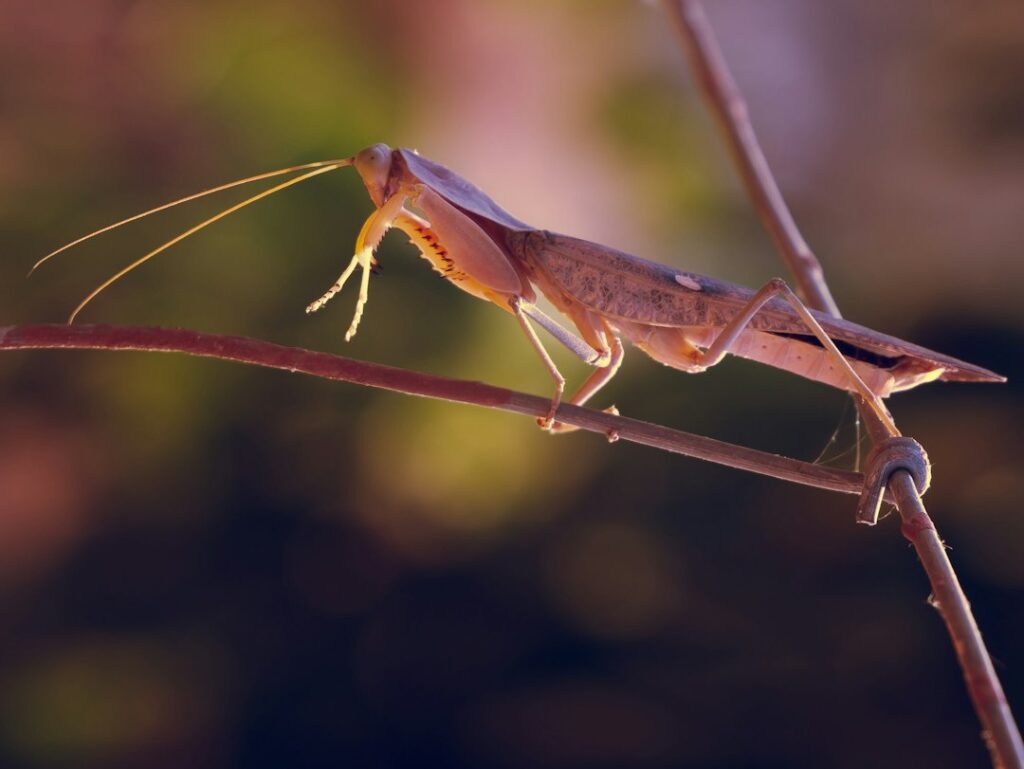
Featured image: illustrative Unsplash photograph (adult praying mantis on a branch, not an egg case), not an image of the platform or named individuals. Photo: Malama Mushitu / Unsplash. Used under the Unsplash License.