
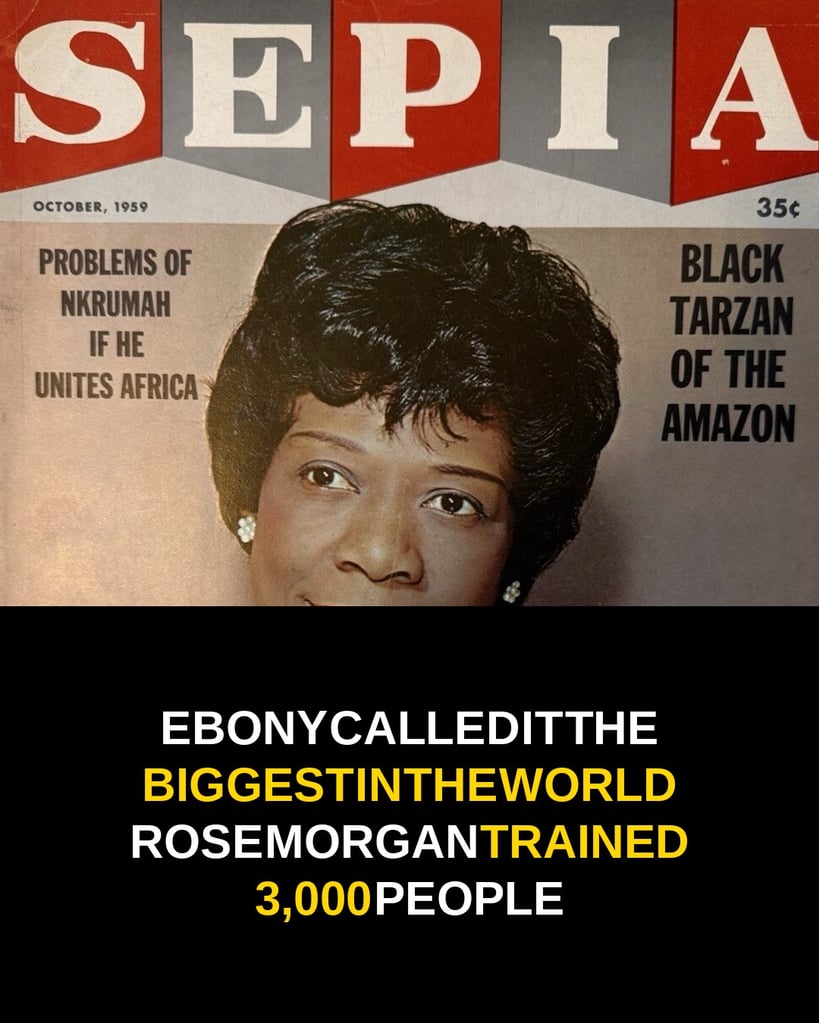
Picture a Harlem mansion turned into a beauty empire. That was Rose Morgan’s House of Beauty — a salon so big that Ebony called it the “biggest Negro beauty parlor in the world,” in the magazine’s own period wording. She didn’t just style Harlem. She trained more than 3,000 people, built a business that grossed millions, and then helped found a bank.
Rose Meta Morgan was born on August 9, 1912, in Edwards, Mississippi, and raised in Chicago. Her break came in 1938, styling singer Ethel Waters’s hair — work that brought her to New York. Plenty of stylists get one famous client and ride the moment. Morgan did something else with hers: she built an institution around it.
On May 6, 1945, she opened Rose Meta’s House of Beauty in a Harlem mansion, with Rep. Adam Clayton Powell Jr. cutting the ribbon at the grand opening. By 1946, just a year later, the salon employed a staff of 29 — 20 stylists, 3 licensed masseurs and a registered nurse. Read that staff list again. Stylists, yes — but also masseurs and a nurse, under one roof, in 1946. This wasn’t a chair and a mirror. It was a full house of beauty, staffed like one.
Bigger than a salon
The numbers backed up the name. The business grossed more than $3 million in its first years — serious money, earned in an era when a Black woman building anything at that scale had to push through every door herself.
And she kept expanding. In 1955 she opened the five-floor Rose Morgan’s House of Beauty at 507 W. 145th St., adding dressmaking and a charm school to the operation. A wig salon followed in 1960. Hair, dressmaking, charm, wigs — she was building a complete world of beauty and presentation, floor by floor, service by service, all of it employing and training Black women and men along the way.
That training may be her deepest legacy. Across her career, Morgan employed and trained more than 3,000 people. Three thousand stylists, workers and professionals who learned a trade inside her houses — and carried those skills, and those standards, out into salons and businesses of their own. An empire that teaches is an empire that multiplies.
From beauty parlor to bank
Then she did the move that tells you exactly how she thought. In 1964/65, Morgan co-founded Freedom National Bank — then New York’s only Black-owned commercial bank. The woman who built the biggest beauty parlor in the world understood that beauty money needed somewhere Black-owned to live. Style built the business; the bank was about keeping the community’s money working for the community.
Rose Morgan died in 2008, at 96 — a life that stretched from a Mississippi birth in 1912 to a Harlem mansion salon, a five-floor beauty house, more than 3,000 people trained, and a bank with her name in its founding story. Ebony’s superlative gets quoted a lot. What deserves quoting just as loudly is everything she built underneath it.
Join the conversation
Three thousand people trained — how many salons, careers and family incomes do you think trace straight back to Rose Morgan’s chairs? And be honest: had you ever heard her name before today? Tell us below.
Source note: Rose Morgan’s story — born August 9, 1912, in Edwards, Mississippi, and raised in Chicago; her 1938 break styling singer Ethel Waters’s hair, which brought her to New York; the May 6, 1945 grand opening of Rose Meta’s House of Beauty in a Harlem mansion, with the ribbon cut by Rep. Adam Clayton Powell Jr.; a staff of 29 by 1946 (20 stylists, 3 licensed masseurs and a registered nurse); Ebony calling it the “biggest Negro beauty parlor in the world” (quoted in the magazine’s period wording); more than $3 million grossed in its first years; the five-floor Rose Morgan’s House of Beauty opened in 1955 at 507 W. 145th St. with dressmaking and a charm school, and a wig salon in 1960; more than 3,000 people employed and trained across her career; co-founding Freedom National Bank in 1964/65, then New York’s only Black-owned commercial bank; and her death in 2008 at 96 — is from The HistoryMakers, the New York Times “Overlooked No More” obituary coverage, and Wikipedia.

