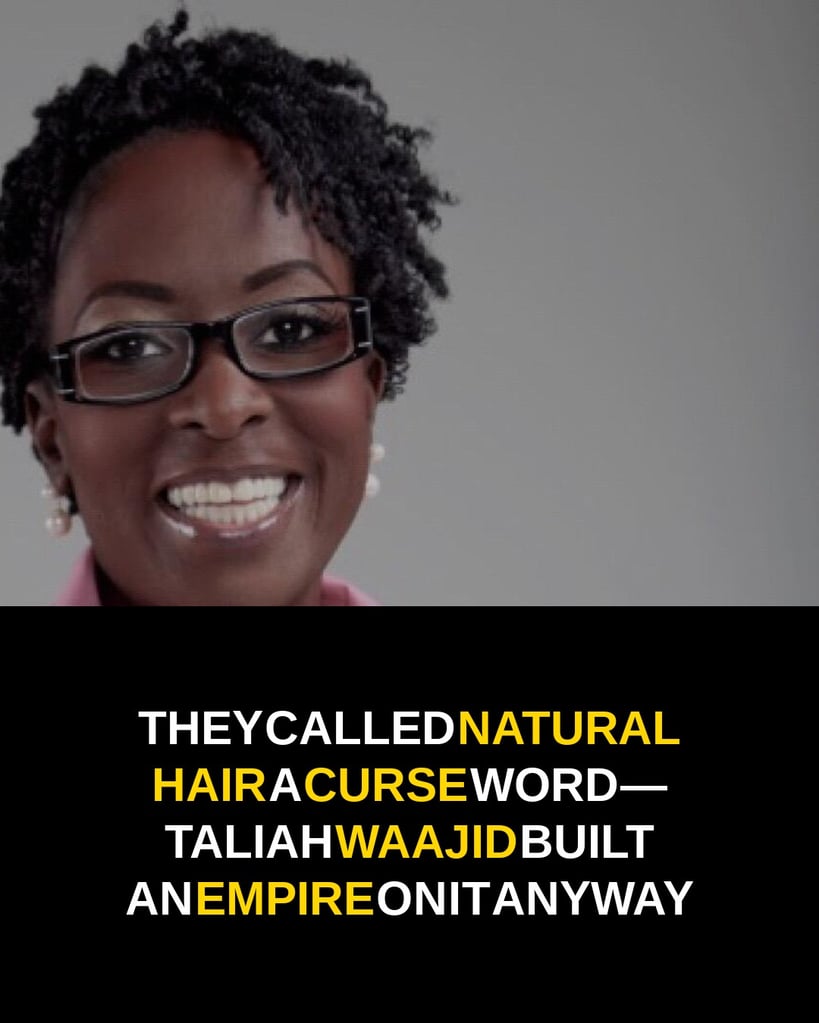
You have to hear it in her own words to believe the starting line. Taliah Waajid moved from New York to Atlanta in 1991, and in Atlanta at that time, natural hair — in her words — “was almost considered a curse word.” The woman who would build an empire on natural hair arrived in a city that treated it like an insult. She did hair for free until the city changed its mind.
Her foundation was set in childhood: her mother wouldn’t allow her to have a relaxer, so Waajid learned to care for and style natural hair as a girl — and she was braiding professionally in her teens. While other stylists built their names on chemical services, her hands were trained on the hair the industry was teaching women to hide. When the relaxer era finally cracked, she’d been ready for decades.
Atlanta, though, wasn’t ready for her. So she worked free at first, building a clientele one head at a time — every free style a walking advertisement for the hair the city called a curse word. Then she borrowed money from her father for a booth at the Bronner Bros. show, marched models through the aisles handing out cards, and turned a borrowed booth into a beachhead.
The line, the show, the empire
In 1996 she launched her Black Earth Products line. And she founded the World Natural Hair, Health & Beauty Show in Atlanta — the first show of its kind anywhere. Its first edition drew about 25 exhibitors and 150 attendees. Sit inside those numbers for a second: twenty-five booths and a room of 150 people, betting that natural hair deserved its own industry.
The show grew to more than 200 exhibitors and crowds in the tens of thousands. (Sources split on both the show’s founding year and its peak attendance figure, so this page prints it the honest way: the first show was small, the grown show was enormous, and the arc between them is hers.) Her product lines — the Taliah Waajid brand, the Uncle Jimmy men’s line, a children’s line — reached national retail, putting natural hair care on shelves from a company founded by a woman who once had to give the service away.
Today, natural hair has conventions, aisles, influencers and empires. Waajid was holding its show when it had 150 people and a curse word for a name. Every empire in this industry has a founding story, but not many founders can say they built it in a city that hissed at the product — by braiding, for free, until the city came around.
Join the conversation
Did YOU come up in the era when natural hair got you side-eye — and be honest, who in your family wore theirs anyway, curse word or not? And should Taliah Waajid’s name be spoken automatically whenever the natural hair industry tells its own history? Tell us below.
Source note: Taliah Waajid’s account — her mother not allowing her a relaxer, so she learned to care for and style natural hair as a girl and was braiding professionally in her teens; her move from New York to Atlanta in 1991, where natural hair, in her own words, “was almost considered a curse word”; doing hair free at first to build a clientele, then borrowing money from her father for a booth at the Bronner Bros. show and marching models through the aisles handing out cards; launching her Black Earth Products line in 1996; founding the World Natural Hair, Health & Beauty Show in Atlanta, the first show of its kind, growing from a first edition of about 25 exhibitors and 150 attendees to 200+ exhibitors and crowds in the tens of thousands (sources split on the show’s founding year — 1994 in her own PR versus 1997 implied by the 20th anniversary celebrated in April 2017 — and on the peak attendance figure, reported between 30,000 and 40,000, so neither a single founding year nor a single peak figure is printed); and her product lines (Taliah Waajid brand, Uncle Jimmy men’s line, children’s line) reaching national retail — is from Her Agenda, PRWeb brand releases, Sheen Magazine’s 20th anniversary coverage, her Cocotique interview, and MadameNoire.