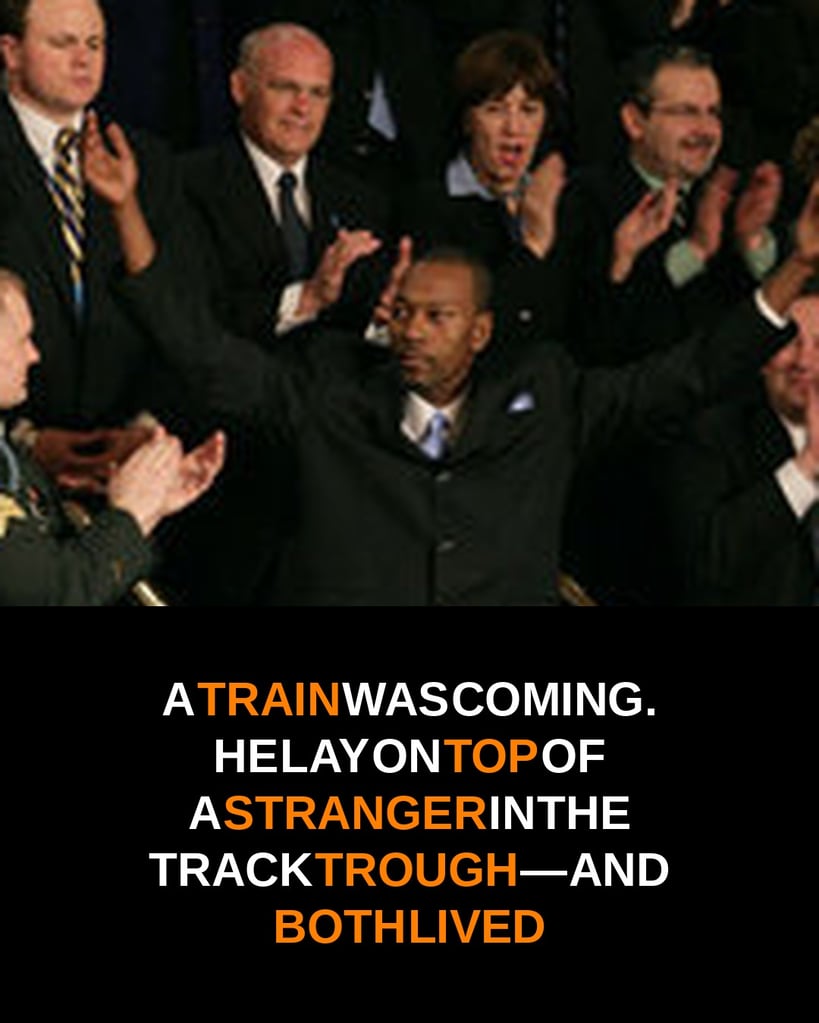
There was no time to be a hero the careful way — so Wesley Autrey did it the only way there was. On Jan. 2, 2007, a stranger fell onto the New York subway tracks in front of an oncoming train, and Autrey — a 50-year-old construction worker and Navy veteran, standing on the platform with his two young daughters — jumped down after him. What he did in the next few seconds is the reason both men are alive to tell it.
The station was 137th Street–City College. The young man was Cameron Hollopeter, a 20-year-old film student, who suffered a seizure on the platform and fell onto the tracks. The No. 1 train was approaching — its lights about 200 feet away. Autrey’s daughters were right there watching their father make the decision most of us only imagine making.
Autrey jumped down and tried to drag Hollopeter up off the tracks. It was not going to work — there simply was not time. So he changed the plan in an instant, in the way that separates the stories we tell for decades from the ones that end in tragedy: he pushed Hollopeter into the drainage trough between the rails, and lay on top of him, holding him down.
Grease on his cap
Then the train passed over them both. It stopped with its second car above the men — close enough to leave grease on Autrey’s cap. Picture that clearance, family. A train, passing over two men lying in a trough between the rails, near enough to mark the cap on the rescuer’s head — and both of them underneath it, alive. Hollopeter survived with bruises.
The honors followed, and they were earned in full. Autrey received the Carnegie Medal. He received New York City’s Bronze Medallion, its highest citizenship award. And he earned a place on the Time 100 list in 2007. A construction worker, a Navy veteran, a father whose two young daughters watched the whole thing from the platform — honored by his city, by the Carnegie Hero Fund, and by one of the most famous lists in publishing, for a decision that took less time than reading this paragraph.
But the line that closes his story best is his own, and this page will not improve on it, because it cannot be improved. Autrey’s own summary: “I don’t feel like I did something spectacular; I just saw someone who needed help.” That is the whole philosophy, in one sentence, from a man lying under a train with grease on his cap so a stranger could live. He is still with us, and his example still stands on that platform, asking the rest of us a quiet question: if the moment came — lights 200 feet away, no time to think — would you jump?
Join the conversation
Be honest, family — lights 200 feet away, your kids watching from the platform: do YOU jump? And what do you make of a man who calls that “not spectacular”? Tell us below, and give Mr. Autrey his flowers while he can still read them.
Source note: On Jan. 2, 2007, at New York’s 137th Street–City College station, Wesley Autrey, a 50-year-old construction worker and Navy veteran waiting with his two young daughters, saw 20-year-old film student Cameron Hollopeter suffer a seizure and fall from the platform onto the tracks as a No. 1 train approached, its lights about 200 feet away; Autrey jumped down, tried to drag Hollopeter up, realized there was not time, and instead pushed him into the drainage trough between the rails and lay on top of him, holding him down while the train passed over them, stopping with its second car above the men, close enough to leave grease on Autrey’s cap; Hollopeter survived with bruises, and Autrey received the Carnegie Medal, New York City’s Bronze Medallion (its highest citizenship award), and a place on the Time 100 list in 2007, summarizing it himself as: “I don’t feel like I did something spectacular; I just saw someone who needed help” — from the Carnegie Hero Fund Commission (official citation), the New York Times, and Wikipedia.