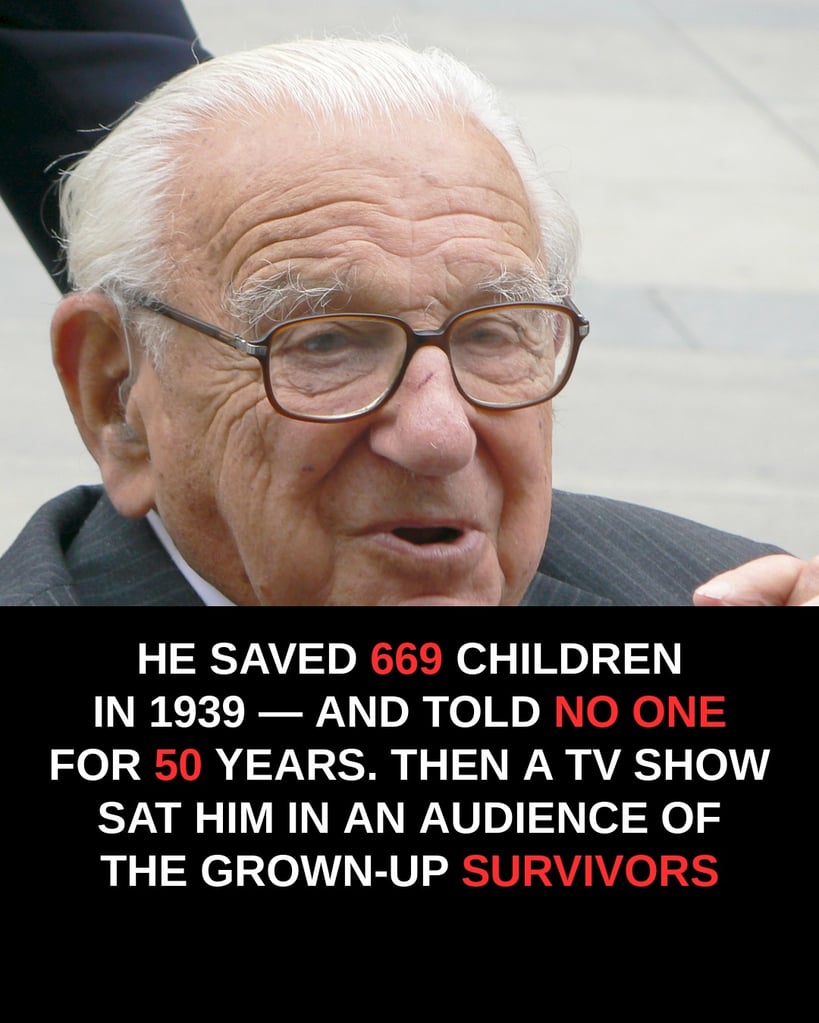
In 1939, a 29-year-old stockbroker cancelled a skiing holiday, went to Prague instead — and quietly saved 669 children. Then he went home, kept a scrapbook, and told almost no one for half a century.
His name was Nicholas Winton, and if you have ever cried at a television clip without knowing why, there is a good chance it was his.
Eight trains out of Prague
Winton was a London stockbroker. In 1939, instead of taking his planned skiing holiday, he went to help in Prague, where families — most of them Jewish — were desperate to get their children out before the war everyone could feel coming arrived.
What he organized was not a gesture. It was a rescue operation: eight trains that carried 669 mostly Jewish children to safety in Britain, to new homes and a future none of them would otherwise have had.
There was supposed to be a ninth train. It had 250 children aboard, and it was due to leave on September 1, 1939 — the day war broke out. That train never left. Hold that number alongside the other one, because Winton carried both of them for the rest of his life: 669 saved, and 250 who were ready, packed, and waiting on the one day that made rescue impossible.
The scrapbook in the attic
Here is the part that makes this story unlike any other hero story on this page. Winton came home and said almost nothing about it — for roughly fifty years. No memoir tour. No fame. Just a scrapbook, kept quiet in the house he shared with his wife, Grete.

In 1988, Grete found that scrapbook in their attic. And that discovery is the only reason the world knows his name at all. Imagine it: one of the great rescues of the Second World War, sitting in an attic, one house-clearance away from being lost forever — because the man who did it never thought to make himself the story.
The audience that stood up
On February 27, 1988, the BBC programme That’s Life!, hosted by Esther Rantzen, sat Winton in its studio audience. Beside him sat Vera Diamant — one of the children he had saved, now grown. That alone would have been a reunion worth filming.
Then came the reveal. Much of that studio audience was made up of “Winton’s children” — the grown-up survivors of those eight trains, sitting all around the man who had saved them and never asked any of them for so much as a thank-you. One by one, and then all together, they stood for him.
He was knighted in 2003. He died on July 1, 2015, aged 106 — a lifespan so long that he lived to see generations descend from the children on his trains. The descendants of the 669 now number over 5,000. Five thousand people, walking around today, because a 29-year-old changed his holiday plans.
Join the conversation
Why do you think he kept it secret for 50 years — humility, grief for the 250 on the ninth train, or both? And if you could say one sentence to a man who saved your whole family line before you were born, what would it be? Tell us below.
Source note: The account of Nicholas Winton — the cancelled skiing holiday and work in Prague in 1939, the eight trains carrying 669 mostly Jewish children to safety in Britain, the ninth train with 250 children due to leave on September 1, 1939 that never left, the scrapbook found by his wife Grete in the attic in 1988, the BBC That’s Life! broadcast of February 27, 1988 hosted by Esther Rantzen with Vera Diamant and an audience of grown survivors, the 2003 knighthood, his death on July 1, 2015 aged 106, and the 669 children’s descendants now numbering over 5,000 — is from History Extra (BBC History Magazine), the Greater Good Science Center account, and the That’s Life! broadcast record.
Tell us in the comments below - we read every single one, and the best takes get featured.