Critical Content | Reported October 23, 2026
A small, nocturnal primate that had gone undocumented in scientific literature for almost a century has been confirmed alive on Indonesia’s Bangka Island. The Bangka slow loris, a critically endangered species once listed as possibly extinct, is the subject of a new study publicized October 20, 2026.
The finding did not come from one surprise encounter in a forest. It came from years of records collected by the Alobi Wildlife Rescue Center, which documented more than 90 individuals between 2015 and 2025, according to conservation group Re:wild.
Why people knew what scientists hadn’t documented
Residents on Bangka had continued to encounter slow lorises in yards, alongside roads and near power lines, even while formal scientific documentation was missing. The rescue center responded to those sightings, cared for animals and recorded where they were found.
Researchers combined the records into a peer-reviewed paper in Spixiana. Of the animals rescued, 86 were released at selected forest sites. Those numbers describe rescue activity, not a complete census of the wild population.
A remarkable animal with a serious problem
Slow lorises are unusual among primates because their bite can be venomous: gland secretions are mixed with saliva. Their large eyes and deliberate movement suit life in trees at night.
But the researchers emphasized the threats still facing the Bangka species. Mining, land conversion for palm-oil plantations, roads and the pet trade continue to reduce suitable habitat and expose animals to injury.
A rediscovery is not a recovery
Re:wild and study authors have called for habitat protection, population surveys and long-term monitoring. Confirming that a species survives is an important first step, but it does not establish that numbers are rising or that extinction risk has passed.
The most striking lesson is about local knowledge: an animal can disappear from scientific databases without disappearing from the daily experience of the people who live near it.
Sources and further reading
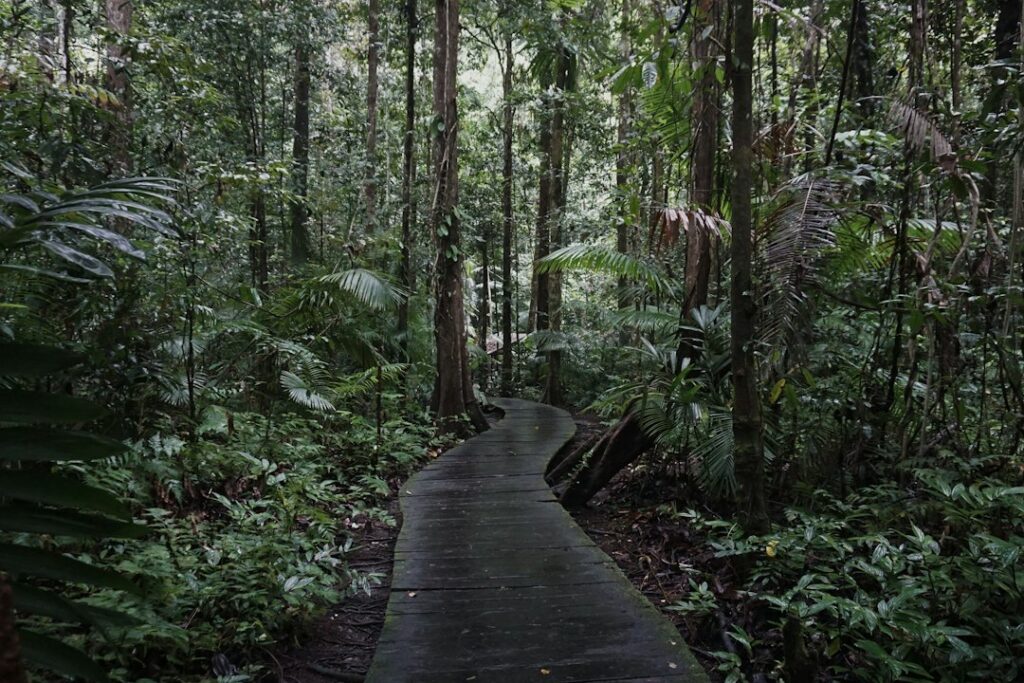
Featured image shows Indonesian rainforest habitat, not the Bangka slow loris or a documented rescue. Photo by Afriyandi Setiawan / Unsplash (Unsplash License).