
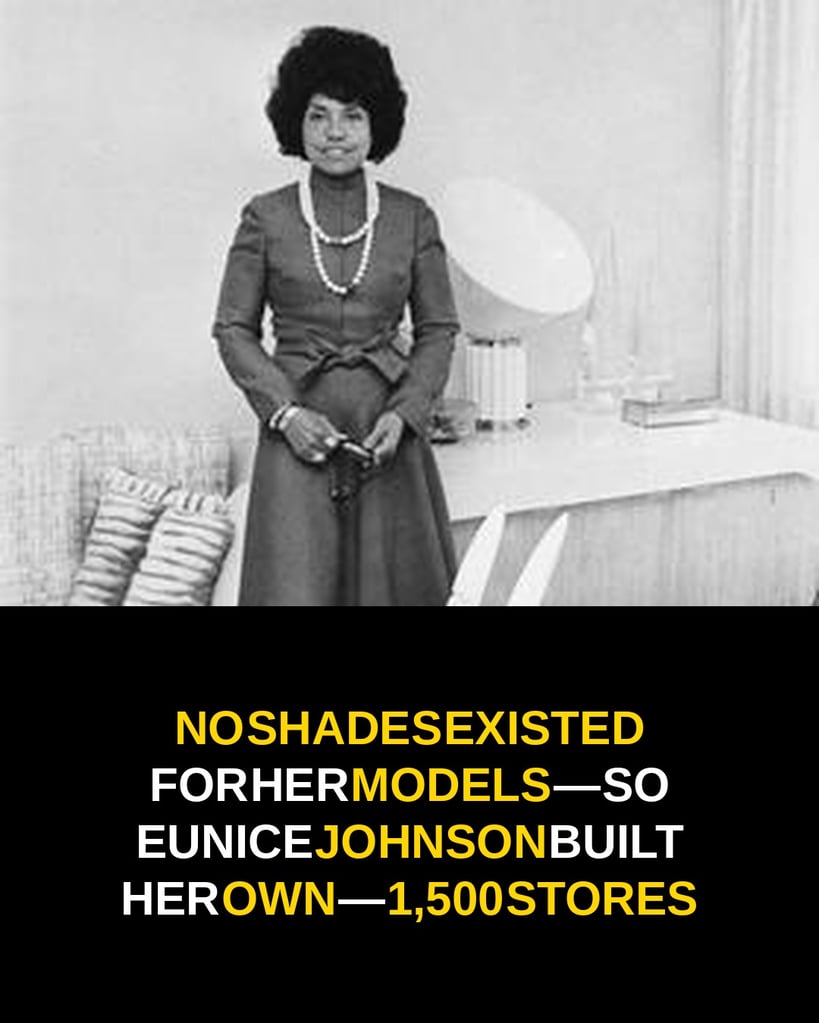
Picture the problem plainly: Eunice W. Johnson had the models, the clothes and the crowds — and the beauty industry had nothing for the faces walking her runway. Mainstream cosmetics brands simply made no shades for her Black models. So the woman who co-founded Johnson Publishing did what founders do. She built the thing that didn’t exist — and put an empire inside a makeup compact.
Johnson had already changed American publishing alongside her husband, John H. Johnson, as a co-founder of Johnson Publishing, home of Ebony and Jet. In 1958 she founded and directed the Ebony Fashion Fair — a traveling fashion show that began as a hospital fundraiser. It didn’t stay small. The show ran until 2009, visited 200 cities and staged more than 4,000 shows.
And it gave while it glamoured. Across its run, the Ebony Fashion Fair raised more than $50 million for charity — real money, raised city by city, runway by runway, in communities the fashion world mostly ignored. Her models carried couture into towns where Black audiences had rarely been treated as the main event, because in her show, they were the main event.
No shades existed — so she made them
On the road, the gap stopped being an insult and became a business plan. If the established brands would not formulate makeup for Black skin, Johnson would. In 1973 she launched Fashion Fair Cosmetics — the first national makeup line formulated for Black women, sold in major department stores.
Read that again, because the setting matters as much as the product. This wasn’t a line tucked into a corner. Fashion Fair sat in Marshall Field’s, Bloomingdale’s and Neiman Marcus — and even Harrods in London. At its peak, the brand was sold in more than 1,500 department stores and became the largest Black-owned cosmetics company in the world.
That’s the Johnson pattern, twice over. With the Fashion Fair, she took a fundraiser and built a national institution. With Fashion Fair Cosmetics, she took an exclusion — no shades, no welcome, no shelf — and answered it with a company. She didn’t wait for the beauty counter to make room. She became the beauty counter.
She died on January 3, 2010. The brand she built later passed through bankruptcy and was bought in November 2019 for $1.85 million, then relaunched at Sephora — a second life for a name she created because the industry had left her models unpainted and unbothered. The shades on shelves today, in every range and undertone, walk through a door Eunice Johnson forced open in 1973.
Join the conversation
Be honest: who in your family wore Fashion Fair — and do you remember the first time you saw a makeup counter that actually had YOUR shade waiting? And should Eunice Johnson’s name be spoken first whenever the story of Black beauty business is told? Tell us below.
Source note: Eunice W. Johnson’s record — co-founding Johnson Publishing (Ebony, Jet) with her husband John H. Johnson; founding and directing the Ebony Fashion Fair in 1958, a traveling show that began as a hospital fundraiser, ran until 2009, visited 200 cities and staged more than 4,000 shows; the shows raising more than $50 million for charity (Johnson Publishing’s own figure is $55 million, so this page prints “$50 million+”); mainstream cosmetics brands making no shades for her Black models; her 1973 launch of Fashion Fair Cosmetics as the first national makeup line formulated for Black women, sold in major department stores including Marshall Field’s, Bloomingdale’s, Neiman Marcus and Harrods in London; the brand reaching more than 1,500 department stores at its peak and becoming the largest Black-owned cosmetics company in the world; the brand being bought out of bankruptcy in November 2019 for $1.85 million and relaunched at Sephora; and her death on January 3, 2010 — is from Wikipedia’s sourced company history, the ASU FIDM Museum, and System Magazine.

