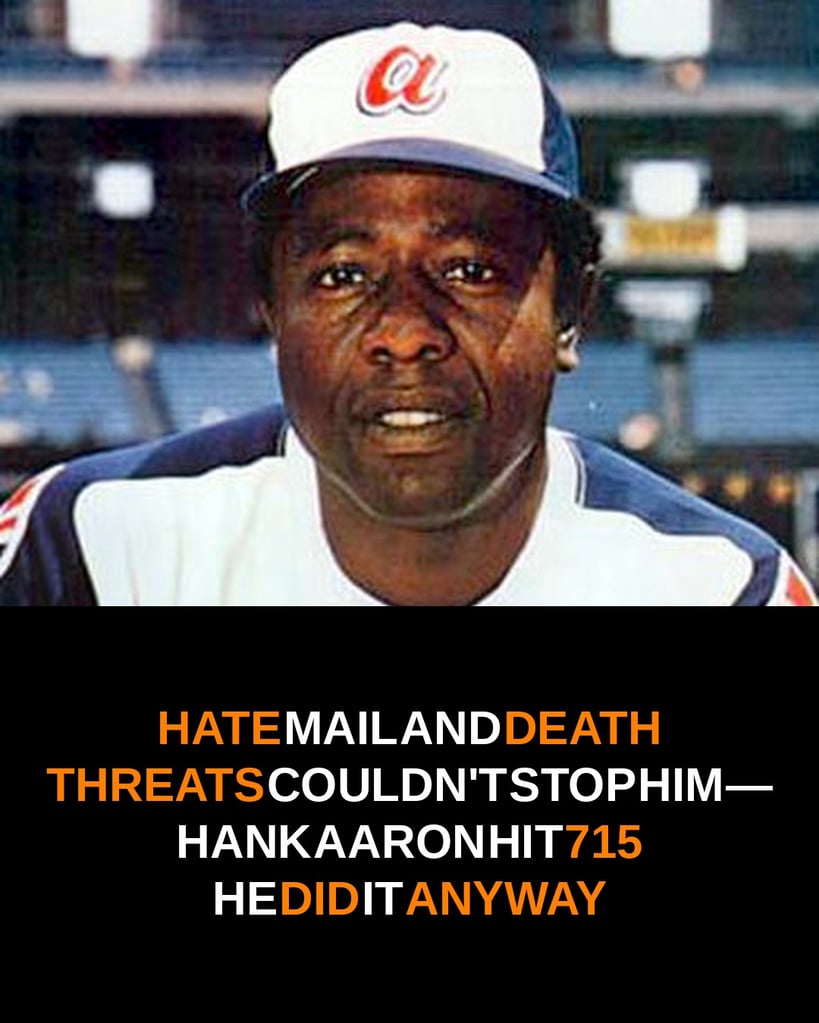
This is a tribute to a man who did the hardest thing in American sports while strangers threatened his life for doing it. As Hank Aaron closed in on Babe Ruth’s home run record, the hate mail and death threats poured in. He kept swinging. On April 8, 1974, he hit number 715 anyway — and baseball, and this country, were never the same.
Henry “Hank” Aaron began as a teenager in the Negro Leagues. By the early 1970s he was closing on the most sacred number in baseball: Ruth’s career record of 714 home runs. And the closer he got, the uglier America got. Aaron received an extraordinary volume of racist hate mail and death threats. The FBI provided protection. His daughter’s college needed added security. A kidnap plot against his family was reported.
Sit with what that means. A man was threatened — his children were threatened — not for any wrong, but for hitting baseballs better than anyone ever had, while Black. Every at-bat carried a weight no record book records.
April 8, 1974
Aaron ended the 1973 season at 713. On his first swing of the 1974 season, he tied Ruth. Then came April 8, 1974, in Atlanta, before 53,775 fans. Aaron drove an Al Downing pitch over the left-field wall — number 715. The record was his.
Vin Scully’s call framed the moment for history: “A Black man is getting a standing ovation in the Deep South for breaking a record of an all-time baseball idol.” In the Deep South — standing, cheering, for the man the threats had tried to stop. He hadn’t just broken a record. He had outlasted the worst mail in America to do it in front of everybody.
Aaron finished with 755 home runs, a record that stood for 33 years, and he remains the all-time leader in runs batted in and total bases — quiet, cumulative records built at-bat after at-bat, season after season, by a man who showed up and did the work better and longer than anyone. He was inducted into the Hall of Fame in 1982. He died on January 22, 2021, at 86 — and the tributes that poured in carried the same word, over and over: grace. Not just power. Grace, under a kind of pressure almost no athlete has ever been asked to carry.
The home runs are counted. What he carried to hit them can’t be. Rest well, Hammer. You did it anyway.
Join the conversation
Where were YOU — or your parents, or your grandparents — when 715 left the park? And be honest: does knowing what Aaron endured on the way there change what that swing means to you? Tell us below.
Source note: Hank Aaron’s record — beginning as a teenager in the Negro Leagues; closing on Babe Ruth’s career record of 714 home runs in the early 1970s amid an extraordinary volume of racist hate mail and death threats, FBI protection, added security at his daughter’s college and a reported kidnap plot against his family; ending 1973 at 713 home runs and tying Ruth on his first swing of the 1974 season; hitting No. 715 on April 8, 1974, in Atlanta before 53,775 fans, off Al Downing, over the left-field wall; Vin Scully’s call (“A Black man is getting a standing ovation in the Deep South for breaking a record of an all-time baseball idol”); finishing with 755 home runs, a record that stood 33 years; remaining the all-time leader in runs batted in and total bases; Hall of Fame induction in 1982; and his death on January 22, 2021, at 86 — is from Baseball Hall of Fame coverage, the Washington Post obituary, and PSA/NBC Sports histories.