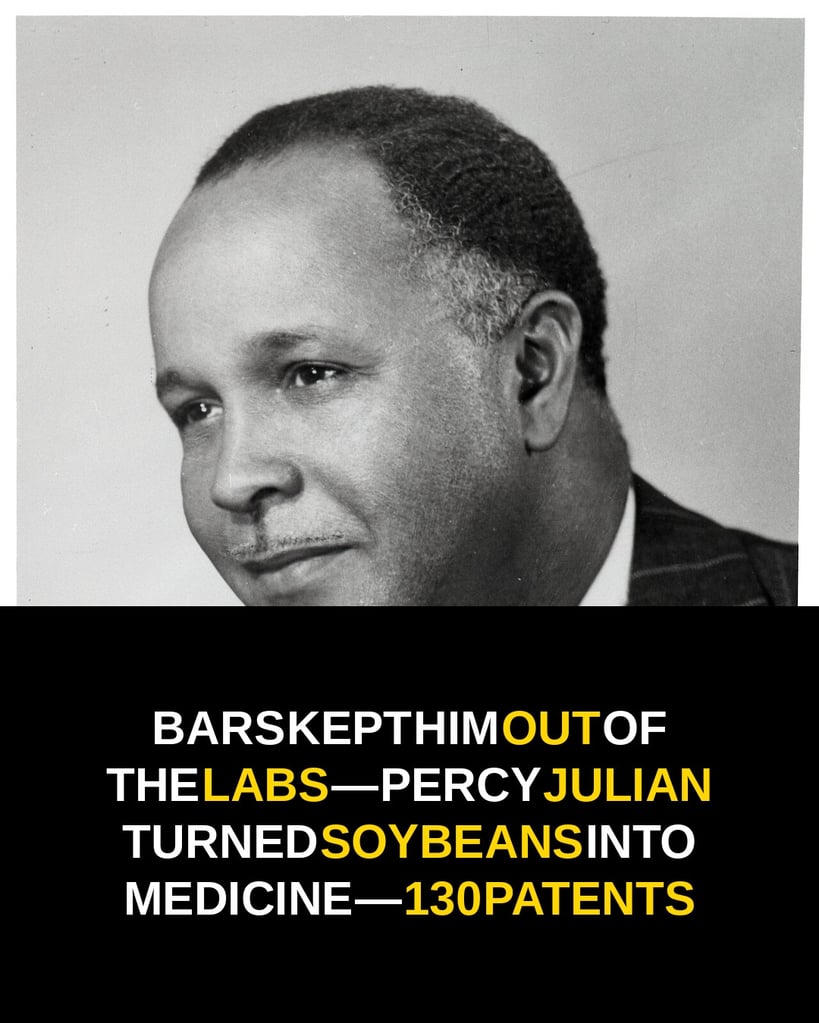
The doors of American science were closed to Percy Julian — so he stopped knocking and built his own laboratory, his own company and his own legacy. Grandson of enslaved people, holder of more than 130 patents, the chemist the professorships rejected ended up synthesizing medicines the whole world needed, out of something as humble as a soybean.
Percy Lavon Julian was born April 11, 1899, in Montgomery, Alabama. He earned his PhD in Vienna in 1931 — and came home to a country where racism shut him out of the professorships his credentials had earned. What he did next is the part they couldn’t bar him from: in 1935 he achieved the first synthesis of physostigmine, the glaucoma drug — a feat the American Chemical Society later named one of the top 25 achievements in American chemistry.
Let that sit. A man the universities wouldn’t hire produced one of the finest chemical achievements in the nation’s history. The bars were never about his ability. They were only ever about the bars.
The soybean years
In 1936 Julian joined the Glidden Company as research director and turned to the soybean — and the soybean turned into medicine, industry and wartime rescue. He invented Aero-Foam, a soy-protein fire suppressant the Navy used across World War II. He extracted soybean sterols and synthesized progesterone and testosterone at industrial scale, laying the foundation for affordable cortisone production and, later, birth-control pills.
Treatments that reached millions trace back to a chemist working with beans because the elite labs wouldn’t have him. He won the NAACP’s Spingarn Medal in 1947. And still, the ultimate Julian move was ownership: in 1953 he founded Julian Laboratories — his name on the door, at last — and sold it in 1961 for more than $2 million.
In 1973, the institution that represents the summit of American science finally opened its door: Percy Julian became the first African American chemist elected to the National Academy of Sciences, and only the second Black scientist in any field. He died April 19, 1975, and the National Inventors Hall of Fame inducted him in 1990.
Read his arc the way this page reads it: every stage of it was earned twice. The degree, earned abroad because home made it harder. The breakthrough, achieved without the professorship that should have carried it. The fortune, built in a company bearing his own name because no one else’s door would open. Julian didn’t just do chemistry at the highest level — he built, piece by piece, the institution that the existing institutions refused to let him join.
Bars kept him out of their labs. So he built his own — and the medicines outlasted the bars.
Join the conversation
Were you ever taught Percy Julian’s name in school — and be honest, had you heard of physostigmine, Aero-Foam or his 130+ patents before today? And which hits harder: the science he did, or the fact that he did it after being locked out? Tell us below.
Source note: Percy Julian’s record — born April 11, 1899, in Montgomery, Alabama, grandson of enslaved people; PhD earned in Vienna in 1931; the first synthesis of physostigmine, the glaucoma drug, in 1935, later named by the American Chemical Society one of the top 25 achievements in American chemistry; being shut out of professorships by racism; joining the Glidden Company in 1936 as research director; inventing Aero-Foam, the soy-protein fire suppressant used by the Navy across World War II; extracting soybean sterols to synthesize progesterone and testosterone at industrial scale, laying the foundation for affordable cortisone and, later, birth-control pills; holding more than 130 patents; founding Julian Laboratories in 1953 and selling it in 1961 for more than $2 million; winning the NAACP’s Spingarn Medal in 1947; becoming in 1973 the first African American chemist elected to the National Academy of Sciences (the second Black scientist in any field); dying April 19, 1975; and his 1990 induction into the National Inventors Hall of Fame — is from the Science History Institute, the American Chemical Society, and Sigma Xi.