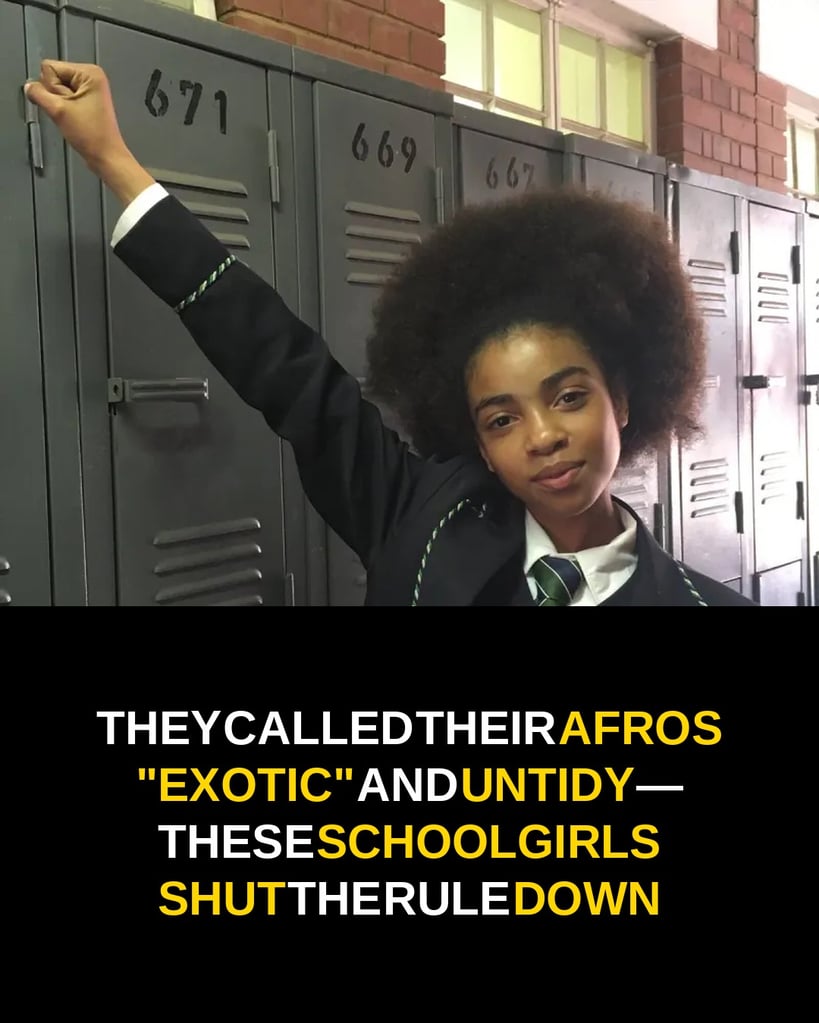
The code of conduct never said the word “afro.” It didn’t have to. In August 2016, Black pupils at Pretoria High School for Girls in South Africa stood up and said what the enforcement actually sounded like: their afros were being called “exotic” and untidy, and they were told to tame them or straighten them. The girls refused — and the rule came down.
The school’s code required hair to be “conservative” and “neat” — words that look neutral on paper. But policies live in their enforcement, not their wording, and the girls testified to the enforcement: afros policed as a problem, natural hair treated as something to be corrected before it could be acceptable. A rule that never names your hair can still be aimed at it, if the only heads it ever lands on are yours.
A 13-year-old became the face of it
Zulaikha Patel was thirteen years old. She became the face of the protests and of the hashtag that carried them around the world: #StopRacismAtPretoriaGirlsHigh. An online petition drew almost 25,000 signatures within a day.
Picture the imbalance she was standing inside. A thirteen-year-old. A school administration. A national code-of-conduct culture that treated grown institutions as the authority and schoolgirls as the problem. And then the signatures arrived — 25,000 in a day — and the imbalance flipped: now the institution had to explain itself, to the country, about the hair of its own pupils.
There is a detail in the girls’ complaint worth underlining before we move on. The code’s actual words were “conservative” and “neat” — the girls never claimed the document named them. What they documented was what the words did: afros called “exotic,” afros called untidy, afros ordered tamed or straightened, and no other kind of hair ever discussed in those terms. That gap between neutral paper and targeted practice is exactly what a protest exists to expose — and it’s why the official response that followed wasn’t only a review of a hair clause, but an inquiry into racism at the school itself.

The province stepped in
The pressure worked at the level where it counts. Gauteng Education MEC Panyaza Lesufi visited the school himself. And the Gauteng Department of Education suspended the hair clause pending a review — and an inquiry into racism at the school.
Read what that sequence really is. Girls protested a rule. The rule was suspended. An inquiry into racism was opened. Not because the institution suddenly saw the light on its own schedule, but because a thirteen-year-old and her classmates made the enforcement impossible to defend in public. That is the whole mechanism of every hair fight on this page, from London to Hackney to Pretoria: somebody young refuses, loudly enough that the adults with power have to come and look.
Their afros weren’t exotic. They weren’t untidy. They were afros — and the clause that policed them is the thing that didn’t survive inspection.
Join the conversation
She was THIRTEEN. Would you have stood up at that age — and be honest, does a rule have to name your hair to be aimed at it? And what would you say to Zulaikha Patel and those girls today? Tell us below.
Source note: The Pretoria High School for Girls account — Black pupils protesting in August–September 2016 against hair enforcement under the school’s “conservative, neat” code, under which their afros were called “exotic” and untidy and had to be tamed or straightened, though the code never named afros; 13-year-old Zulaikha Patel becoming the face of #StopRacismAtPretoriaGirlsHigh; the online petition drawing almost 25,000 signatures within a day; Gauteng Education MEC Panyaza Lesufi’s visit to the school; and the Gauteng Department of Education suspending the hair clause pending a review and an inquiry into racism at the school — is from BBC News and CNN coverage (August–September 2016).
Tell us in the comments below - we read every single one, and the best takes get featured.