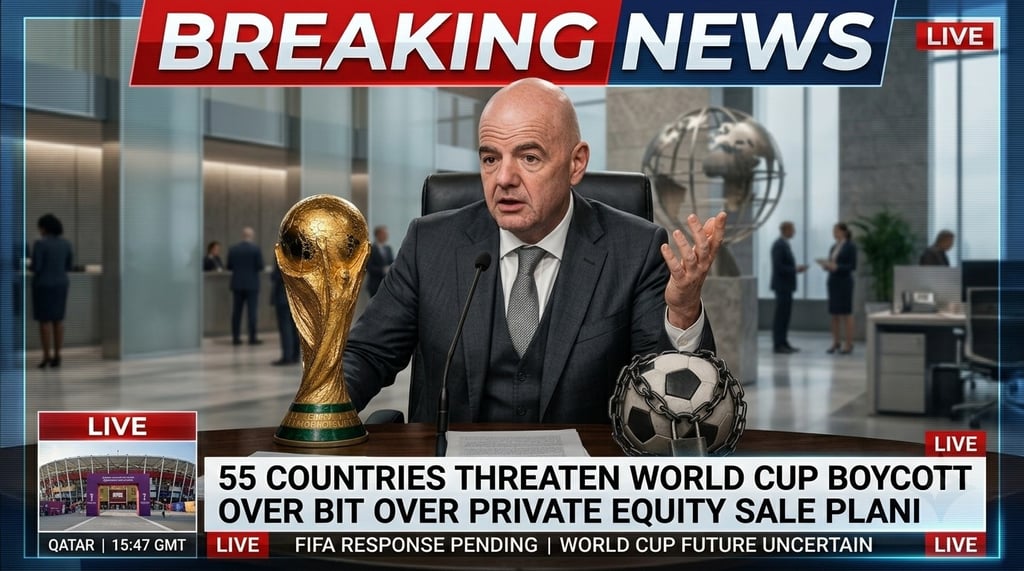
European football is facing one of its biggest governance disputes in years after UEFA and all 55 of its member associations announced they would boycott FIFA competitions if FIFA proceeds with a controversial proposal to bring private investors into the commercial business surrounding the FIFA World Cup.
The dispute centers on a reported plan backed by FIFA President Gianni Infantino to sell a 20% stake in a new commercial entity managing World Cup and other FIFA tournament rights. The proposal has sparked strong opposition from UEFA, which argues that football’s most prestigious competitions should not become investment products.
What Happened
According to UEFA, representatives from all 55 European member associations unanimously agreed that they would not participate in FIFA competitions if the proposed investment plan is approved.
The proposal reportedly involves creating a new commercial company—known in reports as FIFA Forward Enterprise (FFE)—valued at approximately $20 billion. FIFA would reportedly sell a 20% ownership stake to outside investors. Reports indicate that investment firm Thrive Capital, founded by Joshua Kushner, is expected to lead the investment group, while JPMorgan Chase is assisting with fundraising.
UEFA described the proposal as a fundamental change to football’s governance and issued a statement declaring:
“The World Cup is not for sale.”
The organization argues that football’s biggest competitions should remain under sporting governance rather than private ownership.
Background
The FIFA World Cup is among the world’s most valuable sporting events, generating billions of dollars through broadcasting rights, sponsorships, ticket sales, and commercial partnerships.
According to reports, FIFA believes outside investment could generate additional funding for football development worldwide.
However, critics argue that introducing private equity ownership could create pressure to maximize financial returns, potentially influencing decisions about tournaments, scheduling, and commercial priorities.
Why This Matters

If UEFA follows through on its warning, the consequences for world football could be enormous.
Potential impacts include:
- European national teams refusing to participate in FIFA tournaments.
- Questions over the future of men’s and women’s World Cups.
- Increased tensions between FIFA and regional confederations.
- Greater debate about transparency and governance in global football.
At this stage, however, no boycott has taken place. UEFA’s position is conditional on FIFA moving forward with the proposal.
Public Reaction
The announcement has generated widespread discussion among football fans, administrators, and former players.
Many supporters have backed UEFA’s stance, arguing that the World Cup represents more than a commercial asset.
Others believe outside investment could provide additional financial resources that benefit football globally if managed transparently.
The debate has quickly become one of the biggest governance stories in international football.
Expert or Wider Context
The disagreement extends beyond Europe.
Reports indicate that the Asian Football Confederation (AFC) has also expressed concerns, warning that proposals affecting world football should not proceed without meaningful consultation with regional confederations.
Meanwhile, CONCACAF has also criticized the process surrounding the proposal, citing governance and transparency concerns.
These developments suggest that the debate is no longer limited to UEFA but has become a broader discussion about how international football should be governed.
Final Thoughts
The proposed investment has not yet been approved, and FIFA has not completed the transaction.
However, UEFA’s unanimous position demonstrates the depth of concern among European football associations.
Whether FIFA revises its proposal or moves ahead could shape the future relationship between world football’s governing body and several of its largest confederations.
For now, the possibility of a boycott remains a warning rather than a reality, making the coming months potentially decisive for the sport’s governance.
FAQ